Reported by Weng Patrick Atokor l Journalist at Weng Global
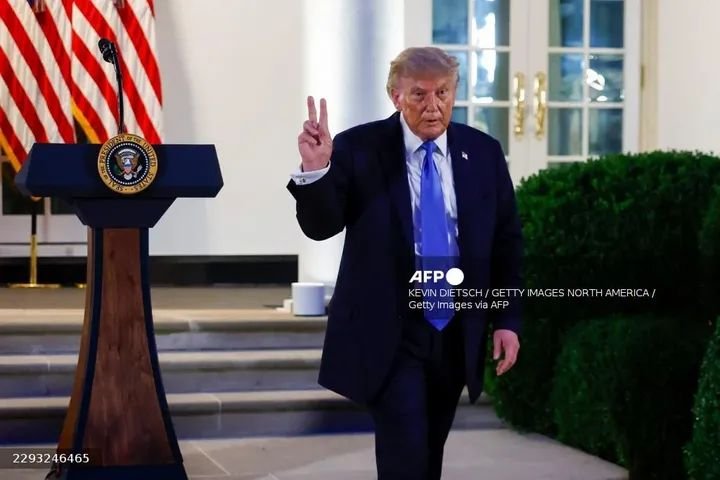
The White House has reiterated the United States government’s position that it recognises only two sexes, male and female, reinforcing President Donald Trump’s administration’s approach to biological sex and gender identity in federal government policies.
The reaffirmation was made in a statement shared through the White House’s official social media account on Saturday, November 7, 2026. The statement restated the administration’s position that the official policy of the United States government recognises only male and female.
The development highlights the administration’s continued commitment to a policy introduced shortly after Trump returned to the White House in January 2025. It also brings renewed attention to the political, legal and social debate surrounding transgender rights, gender identity and the role of biological sex in government policies.
The White House’s latest communication reinforces a position that has become a significant part of Trump’s domestic policy agenda.
Trump Established the Policy Through Executive Order
President Trump formally introduced the policy on January 20, 2025, through an executive order titled Defending Women From Gender Ideology Extremism and Restoring Biological Truth to the Federal Government.
The executive order established the recognition of two biological sexes, male and female, as the official position guiding the federal government’s interpretation and implementation of relevant policies.
Under Section Two of the order, the administration defined sex as an individual’s biological classification as either male or female. It also distinguished biological sex from gender identity.
The directive instructed federal agencies to apply these definitions when interpreting federal laws, regulations, policies and official government communications.
It further directed federal agencies to use the term “sex” rather than “gender” in applicable federal policies and documents.
The order also required changes to certain government identification documents and official records to reflect the administration’s definition of biological sex.
The executive action marked a major shift from several policies introduced under former President Joe Biden, whose administration had adopted broader federal recognition of gender identity in various areas of government policy.
The White House +2
Federal Agencies Directed to Apply the Definitions
The executive order extends beyond the language used in official government statements. It directs federal departments and agencies to incorporate the administration’s definitions into their official operations.
Among its provisions, the directive instructed government agencies to:
- Recognise male and female as the two biological sexes under federal policy.
- Use sex-based definitions when interpreting and implementing relevant federal laws.
- Remove government communications and policies identified by the administration as promoting gender ideology.
- Ensure official government forms requiring sex information reflect the administration’s male-and-female classification.
- Review federal identification documents, including passports and visas, in line with the executive order.
The Department of Health and Human Services subsequently issued guidance on February 19, 2025, explaining how federal agencies and external partners should apply the administration’s definitions.
The guidance reinforced the administration’s position that biological sex should be distinguished from gender identity in federal policy.
HHS.gov +1
Policy Reverses Several Biden-Era Measures
Trump’s decision also represents a reversal of several policies introduced during the administration of former President Joe Biden.
Under Biden, the federal government adopted measures that recognised gender identity in various government programmes and administrative policies.
These included executive actions addressing discrimination based on gender identity and sexual orientation, as well as measures promoting equality for lesbian, gay, bisexual, transgender, queer and intersex people.
Trump’s January 2025 executive actions rescinded several of those measures and directed federal agencies to adopt a different approach.
According to policy research organisation KFF, the changes have implications for federal health programmes, access to healthcare, government data collection and protections affecting LGBTQ+ communities.
KFF’s assessment also identifies concerns about the potential consequences of changes to federal funding and healthcare guidance.
The organisation noted that some healthcare facilities and community health programmes had reported uncertainty about federal funding requirements following the administration’s directives.
KFF
Executive Order Faces Legal Challenges
Despite the administration’s reaffirmation of its position, the implementation of Trump’s gender-related policies has faced legal challenges in American courts.
Several lawsuits have questioned aspects of the executive orders, including their implications for transgender people, access to healthcare, government identification documents and protections under existing federal laws.
One of the legal disputes involves Jana Jansen, an intersex transgender woman who challenged the administration’s passport and Global Entry identification policies.
In an August 24, 2026, ruling, a federal district court in Washington, DC, rejected her renewed request for a preliminary injunction against the challenged identification policies.
The court’s decision addressed the request for temporary relief and did not amount to a final resolution of the wider legal dispute.
The case illustrates how the administration’s definition of biological sex has affected government identification procedures and generated questions about the relationship between presidential executive orders and existing legal protections.
Justia Dockets & Filings
Other legal disputes have also focused on the administration’s restrictions affecting gender-affirming healthcare.
KFF reported in its October 26, 2026, policy update that several court proceedings had resulted in injunctions temporarily blocking particular provisions of the administration’s executive actions.
These legal developments demonstrate that the implementation of the administration’s policies has not proceeded without judicial scrutiny.
The disputes involve questions about presidential authority, federal funding, healthcare regulations and the interpretation of existing civil rights protections.
KFF +1
Transgender Rights Remain a Major Subject of Debate
The policy has intensified an existing national debate over biological sex, gender identity, women’s rights and protections for transgender people.
Supporters of the administration’s position generally argue that government policies should recognise biological distinctions between males and females, particularly in areas involving women’s sports, privacy, healthcare and sex-separated facilities.
Critics, including LGBTQ+ advocacy organisations, have raised concerns about the consequences of excluding gender identity from federal policies and the potential impact on transgender and intersex individuals.
The disagreements extend into healthcare, education, employment, public administration and the legal interpretation of discrimination protections.
The debate also involves questions about how government institutions should balance sex-based protections with the rights and dignity of people whose gender identity differs from their sex assigned at birth.
These competing positions have contributed to continuing political and legal disagreements across the United States.
Why the White House Reaffirmation Matters
The latest White House statement is significant because it demonstrates that the Trump administration continues to regard the recognition of two biological sexes as an established federal policy priority.
For government departments and agencies, the position provides the political and administrative direction guiding the administration’s approach to sex-related policies and official documentation.
It also has implications beyond domestic politics, particularly in international discussions about gender equality, transgender rights, healthcare and human rights.
The United States plays an influential role in international policy discussions, and changes in its domestic approach can shape debates involving international organisations, diplomatic relationships and global advocacy groups.
However, the White House’s position should be understood within its proper legal scope. The executive order establishes the administration’s approach to federal government policy; it does not automatically settle every legal question involving gender identity or determine how every private institution and state government must operate.
The courts continue to play an important role in determining the legality and enforceability of specific government measures.
What Happens Next?
The immediate development is a reaffirmation of an existing policy rather than the announcement of an entirely new executive order.
The administration is expected to continue implementing its established position through federal departments, agencies and relevant policy decisions.
Meanwhile, legal challenges involving identification documents, healthcare provisions and the rights of transgender people remain important developments to watch.
Further court decisions could determine whether particular elements of the administration’s approach can be maintained, modified or blocked.
For now, the White House’s November 7 statement reinforces President Trump’s commitment to maintaining the male-and-female classification as the official position of the federal government.
Weng Global – Stories beyond borders
Sources
1. The White House – Executive Order: Defending Women From Gender Ideology Extremism and Restoring Biological Truth to the Federal Government, January 20, 2025. Read the executive order.
2. Punch Newspapers – White House Reaffirms US Policy Recognising Only Two Genders, November 7, 2026. Read the report.
3. KFF – Overview of President Trump’s Executive Actions Impacting LGBTQ+ Health, updated October 26, 2026. Read the policy analysis.
4. United States District Court for the District of Columbia – Jansen v. Trump, Memorandum Opinion and Order, August 24, 2026. Read the court ruling.
5. U.S. Department of Health and Human Services – HHS Takes Action on President Trump’s Executive Orders Defending Women and Children, February 19, 2025. Read the official statement.