Reported by Weng Patrick Atokor l Journalist at Weng Global
Former Minister of Transportation and African Democratic Congress (ADC) vice-presidential candidate Rotimi Amaechi has claimed that former President Muhammadu Buhari promised him the All Progressives Congress (APC) presidential ticket ahead of the party’s 2022 presidential primary.
Amaechi attributed his eventual defeat in the contest to his decision to follow advice he received during the political process, raising fresh questions about the internal negotiations and political calculations that shaped the APC’s choice of presidential candidate ahead of Nigeria’s 2023 general election.
The claim concerns the 2022 APC presidential primary, which produced Bola Ahmed Tinubu as the party’s flagbearer.
Amaechi Says Buhari’s Assurance Influenced His Campaign Strategy
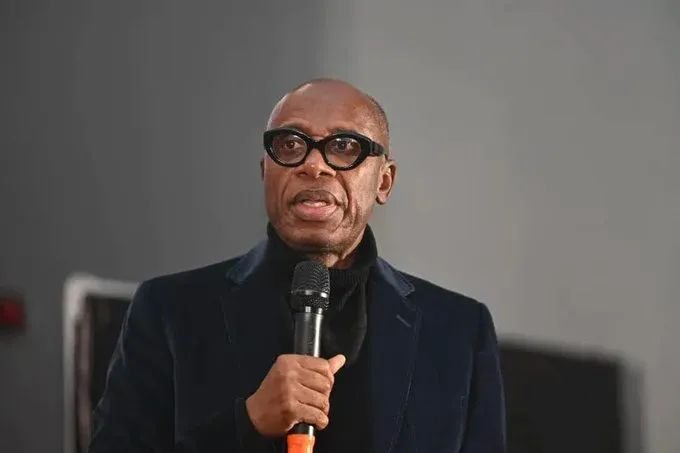
Amaechi made the disclosure during an interview on Mainland 98.3FM’s The Situation Room programme in Lagos on Friday, November 6, 2026, where he reflected on his unsuccessful attempt to secure the APC presidential ticket.
According to a report by Politics Nigeria published on Saturday, November 7, Amaechi said Buhari assured him that he would be selected as the party’s preferred presidential candidate.
The former Rivers State governor said the assurance was not merely verbal, claiming that Buhari also put the promise in writing.
Amaechi explained that he trusted the former president’s assurance and consequently did not engage in the extensive political consultations and negotiations that other aspirants pursued ahead of the primary.
He described his decision to rely on Buhari’s commitment rather than actively negotiate with influential party stakeholders as one of the biggest mistakes he made during the contest.
Recalling the conversation, Amaechi said:
“The first mistake that I made at that primary was that I listened to President Buhari. He said to me, ‘Don’t campaign. Don’t do anything. I will announce you as my candidate.’
“He told me that. He put it in writing. When I write my book, I’ll put it out.”
Amaechi’s statement suggests that he believed Buhari’s endorsement would be sufficient to secure the party’s presidential ticket without having to undertake the usual political bargaining associated with an internal party contest.
Failure to Negotiate With APC Governors
Amaechi also identified his failure to negotiate with influential APC governors and other political stakeholders as a major factor behind his defeat.
According to him, presidential primaries require more than personal relationships or assurances from party leaders. They also involve building alliances, securing delegate support and reaching political understandings with influential figures.
He suggested that he could have improved his chances by making commitments to political stakeholders who controlled significant political structures within the party.
The former minister specifically referred to the possibility of offering positions such as vice-president and Secretary to the Government of the Federation (SGF) during negotiations.
He argued that such arrangements could have helped him secure the backing of more governors and influential party figures.
Amaechi said his decision not to enter into political deals gave Tinubu an advantage because the former Lagos State governor was more successful in building alliances.
He explained:
“Now, I didn’t do deals. So I would have promised you vice-president, promised you SGF, and then would have gone for this primary, I would have possibly won. I would have had governors on my side.
“Because I didn’t do deals, Tinubu had the chance to do deals.”
The comments offer Amaechi’s personal explanation of the political calculations he believes contributed to his defeat. They do not independently establish the extent of Buhari’s alleged intervention or the specific agreements reached by other presidential aspirants.
How Tinubu Defeated Amaechi in the 2022 APC Primary
The APC conducted its presidential primary at Eagle Square in Abuja in June 2022 to select its candidate for the 2023 general election.
The contest attracted several prominent political figures, including Tinubu, Amaechi, former Vice-President Yemi Osinbajo, Senate President Ahmad Lawan and other serving and former governors.
Tinubu emerged victorious with 1,271 votes, defeating Amaechi, who secured 316 votes. Osinbajo finished third with 235 votes, according to BusinessDay’s report on the primary.
Tinubu’s victory followed an intense period of consultations and political manoeuvring involving governors, party leaders, delegates and presidential aspirants.
Several aspirants withdrew from the race before the final voting, with some publicly endorsing Tinubu.
The outcome established Tinubu as the APC’s presidential candidate and positioned him to challenge the opposition parties in the 2023 election.
He subsequently won the presidential election and succeeded Buhari as Nigeria’s president on May 29, 2023.
Amaechi’s latest account provides additional insight into how he believes the internal political contest unfolded and why his strategy did not produce the expected result.
Amaechi Raises Questions About Religious Politics
During the interview, Amaechi also discussed the influence of religion on political mobilisation during the 2022 APC presidential contest.
He alleged that some supporters of Tinubu used religious considerations to persuade political leaders in the North-West to support the former Lagos governor.
According to Amaechi, a group of Yoruba Muslims from the South-West approached northern governors and appealed to them to support Tinubu partly on religious grounds.
He also referred to former Kaduna State Governor Nasir El-Rufai, whom he said had initially supported his presidential ambition before eventually backing Tinubu.
Amaechi cited comments attributed to El-Rufai in a widely circulated video as part of his argument about the role of religious considerations in the contest.
However, these remain Amaechi’s allegations and should not be treated as independently established evidence of how individual delegates voted or why they supported particular candidates.
The former governor maintained that he would not use religious identity as a political mobilisation strategy, arguing that Nigeria’s religious diversity requires leaders to build support across different communities.
He said he would not want to become president by encouraging members of a particular religious group to vote for him simply because they shared the same faith.
Amaechi argued that religious mobilisation could deepen divisions in a country where Christians and Muslims form significant parts of the population.
His position reflects a broader debate about the influence of ethnicity, religion and regional identity on political competition in Nigeria.
Buhari’s Relationship With Amaechi Before the Primary
Amaechi served as Minister of Transportation under Buhari from 2015 until 2022 and was among the prominent political figures in the former president’s administration.
Their political relationship was particularly significant because Amaechi had publicly expressed loyalty to Buhari before the APC presidential primary.
In April 2022, shortly after declaring his presidential ambition, Amaechi said he would support whoever Buhari and the APC eventually chose as their preferred candidate.
According to a report by TheCable published on April 30, 2022, Amaechi said he would remain loyal to the president even if another aspirant received Buhari’s backing.
His remarks reflected the importance he attached to party loyalty and his relationship with the president at the time.
However, his latest account presents a different dimension of that relationship, suggesting that he interpreted Buhari’s alleged assurance as a reason not to pursue the aggressive political negotiations taking place within the party.
Amaechi’s claim that Buhari put the alleged promise in writing is particularly significant. He said he intends to make the document public when he writes his book.
Until the document is released and its contents independently examined, the public cannot establish precisely what Buhari wrote or the circumstances surrounding the alleged assurance.
What the Revelation Means for Nigerian Politics
Amaechi’s account highlights the influence of internal political negotiations in Nigeria’s party nomination processes.
Although political parties conduct formal primaries to select candidates, the outcomes are often shaped by consultations among governors, party executives, delegates and other influential political actors.
The 2022 APC primary demonstrated how alliances and last-minute political decisions could influence the direction of a presidential contest.
Amaechi’s remarks also raise questions about the relationship between political loyalty and personal ambition, particularly when competing interests emerge within a ruling party.
His experience suggests that relying on assurances from influential leaders may not be enough to secure victory in a contest where multiple stakeholders have their own political interests.
For Nigeria’s opposition politics, the comments are also relevant because Amaechi is now associated with the African Democratic Congress (ADC), having moved away from the APC political platform.
His reflections on the 2022 contest could influence how Nigerians assess his political experience, decision-making and understanding of the country’s party system.
However, his explanation remains his own account of events, and further documentation or responses from people directly involved would help establish a fuller picture.
What Happens Next?
Amaechi has indicated that he intends to publish the alleged written assurance from Buhari in a future book.
That document, if made public, could provide additional information about the former president’s alleged position during the APC’s 2022 presidential selection process.
It could also generate further debate about the role of presidential endorsements, political agreements and internal party negotiations in determining candidates.
For now, Amaechi’s disclosure adds another account to the history of the APC’s 2022 presidential primary, a contest that ended with Tinubu securing the party’s ticket and eventually becoming Nigeria’s president.
Weng Global – Stories beyond borders
Sources
- Politics Nigeria — Amaechi’s November 7, 2026 interview disclosure. Politics Nigeria
- TheCable — Amaechi’s April 2022 comments on supporting Buhari’s preferred presidential candidate. The Cable
- BusinessDay — Results of the June 2022 APC presidential primary. Businessday NG
- Chatham House — Background analysis of Nigeria’s 2023 elections and the APC primaries. Chatham House