Reported by Simon Daniel Yusuph l Journalist at Weng Global
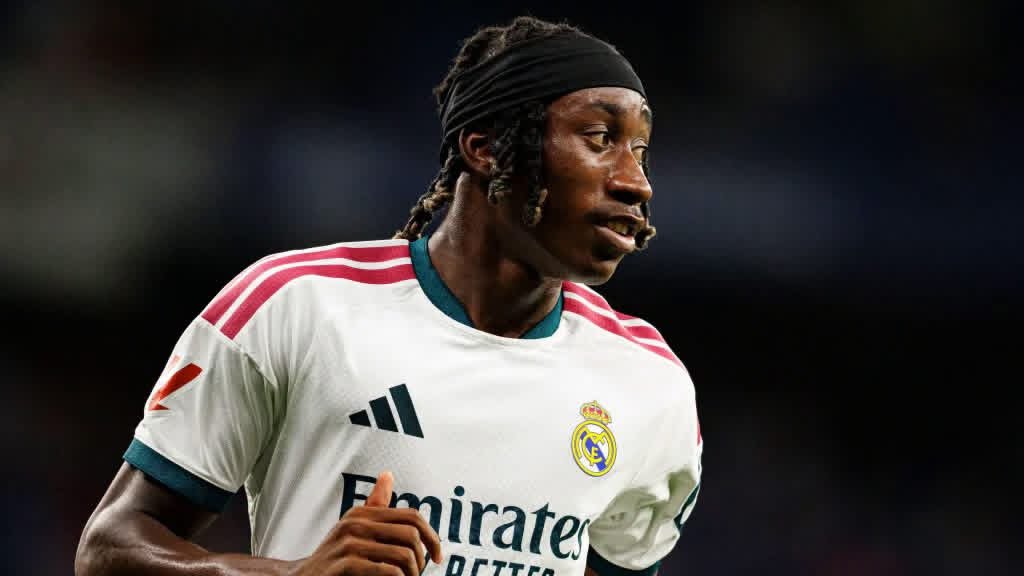
José Mourinho has expressed confidence in the potential of young winger Yan Diomande while emphasising the need for continued improvement as the Ivory Coast international develops his career at Real Madrid.
The Portuguese manager has acknowledged Diomande’s attacking qualities, including his pace, ability to take on defenders and versatility across the forward line. However, the young winger still has important areas to develop as he adjusts to the demands of playing at the highest level of European football.
Mourinho’s assessment reflects the challenge facing emerging attacking talents at a club where individual performances are closely scrutinised and competition for places remains intense.
For Diomande, improving his finishing and making better decisions in the final third could prove important as he seeks to establish himself as a regular contributor to the Spanish giants.
Mourinho Backs Diomande’s Long-Term Potential
Mourinho has made it clear that he sees considerable promise in the young winger, whose attacking ability gives Real Madrid additional options in wide positions.
Speaking at a press conference published by Real Madrid on September 12, 2026, the manager described Diomande as a player with significant potential who was working hard to improve.
Mourinho highlighted the winger’s qualities in one-on-one situations and his ability to operate in different attacking positions.
He also acknowledged that Diomande still had much to learn tactically, noting his relatively limited experience at the highest level of European football.
The manager’s comments suggest that Real Madrid view the winger as a developing player whose progress will require patience, regular training and opportunities to gain experience in competitive matches.
At a club with ambitious expectations, young players must demonstrate not only technical ability but also consistency, tactical awareness and the capacity to make decisive contributions when opportunities arise.
Diomande’s challenge is therefore to turn his natural attacking strengths into performances that consistently benefit the team.
Why Finishing Matters for Diomande
Finishing is an important component of a winger’s development, particularly at a club such as Real Madrid, where attacking players are expected to convert opportunities into goals.
A winger may possess the pace to beat a defender, the technique to create space and the confidence to enter dangerous areas. However, those qualities become more valuable when they lead to accurate shots, well-timed passes or clear scoring opportunities for teammates.
Improvement in front of goal involves more than shooting power. It requires composure, positioning, awareness of the goalkeeper, appropriate shot selection and the ability to make quick decisions under pressure.
For a young player adapting to elite-level football, developing these qualities can take time.
Defenders in La Liga are often organised and experienced, leaving attackers with limited space to operate. Players must therefore learn to recognise opportunities quickly and choose the most effective option before opponents can recover their defensive shape.
For Diomande, refining these details could help him become a more productive attacking player.
It is important, however, to distinguish between the general development areas identified by Mourinho and any specific criticism attributed to him. His published September comments emphasised Diomande’s potential and the need for overall improvement, including tactical development. The precise wording of the reported instruction about finishing should be confirmed against the relevant original interview before being presented as a direct quotation.
Real Madrid’s Competitive Environment
Playing for Real Madrid presents a demanding test for any young footballer.
The Spanish club competes for major domestic and European honours and operates in an environment where players are expected to deliver results while maintaining high technical standards.
Attacking positions are particularly competitive because the team has several players capable of influencing matches through goals, assists, movement and individual creativity.
Mourinho acknowledged this challenge when discussing his squad and the decisions involved in selecting players for different matches.
In his September press conference, he explained that Real Madrid had several quality options and that competition for places was a natural consequence of the squad’s strength.
He also made clear that he wanted to develop Diomande rather than judge him solely on what he could deliver immediately.
That approach is significant for a young player because development at an elite club requires a balance between immediate performance and long-term growth.
Managers must determine when to give emerging talents starting opportunities, when to introduce them from the bench and which aspects of their game require the most attention during training.
For Diomande, competition can provide motivation to improve while also exposing him to the standards required to remain in the starting line-up.
Tactical Development Remains Important
Mourinho’s assessment has also drawn attention to the tactical demands facing the young winger.
Modern football requires wide attackers to contribute beyond dribbling and scoring. They must understand pressing instructions, defensive responsibilities, positional rotations and the timing of their movements when the team has possession.
At Real Madrid, attacking players are expected to combine individual creativity with collective discipline.
A winger may be required to stay wide to stretch the opposition defence, move inside to create space for an overlapping teammate or track back when the opposing side launches a counterattack.
These decisions can influence the team’s attacking rhythm and defensive stability.
Mourinho’s comments about Diomande’s tactical development indicate that the manager considers learning the wider demands of the game an important part of the player’s progression.
Developing tactical understanding could also improve Diomande’s finishing. Better positioning and movement can help an attacker arrive in more favourable areas, while improved decision-making can create clearer opportunities to shoot or provide assists.
The relationship between tactical awareness and attacking output is therefore important to his overall development.
Diomande’s Versatility Offers Real Madrid More Options
One of the qualities Mourinho has identified in Diomande is his ability to operate in different attacking positions.
The manager said in September that the winger could play in Vinícius Júnior’s position or on the right flank.
Such versatility can be valuable during a demanding season, when clubs must manage injuries, suspensions, changes in opposition tactics and the physical demands of competing in multiple competitions.
A player capable of operating on either flank gives the manager more flexibility when constructing the starting line-up or changing the team’s approach during a match.
However, versatility also requires a strong understanding of the different responsibilities associated with each position.
A winger operating on the left may be expected to cut inside onto his stronger foot, while a player on the opposite flank might be required to maintain width, attack the space behind the full-back or deliver crosses into the penalty area.
Diomande’s development will therefore involve learning how to adapt his attacking instincts to the tactical requirements of different roles.
His ability to perform these responsibilities consistently could increase his usefulness to the team.
The Importance of Patience in Young Players’ Development
The expectations surrounding young players at major European clubs can be considerable, particularly when they demonstrate the technical ability to attract attention early in their careers.
However, potential does not automatically translate into consistent performance.
Young attackers often need time to adjust to the pace of the game, the physical strength of opponents and the tactical discipline required at the highest level.
They must also learn how to respond to missed chances, difficult matches and periods when opportunities are limited.
For Diomande, the process of development will require sustained work on his technical and tactical abilities.
Improving his finishing would be one part of that process, alongside developing his movement, decision-making, awareness and consistency.
Mourinho’s public assessment has emphasised the importance of continued improvement rather than suggesting that the winger has already reached his full potential.
That distinction matters because it places Diomande’s progress within a longer development process rather than reducing his performances to a single strength or weakness.
The manager’s willingness to discuss the player’s potential also indicates that Diomande remains part of his plans for developing the squad.
Nevertheless, opportunities at Real Madrid must be earned through performances in training and competitive matches.
Diomande’s Goal Against Villarreal Provides Encouragement
Diomande has already demonstrated his ability to make a decisive contribution for Real Madrid.
According to the club’s official match report, the Ivorian scored the winning goal in a 1-0 La Liga victory over Villarreal on October 10, 2026.
The goal came in the 62nd minute at the Santiago Bernabéu after Federico Valverde played a through ball into his path. Diomande finished with a shot across the goalkeeper to secure the three points.
The goal was initially flagged for offside but was awarded following a video assistant referee review.
The result provided an example of the winger’s ability to influence a match at a crucial moment.
However, one goal does not remove the need for continued development. For an attacking player at Real Madrid, the challenge is to reproduce such contributions consistently across the season.
That means taking advantage of opportunities, contributing to the team’s attacking movement and making sound decisions in situations where the correct choice may be a pass rather than a shot.
Diomande’s performance against Villarreal offers encouragement, while the broader expectations surrounding his development remain unchanged.
What Comes Next for the Young Winger?
Diomande’s immediate challenge is to build on his promising qualities and establish greater consistency in his performances.
Continued work on his finishing, tactical understanding and decision-making could help him become a more complete attacking option for Mourinho.
His progress will also depend on how effectively he adapts to the manager’s tactical system and makes use of the opportunities available to him.
With competition for places at Real Madrid, every appearance provides an opportunity to demonstrate improvement.
The club’s coaching staff will be responsible for guiding his development, while Diomande must translate that guidance into performances on the pitch.
For supporters, the key question is how quickly the young winger can turn his potential into consistent contributions in La Liga and other competitions.
Mourinho’s assessment provides a clear indication that the manager recognises his talent but expects him to continue learning.
For Diomande, the objective is to combine his attacking ability with improved decision-making and greater efficiency in front of goal.
If he continues to develop those qualities, he could become an increasingly important option in Real Madrid’s attack.
Weng Global – stories beyond borders
Sources
- Real Madrid official press conference, José Mourinho, September 12, 2026.
- Real Madrid official match report: Real Madrid 1-0 Villarreal, October 10, 2026.
- La Liga official match records, 2026/27 season.