Reported by Simon Daniel Yusuph l Journalist at Weng Global
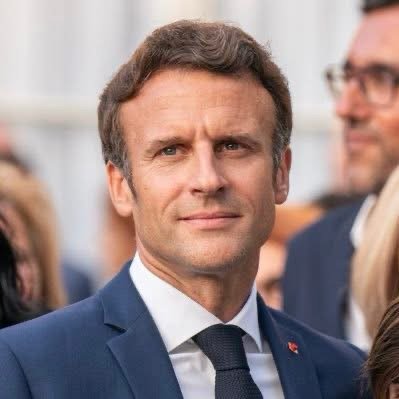
French President Emmanuel Macron has acknowledged failures in intelligence gathering and security planning following widespread violence across France, while refusing the resignation of Interior Minister Laurent Nuñez after demonstrations over the cost of living and education concerns escalated into riots, looting and attacks on public buildings.
The unrest, which erupted during demonstrations on Saturday, October 17, 2026, affected several French cities, prompting criticism of the government’s preparedness and raising questions about its ability to protect public infrastructure, businesses and residents during large-scale protests.
On Monday, October 19, the Élysée Palace confirmed that Macron had rejected Nuñez’s resignation, arguing that maintaining continuity in the leadership of law enforcement agencies was necessary amid the security crisis.
The president also directed the interior minister to improve operational responses to violent groups and ensure transparency regarding the failures in planning and intelligence that contributed to the unrest.
Macron Acknowledges Security and Intelligence Failures
The president’s admission represents an acknowledgment that authorities did not adequately anticipate the scale of the violence or prepare a sufficiently effective response.
According to reporting by Reuters and other international media organisations, Macron ordered a review of possible failures in intelligence gathering and police preparedness following the destruction and looting witnessed in several cities.
The review is expected to examine whether security agencies adequately assessed the risks associated with the demonstrations, whether intelligence about potential violence was properly shared and whether police resources were deployed effectively.
The president’s decision to demand greater transparency places responsibility on the government to explain how peaceful demonstrations developed into widespread disorder.
However, the precise findings of any review have not yet been established publicly. It would therefore be premature to conclude that a particular agency or official was solely responsible for the security failures.
Macron has also made clear that the government intends to respond firmly to those responsible for violence, vandalism and looting.
In a televised address on Sunday, October 18, he condemned the destruction and warned that those responsible would face accountability.
The president’s position reflects the challenge facing the French government: protecting the right to peaceful protest while preventing violent acts from endangering residents, police officers, public servants and business owners.
The investigation into the security response will be important in determining whether the violence resulted primarily from intelligence shortcomings, operational mistakes, the scale of mobilisation or a combination of factors.
Why Macron Rejected Nuñez’s Resignation
Nuñez submitted his resignation to Macron on Sunday following the unrest, but the president refused to accept it.
The Élysée Palace said the decision was based on the need to maintain continuous leadership of the law enforcement agencies during a period of heightened tension.
Rather than removing the minister, Macron instructed him to take measures to improve security operations and address the weaknesses identified in the preparation for the demonstrations.
The decision suggests that the president wants the interior minister to remain directly responsible for coordinating the government’s response while efforts are made to prevent further violence.
Nuñez occupies a central position in France’s internal security system, overseeing a ministry responsible for domestic security, policing coordination and public order.
Replacing the minister during a crisis could create administrative uncertainty, although whether a change in leadership would have improved the response remains a matter of political judgment.
By retaining Nuñez, Macron has chosen continuity over an immediate change of leadership.
The decision does not remove the political consequences of the security failures. Instead, it leaves the minister responsible for implementing corrective measures while facing questions from political opponents and local authorities.
The effectiveness of that approach will depend on whether the government can demonstrate measurable improvements in intelligence coordination, police preparedness and protection for communities affected by the unrest.
Nearly 2,400 Arrests Reported During the Unrest
The scale of the disturbances has intensified pressure on French authorities.
Reports citing the Interior Ministry said approximately 2,400 people were arrested during the demonstrations and related violence on October 17. Nearly 1,000 police officers, gendarmes and other personnel were reported injured during the unrest and its aftermath.
The figures illustrate the demands placed on emergency services and law enforcement during the disturbances.
Several cities experienced clashes, fires, vandalism and looting. Public buildings and commercial premises were among the locations targeted, while authorities faced the task of restoring order and protecting vulnerable areas.
In Limoges, a historic town hall was set on fire, according to the Associated Press. Other cities, including Paris, Marseille and Lyon, also experienced serious disturbances.
The destruction of public buildings has raised particular concern because such facilities provide services and administrative support to local communities.
Damage to commercial premises also creates financial pressure for business owners, some of whom may face repair costs, lost income and uncertainty over when normal operations can resume.
Although the reported arrest and injury figures provide an indication of the severity of the unrest, they do not by themselves establish the full extent of the damage or the individual responsibility of those detained.
Arrest does not constitute proof of guilt, and any criminal allegations must be assessed through the appropriate legal process.
Authorities will need to establish which individuals participated in violence, which were involved in property destruction and whether particular incidents were coordinated.
Cost-of-Living Pressures and Education Concerns Fuel Protests
The demonstrations took place against a background of public frustration over living costs, deteriorating public services and concerns about conditions in the education system.
These grievances have contributed to mounting pressure on the French government as households, students and workers demand responses to economic and social difficulties.
The unrest highlights the challenge of managing demonstrations when economic dissatisfaction overlaps with wider political discontent.
Rising living costs can affect household budgets, particularly when essential expenses such as food, housing, transport and energy consume a large share of income.
Education-related grievances have also contributed to the mobilisation, with students and other demonstrators expressing concerns about conditions in schools and the government’s handling of public services.
However, the reasons people join demonstrations are not necessarily identical. Some participants may be motivated by specific policy demands, while others may use protests to express broader dissatisfaction with the government.
Those who engage in peaceful protest should not automatically be associated with individuals who loot businesses or attack public buildings.
Macron has sought to distinguish between citizens exercising their right to demonstrate and groups responsible for violent acts.
That distinction is important because the government’s response must address both public safety and the underlying grievances that have brought people onto the streets.
Security operations alone may contain immediate violence, but they cannot independently resolve disagreements over living costs, education or public services.
The government’s ability to combine effective policing with meaningful engagement will therefore influence whether tensions ease or continue.
Macron Blames Violent Groups, Opposition Questions Government Preparedness
Macron has condemned those responsible for looting and vandalism, describing the violence as unacceptable and promising accountability.
He has also blamed radical far-left groups and criminal elements for participating in the disorder.
Those characterisations reflect the president’s assessment of the unrest, but responsibility for individual incidents must be established through evidence rather than political claims.
The opposition has questioned the government’s preparedness, with some political figures calling for Nuñez to leave office.
Critics argue that the scale of the violence exposed weaknesses in security planning and raised doubts about whether authorities adequately anticipated the risks.
The decision to reject the minister’s resignation has consequently become part of a wider debate over political responsibility.
For the government, the immediate priority is restoring public order and preventing further destruction. For opposition figures, the crisis raises questions about accountability and whether senior officials should face consequences for failures in their areas of responsibility.
These competing positions are likely to shape parliamentary and public discussions about the government’s handling of the demonstrations.
A full assessment, however, will require more than political statements. Information about intelligence assessments, operational decisions, police deployment and the circumstances surrounding individual incidents will be important in determining what went wrong.
Government Orders New Security Measures
Macron has instructed Nuñez to introduce new operational methods for security forces and improve the response to groups involved in violence.
The president has also called for transparency concerning failures in the planning and intelligence processes that preceded the disturbances.
These instructions indicate that the government intends to review how authorities anticipate, manage and respond to large-scale demonstrations.
Possible areas of scrutiny include intelligence-sharing arrangements, risk assessments, the deployment of officers, coordination between national and local authorities and the protection of public buildings.
The president has also indicated that local officials could be given greater scope to restrict certain gatherings where authorities consider such measures necessary.
Any restrictions on demonstrations must be considered within France’s legal framework governing public assembly, civil liberties and public safety.
The challenge for the government is to prevent violence without treating peaceful protest as a security threat in itself.
Overly broad restrictions could deepen public dissatisfaction, while an inadequate security response could expose communities and businesses to further harm.
The review’s findings should help determine whether changes to police operations, intelligence coordination or local contingency planning are required.
Until those findings are made public, the precise reforms that will follow remain uncertain.
Economic Consequences for Businesses and Communities
The unrest also has implications for France’s local economies.
Businesses affected by looting, fires and vandalism may face repair bills, interrupted trading and losses that extend beyond the immediate period of violence.
Small businesses can be particularly vulnerable because they may have limited financial reserves to absorb unexpected damage or prolonged closures.
Workers may also experience disruption if shops, transport routes or public services become unavailable.
Local governments face additional responsibilities when public buildings and community facilities are damaged. Repairing those facilities can require public expenditure and divert resources from other services.
The broader economic impact will depend on the extent of the damage, the duration of the unrest and the speed at which normal commercial activity resumes.
The demonstrations also underscore the connection between economic dissatisfaction and political stability.
Although the destruction associated with riots is not representative of everyone participating in protests, widespread disorder can increase pressure on authorities to respond to the underlying grievances.
For France, the challenge is to protect economic activity and public safety while addressing concerns over living standards and the quality of public services.
The government will need to demonstrate that it can manage immediate security threats without ignoring the social and economic conditions contributing to public frustration.
Implications for French Democracy
The crisis has renewed debate about the balance between public order, civil liberties and government accountability.
France has a long history of public demonstrations, with protests serving as an important means through which citizens express opposition to government policies and demand political change.
The right to peaceful assembly remains distinct from acts of violence, looting and deliberate destruction of property.
Authorities have a responsibility to protect the public and enforce the law, but their response must also respect the rights of peaceful demonstrators.
The current situation tests the government’s ability to uphold both responsibilities during a period of intense political and social pressure.
Macron’s acknowledgment of intelligence failures may help establish the need for institutional improvements, but public confidence will depend on whether the government provides credible explanations and follows through on corrective measures.
Transparency will be especially important if the review identifies mistakes by senior officials or shortcomings in the coordination of security agencies.
The decision to retain Nuñez means the minister will be expected to demonstrate that the government’s response can improve despite the criticism surrounding his department.
For citizens, the outcome will matter not only because of the immediate security threat but also because it will influence how authorities manage future demonstrations.
What Happens Next?
The French government is expected to focus on restoring public order, protecting businesses and public infrastructure, and reviewing the security arrangements that preceded the unrest.
Nuñez will remain in office following Macron’s rejection of his resignation and has been instructed to develop new operational approaches for security forces.
The review of intelligence and planning failures will be important in establishing whether authorities underestimated the scale of the demonstrations or failed to respond effectively to available information.
Prime Minister Sébastien Lecornu was also expected to convene an interministerial crisis meeting on Monday, October 19, to coordinate the government’s response, according to French media reports.
Macron has called for discussions involving students, teachers, lawmakers, trade union representatives and business leaders to develop proposals addressing the crisis.
The details and outcomes of those discussions will be important in determining whether the government can respond to the concerns behind the demonstrations while preventing further violence.
For now, the president has opted to maintain continuity in the leadership of the Interior Ministry while demanding changes to security operations.
The government’s next challenge is to show that its response can protect communities, establish accountability for wrongdoing and address the public grievances that contributed to the demonstrations.
The central questions remain whether the review will identify clear institutional failures, whether corrective measures will be effective and whether the government can rebuild public confidence after the unrest.
Weng Global – stories beyond borders
Sources
- Reuters — Reporting on Macron’s response to the violence and the review of intelligence and police preparedness.
- Associated Press — Reporting on the nationwide unrest, arrests and damage to public buildings.
- Euronews — Reporting on Macron’s rejection of Laurent Nuñez’s resignation and the government’s response.
- The Guardian — Reporting on the unrest, political criticism and security concerns.
- Agence France-Presse (AFP) — Reporting on the resignation offer and the Élysée Palace’s explanation.