Reported by Simon Daniel Yusuph l Journalist at Weng Global
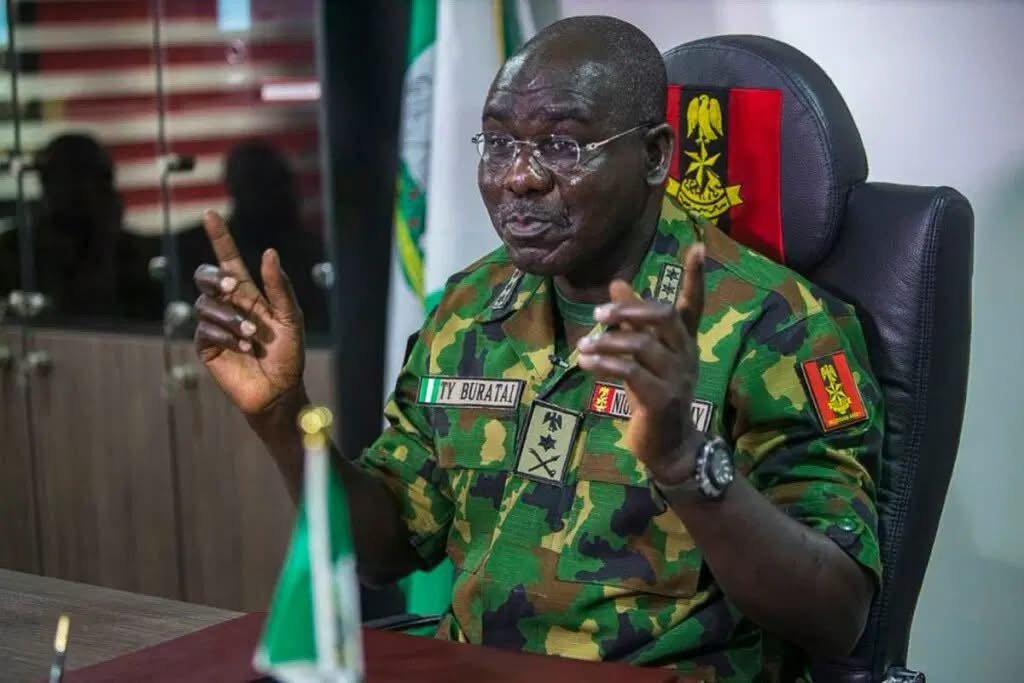
Former Chief of Army Staff, Lieutenant General Tukur Yusuf Buratai (retd.), has said the $1 billion approved for defence procurement during his tenure was released to the Federal Ministry of Defence, insisting that the money did not pass through his hands or the accounts of the Nigerian Army, Navy or Air Force.
Buratai made the clarification on Monday, October 12, 2026, at a conference organised by the Defence Correspondents Association of Nigeria (DECAN) in Abuja, where he addressed the controversy surrounding the funds and called for greater transparency in military procurement.
The retired general described allegations that the money had been diverted for political purposes as politically motivated and malicious. He argued that responsibility for explaining how the funds were spent should rest with the institution that managed the procurement process.
His remarks have renewed attention on a longstanding controversy involving the management of public funds earmarked for military equipment and the accountability mechanisms governing Nigeria’s defence expenditure.
Buratai Explains How the $1 Billion Fund Was Managed
Speaking at the DECAN conference in Abuja, Buratai said the National Economic Council (NEC) approved the $1 billion for defence procurement, but the funds were released to the Ministry of Defence rather than directly to the military services.
He maintained that neither he personally nor the accounts of the Nigerian Army, Navy and Air Force received the money for procurement purposes.
According to Buratai, the ministry handled the procurement process, including the administration of the funds and the associated arrangements for acquiring military equipment.
He argued that the distinction between the institution responsible for managing the funds and the military services expected to benefit from the equipment was important in determining where accountability should lie.
The former army chief also criticised the absence of a sufficiently detailed public explanation of how the money was disbursed and how procurement contracts were awarded.
His position is that the institution that administered the funds should provide the records needed to establish how the money was used.
However, Buratai’s account represents his explanation of the funding arrangements. Establishing the complete financial trail would require examination of the relevant government approvals, disbursement records, procurement contracts and delivery documentation.
The available reports of his remarks do not independently establish the final disposition of every portion of the $1 billion or confirm whether all the intended equipment was delivered.
Former Army Chief Links Allegations to the 2019 Election Period
Buratai traced the controversy to the 2019 election period, when opposition figures allegedly claimed that the money had been diverted for electoral purposes.
He said the Federal Government publicly rejected the allegations at the time, but the controversy continued to affect the reputations of senior military officers.
The former army chief argued that the allegations had remained attached to service chiefs despite his assertion that the Ministry of Defence controlled the procurement process.
His comments seek to separate the responsibility of military commanders from that of the institution that administered the funds.
Nevertheless, allegations surrounding public expenditure require documentary evidence to establish whether money was properly authorised, disbursed and spent.
A statement rejecting allegations does not, on its own, provide a complete account of the transactions. Equally, an allegation of diversion should not be treated as established fact without supporting evidence.
A comprehensive assessment would require access to the original approval, the amount released, the contracts awarded, the suppliers involved and records showing whether the procured equipment was delivered.
The distinction is important because the controversy involves public funds intended to support national defence, an area in which accountability must be balanced with legitimate security considerations.
Buratai Calls for a Defence Procurement Transparency Portal
Beyond defending his role in the transaction, Buratai proposed the establishment of a defence procurement transparency portal to improve public access to information about military contracts.
He recommended that the proposed platform publish broad categories of contracts awarded, the identities of contracting entities and delivery timelines, subject to national security restrictions.
Under the proposal, the public would have a clearer way to understand how defence procurement decisions are made and whether projects are progressing according to approved schedules.
Buratai argued that the Ministry of Defence should take responsibility for explaining the procurement records under its control.
A transparency portal could also provide a structured means of communicating information about defence expenditure without disclosing operational details that could compromise military activities.
For example, information about contract awards, procurement stages and delivery milestones could be made public where disclosure would not create security risks.
The proposal would require appropriate safeguards to prevent the publication of classified information, sensitive equipment specifications or details that could expose military vulnerabilities.
It would also need clear procedures for updating information and correcting inaccurate records.
A website alone would not guarantee accountability. Its effectiveness would depend on the quality of the information published, the frequency of updates and whether independent oversight mechanisms could examine the underlying records.
Buratai’s proposal therefore places emphasis on institutional responsibility and public communication, although its implementation would depend on decisions by the relevant authorities.
Former Army Chief Urges Accountability for Human Rights Violations
Buratai also addressed allegations of human rights violations involving members of Nigeria’s security forces, saying credible claims should be investigated and prosecuted where substantiated.
He acknowledged the importance of demonstrating that military disciplinary procedures are credible and capable of addressing allegations against personnel at different levels.
His position was that the military should not be exempt from the law and that allegations supported by credible evidence should receive appropriate attention.
The issue is relevant to Nigeria’s wider security operations, particularly as the country continues to confront armed groups, criminal violence and other threats to public safety.
Military operations can be essential to protecting communities, but their legitimacy also depends on compliance with applicable laws and respect for the rights of civilians.
Credible investigations can help distinguish substantiated violations from unproven allegations, while appropriate disciplinary or judicial action can reinforce accountability.
Buratai’s remarks placed transparency in procurement alongside accountability for operational conduct as elements of public confidence in the security institutions.
However, his statements at the conference do not establish the outcome of any particular human rights investigation or demonstrate that a specific allegation has been substantiated. Individual cases must be assessed on their evidence and through the appropriate procedures.
Federal Government Highlights Intelligence and Technology in National Security
The DECAN conference also featured remarks from the Minister of Information and National Orientation, Mohammed Idris, who called for a broader approach to Nigeria’s security challenges.
According to reporting by Leadership, Idris, represented by Voice of Nigeria Director-General Jibrin Ndace, said military force alone could not resolve the country’s security problems.
He emphasised the importance of improved intelligence, modern technology and stronger cooperation among security agencies and communities.
The minister’s position reflected the need to combine military operations with measures addressing the conditions that enable criminal groups to recruit members and threaten lives and livelihoods.
Such an approach places intelligence gathering, surveillance, inter-agency coordination and community cooperation alongside conventional military operations.
Nigeria’s security challenges vary across regions and include insurgency, kidnapping, banditry and other forms of organised violence. Responding effectively requires authorities to understand the different drivers of insecurity and coordinate resources accordingly.
The conference theme, Beyond Kinetic Warfare: Harnessing Technology and Intelligence-Led Operations for Nigeria’s National Security, reflected the emphasis on using information, technology and coordinated strategies to improve security outcomes.
Idris also discussed the Federal Government’s security priorities and the importance of ensuring that security initiatives produce practical benefits for citizens, including safer communities, roads, farms and schools.
These remarks broadened the conference discussion beyond the management of defence funds to the effectiveness of Nigeria’s wider security framework.
Why the $1 Billion Procurement Controversy Matters
The controversy raises fundamental questions about the management of public money allocated to national defence.
Defence procurement involves substantial expenditure on equipment, logistics, technology and other resources needed by the Armed Forces. Decisions about how such funds are allocated and spent can affect operational readiness and the ability of security personnel to carry out their duties.
When allegations of financial misconduct emerge, citizens need credible information to determine whether the money was used for its approved purpose.
For the government, transparent procurement records can help demonstrate that public funds are being managed according to established procedures.
For the military, properly equipped personnel and reliable procurement systems are important to operational effectiveness. Delays, poor-quality equipment or failures in contract delivery can undermine the value of public expenditure.
For taxpayers, accountability is essential because defence spending competes with other public priorities, including healthcare, education, infrastructure and social services.
The case also illustrates why responsibility for public expenditure must be clearly documented. Where several institutions participate in approving, releasing, administering or using funds, records should identify the role played by each institution.
That clarity can help investigators, auditors, lawmakers and the public assess whether the process complied with applicable financial and procurement rules.
At the same time, transparency must account for genuine national security concerns. Public disclosure should not expose sensitive operational information or weaken the country’s ability to protect its personnel and citizens.
The challenge is to establish a system that safeguards legitimate secrets while making financial decisions and procurement outcomes subject to meaningful scrutiny.
What Happens Next?
Buratai’s call for greater transparency places renewed attention on the Ministry of Defence’s responsibility to explain the procurement process and account for the funds it administered.
The next steps would involve clarifying the original approval, documenting the disbursement of the money, identifying the contracts awarded and establishing what equipment or services were delivered.
A properly documented review could help resolve outstanding questions about the transaction and distinguish verifiable facts from competing claims.
The proposed defence procurement transparency portal could provide one avenue for publishing relevant information, although no implementation decision was established in the reports of Buratai’s conference remarks.
The relevant authorities could also consider whether existing procurement, audit and legislative oversight arrangements provide sufficient public accountability while protecting classified information.
Any assessment of the allegations would need to rely on documentary evidence rather than political claims or statements by interested parties alone.
For now, Buratai maintains that the $1 billion was released to the Ministry of Defence and did not pass through his hands or the accounts of the military services.
His position places the responsibility for explaining the fund’s administration on the ministry. A complete resolution of the controversy, however, requires transparent records showing how the money was authorised, disbursed and spent.
Weng Global – stories beyond borders
Sources
Punch Newspapers — Report on Buratai’s comments regarding the $1 billion defence procurement fund, October 12, 2026.- Tribune Online — Report on Buratai’s statement at the Defence Correspondents Association of Nigeria conference, October 12, 2026.
- Leadership Newspaper — Report on Buratai’s procurement transparency proposal and the Federal Government’s position on national security, October 13, 2026.