Reported by Simon Daniel Yusuph l Journalist at Weng Global
Aliko Dangote has announced plans to increase the capacity of the Dangote Petroleum Refinery in Lagos to 1.4 million barrels per day by early 2029, an expansion that could significantly strengthen Nigeria’s refining industry, reduce dependence on imported petroleum products and expand the country’s role in global energy markets.
The proposed expansion will double the refinery’s current crude-processing capacity of approximately 700,000 barrels per day, positioning the facility among the world’s largest refining complexes if the target is achieved.
The project forms part of a broader industrial strategy by Dangote to expand Nigeria’s domestic refining capacity, increase exports of refined petroleum products and strengthen the country’s participation in international energy trade.
The expansion is also expected to increase the refinery’s ability to supply petroleum products to domestic and international markets. However, achieving the target will depend on construction progress, equipment installation, financing, reliable crude oil supplies and the successful integration of additional processing capacity.
According to reporting by Bloomberg in September 2026, the refinery’s management said the expansion programme was progressing towards its target, with the company using existing plans, contractors and infrastructure to accelerate development.
Dangote Refinery Plans $14.3 Billion Expansion
The expansion programme is estimated to cost approximately $14.3 billion and is designed to add another 700,000 barrels per day of processing capacity to the existing facility in the Lekki Free Zone, Lagos State.
The additional capacity would take the refinery’s total crude-processing capability to 1.4 million barrels per day, more than doubling its original nameplate capacity of 650,000 barrels per day.
The refinery has already demonstrated the ability to process approximately 700,000 barrels per day, according to information published by the company and reports from Nigerian media organisations.
The expansion is intended to build on that operational base by increasing the volume of crude oil the facility can process and the quantity of refined products it can supply.
The company has indicated that it intends to use existing infrastructure and industrial facilities to support the new phase, potentially reducing the cost and time required compared with constructing an entirely new refinery.
In September 2026, Devakumar Edwin, Group Vice President for Oil and Gas and Fertiliser at Dangote Industries Limited, disclosed during a facility tour that the basic engineering work for the expansion had been completed.
He also indicated that detailed engineering was substantially advanced, with major equipment orders and contracts forming part of the implementation process.
These preparations are important because a refinery expansion of this scale involves more than installing additional processing equipment. It requires coordinated construction, engineering, utilities, storage, transportation infrastructure and operational testing before the new capacity can be fully utilised.
The company’s early-2029 target therefore represents an ambitious industrial milestone rather than a guarantee that the expanded facility will immediately operate at full capacity on that date.
What the Expansion Means for Nigeria’s Fuel Market
Nigeria has historically depended heavily on imported petrol, diesel and other refined petroleum products despite being one of Africa’s major crude oil producers.
The mismatch between domestic crude production and refining capacity has contributed to the country’s reliance on foreign refineries to meet significant portions of its fuel requirements.
The Dangote Petroleum Refinery was established partly to address that structural challenge by processing crude oil domestically and supplying refined products to Nigerian consumers and businesses.
Increasing capacity to 1.4 million barrels per day could strengthen the refinery’s ability to serve the domestic market while supplying customers in other countries.
However, crude-processing capacity should not be confused with actual daily production of petrol or any other individual product.
A refinery processes crude oil into a range of products, including petrol, diesel, aviation fuel, liquefied petroleum gas and industrial feedstocks. The quantities produced depend on the type of crude processed, the facility’s configuration, operating conditions and market demand.
Consequently, doubling the refinery’s crude-processing capacity would not automatically mean that petrol production alone would double by the same proportion.
The expansion’s effect on Nigeria’s fuel market will depend on how efficiently the additional capacity operates, the availability of crude oil, domestic consumption patterns and the distribution of products to consumers.
If the facility consistently processes crude oil at higher volumes and supplies sufficient products to the domestic market, it could reduce the need for some imported refined petroleum products.
It could also create opportunities for Nigeria to increase exports when domestic requirements are met.
Nevertheless, domestic refining capacity alone cannot guarantee lower pump prices. Petrol prices are also influenced by crude oil costs, exchange rates, transportation expenses, taxes, distribution margins, financing costs and competition among suppliers.
The extent to which consumers benefit will therefore depend on broader market conditions and the efficiency of the petroleum supply chain.
Crude Oil Supply Remains a Critical Challenge
One of the most important factors affecting the refinery’s expansion is the availability of reliable crude oil supplies.
A refinery with a processing capacity of 1.4 million barrels per day would require substantial and consistent volumes of feedstock to operate near its designed capacity.
The ability to secure sufficient crude oil is particularly important in Nigeria, where domestic producers supply crude to the export market while local refineries also compete for available supplies.
In September 2026, Premium Times reported that the refinery’s planned expansion could face challenges associated with securing enough crude oil to sustain operations at the proposed higher capacity.
The report, drawing on information contained in the company’s initial public offering prospectus, highlighted the possibility that interruptions or reductions in crude availability could affect operating efficiency.
This issue matters because installed capacity and actual throughput are different measures.
Installed capacity describes the volume of crude oil a facility is designed to process under specified conditions. Actual throughput measures how much crude oil it processes over a given period.
If crude supplies are insufficient, a refinery may operate below its technical capacity even when its equipment is functioning properly.
Other factors, including maintenance, operational interruptions, logistics constraints and market conditions, can also affect output.
For the Dangote refinery to sustain production at the expanded scale, it will need a dependable supply system capable of supporting its increased requirements.
This could involve a combination of domestic crude purchases, contractual arrangements with producers and other lawful sourcing options, depending on availability and commercial terms.
The issue also has implications for Nigeria’s wider oil industry. Greater domestic refining capacity creates an opportunity to retain more value from crude oil within the country, but that opportunity depends on coordination between producers, regulators, government institutions and refinery operators.
Expansion Could Strengthen Nigeria’s Export Potential
Beyond domestic fuel supply, the planned expansion could strengthen Nigeria’s position as an exporter of refined petroleum products.
The refinery’s location in the Lekki Free Zone, close to maritime transportation routes, provides access to shipping infrastructure that can support distribution to international markets.
The company’s existing operations already target domestic and export customers, according to its official corporate information.
Additional capacity could increase the volume of products available for international sales, provided the refinery can secure adequate crude supplies and operate efficiently.
Potential markets include other African countries that depend on imported petrol, diesel and aviation fuel.
For some African economies, importing refined products from a major regional facility could offer an alternative to sourcing fuel from distant international suppliers.
However, the commercial benefits would depend on pricing, shipping costs, product specifications, regional demand and competition from other refiners.
The expansion could also contribute to regional petroleum trade by strengthening supply links between Nigeria and other African markets.
That possibility is particularly relevant as African governments seek to improve industrial capacity, expand intra-African commerce and reduce the economic costs associated with dependence on imported manufactured products.
Still, increased refining capacity does not automatically translate into greater export earnings. International sales must remain commercially viable, and the refinery must compete with suppliers in other regions.
Financing the Expansion Through Capital Markets
The refinery’s expansion programme is also linked to efforts to raise funds through Nigeria’s capital market.
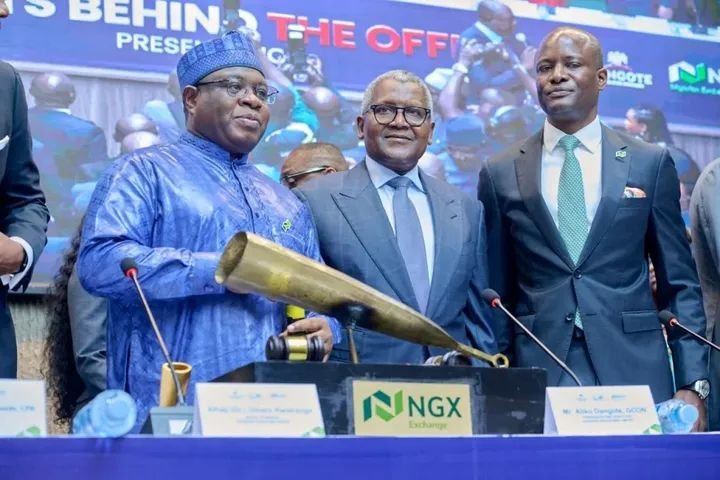
In September 2026, Dangote Petroleum Refinery and Petrochemicals advanced plans for an initial public offering aimed at raising approximately $1.6 billion, with proceeds intended to support its expansion programme.
Reuters reported on September 7, 2026, that the company planned to expand its capacity to 1.4 million barrels per day as part of a wider investment programme estimated at $14.3 billion.
The share offering provides a route for investors to participate in the company while helping it mobilise capital for its next phase of development.
On October 12, 2026, Reuters reported that the refinery had extended the closing date of its initial public offering to October 27 to provide additional time for investors to participate.
The offering is significant because large industrial projects require substantial long-term financing, particularly when construction involves specialised equipment, complex engineering and extensive supporting infrastructure.
Raising funds through equity markets can allow a company to obtain capital without relying entirely on borrowing.
However, investors must also consider the commercial risks associated with the project, including construction costs, operational performance, crude supply, regulatory conditions and future demand for refined products.
The expansion’s eventual financial performance will depend on whether the additional capacity generates sufficient revenue to justify the investment.
The company’s ability to execute the project within its planned schedule and budget will therefore be an important consideration for shareholders and other stakeholders.
Implications for Jobs and Industrial Development
The planned expansion could create employment opportunities during construction and subsequent operations.
Large refinery projects require engineers, technicians, construction workers, logistics specialists, safety personnel and other skilled professionals.
Additional industrial activity may also generate indirect employment for suppliers, transport operators, maintenance contractors and businesses providing services to the facility.
However, the number of jobs that will be created by the expansion has not been established in the information reviewed for this report. It would therefore be premature to assign a specific employment figure to the project.
The expansion could also strengthen demand for supporting industries, including equipment maintenance, industrial services, storage, transportation and petrochemical production.
These opportunities could benefit Nigerian businesses if local companies have the technical capacity and commercial access required to participate in the supply chain.
The long-term development impact will depend partly on how effectively the project builds domestic technical expertise and creates opportunities for Nigerian workers and suppliers.
For the country, the broader objective is not simply to increase the size of one industrial facility. It is also to strengthen the connections between large-scale investment, local businesses, workforce development and economic productivity.
Environmental and Infrastructure Considerations
A refinery expansion of this scale also requires careful management of environmental and operational risks.
Petroleum refining involves emissions, industrial waste, energy consumption and the handling of potentially hazardous materials. Increasing processing capacity makes effective environmental controls, safety systems and regulatory oversight particularly important.
The project will need to meet applicable environmental requirements and maintain operational safeguards as new facilities are constructed and integrated.
Water management, emissions control, waste treatment and emergency preparedness are among the issues relevant to large industrial operations.
The expansion will also place additional demands on supporting infrastructure, including power supply, pipelines, storage facilities, marine transportation and logistics systems.
If those systems do not expand in line with processing capacity, they could limit the refinery’s ability to operate efficiently.
Effective planning will therefore require coordination between the company, relevant regulators, infrastructure providers and other stakeholders.
Transparent reporting on environmental compliance, operational safety and project implementation would help the public assess the wider impact of the investment.
What Happens Next?
The next major milestones include completing the remaining engineering and construction activities, installing the required equipment, integrating the new processing units and conducting operational tests.
The company’s stated objective is to bring the refinery’s capacity to 1.4 million barrels per day by early 2029.
Whether that schedule is achieved will depend on construction progress, equipment delivery, financing, reliable crude oil supplies and the successful commissioning of the expanded facilities.
The refinery will also need to demonstrate that it can sustain operations at the higher capacity while meeting applicable safety, environmental and product-quality requirements.
Beyond the construction timetable, the performance of the expanded facility will be measured by its actual throughput, product availability, export performance and contribution to the domestic petroleum market.
For Nigeria, the potential benefits include greater domestic processing capacity, opportunities for industrial employment and an expanded role in regional energy trade.
Those benefits, however, will depend on execution rather than capacity targets alone.
If the project is completed successfully and supplied with sufficient crude oil, the expanded refinery could become an even more significant part of Nigeria’s industrial and energy infrastructure.
For now, early 2029 remains the target announced for the expansion, with the final outcome dependent on the progress of construction and the refinery’s ability to overcome its operational and supply challenges.
Weng Global – stories beyond borders
Sources
- Dangote Petroleum Refinery and Petrochemicals — official corporate information on current refining capacity and expansion plans.
- Reuters — reporting on the refinery’s $14.3 billion expansion programme and public offering, September 7, 2026.
- Reuters — reporting on the extension of the refinery’s initial public offering, October 12, 2026.
- Bloomberg — reporting on the expansion timeline and construction progress, September 24, 2026.
- Premium Times — reporting on crude oil supply challenges affecting the refinery’s expansion plans, September 2026.