Reported by Simon Daniel Yusuph l Journalist at Weng Global
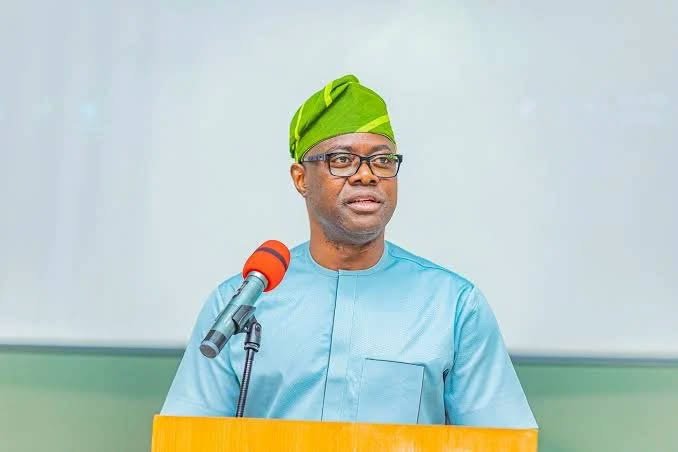
Oyo State Governor Seyi Makinde has revealed how President Bola Ahmed Tinubu selected Adebayo Adelabu for a ministerial appointment in 2023 despite his recommendation of former Oyo State Commissioner for Finance Bimbo Adekanmbi, reopening debate over the political understandings that preceded the last presidential election.
Makinde made the disclosure during a media interview on Fresh FM in Ibadan, where he reflected on his interactions with Tinubu following the 2023 election and questioned whether the political expectations surrounding their relationship had been fulfilled.
According to reports published on October 12, 2026, the governor said he recommended Adekanmbi because of his professional background and experience in public financial management. Tinubu, however, opted for Adelabu, who subsequently became Minister of Power.
The account offers a glimpse into the negotiations and political relationships that shaped ministerial appointments after the 2023 election. It also highlights the distinction between a governor recommending a candidate for federal office and the president exercising the constitutional authority to nominate ministers.
Makinde’s remarks form part of a wider discussion about the political alliance involving the G5 governors, their positions during the 2023 presidential election and the expectations of cooperation that followed.
How Makinde Says the Ministerial Discussion Began
Makinde said he approached Tinubu after the election to discuss the representation of Oyo State in the incoming federal cabinet.
According to the governor’s account, Tinubu asked him to recommend someone with the professional expertise needed for a role connected to budget preparation and economic planning.
Makinde said he considered Adekanmbi suitable for the position because of his experience in public finance and his previous service under the administration of the late Oyo State governor, Abiola Ajimobi.
Adekanmbi served as Oyo State commissioner for finance and budget planning during Ajimobi’s administration. Makinde said his assessment of Adekanmbi’s record influenced the recommendation.
The governor also explained that he was prepared to consider a candidate’s professional ability regardless of political affiliation, arguing that capable individuals should be given opportunities to contribute to public administration.
His account suggests that he viewed the proposed appointment primarily through the lens of professional competence and the potential contribution the nominee could make to government.
However, the president ultimately selected Adelabu, a former deputy governor of the Central Bank of Nigeria, for a ministerial position.
The reported exchange does not establish that Tinubu was legally required to accept Makinde’s recommendation. Rather, it illustrates how political consultations over appointments can differ from the final decisions made by the president.
Why Tinubu Selected Adebayo Adelabu
Adelabu was appointed Minister of Power in August 2023 after Tinubu formed his cabinet.
Before joining the federal government, Adelabu had built a career in finance and banking, including serving as deputy governor of the Central Bank of Nigeria. He had also contested the Oyo State governorship election against Makinde.
The two politicians had faced each other in the 2019 governorship election, which Makinde won. Adelabu later contested the 2023 election under the Accord Party but again lost to the incumbent governor.
Tinubu’s decision to appoint Adelabu therefore brought a prominent Oyo politician with previous electoral experience into the federal cabinet.
Makinde said he recognised Adelabu’s professional qualifications but had nevertheless recommended Adekanmbi for the appointment.
According to reports of the interview, the governor said Tinubu subsequently suggested that Makinde present Adelabu’s appointment as his own preferred choice.
Makinde said he rejected that suggestion, insisting that the president should be identified as the person who made the final decision.
The account is significant because it shows that the disagreement was not necessarily about whether Adelabu possessed professional qualifications. Instead, Makinde’s explanation focused on his preference for another candidate and the question of who should take responsibility for the appointment.
Tinubu’s own detailed explanation for choosing Adelabu over Adekanmbi was not included in the reports reviewed. It would therefore be premature to conclude that the decision was made for a specific political reason without further evidence.
Makinde Revisits the 2023 Political Alliance
The governor’s disclosure also brought renewed attention to the political calculations surrounding the 2023 presidential election.
Makinde was one of the governors associated with the G5, a group of five Peoples Democratic Party governors who opposed the party’s presidential candidate, Atiku Abubakar, amid disagreements over party leadership and the distribution of political power.
The group included Makinde, Nyesom Wike of Rivers State, Samuel Ortom of Benue State, Okezie Ikpeazu of Abia State and Ifeanyi Ugwuanyi of Enugu State.
Their opposition to Atiku’s candidacy created a significant challenge for the PDP during the election campaign. The governors argued that questions concerning party leadership and regional balance needed to be addressed.
Tinubu, the presidential candidate of the All Progressives Congress, eventually won the February 2023 election.
Makinde’s latest comments revisit the political understanding that, according to him, informed his support for Tinubu during that period.
The governor said he and other political actors supported Tinubu in the hope that his administration would bring political stakeholders together and pursue a government of national unity.
He also referred to Nigeria’s security and economic difficulties at the time, including insurgency, banditry, kidnapping and other forms of violence affecting different parts of the country.
Makinde’s account suggests that his expectations extended beyond the election itself to how the incoming administration would accommodate different political interests and work across party lines.
However, political support during an election does not automatically establish an agreement over specific appointments. The precise terms of any understanding would need to be assessed through documented agreements or statements from the people involved.
The Question of Political Expectations
Makinde’s account raises a broader question about the expectations politicians develop when they cooperate across party lines.
Political alliances can involve shared objectives, negotiations over representation and expectations of consultation. Yet those arrangements do not necessarily guarantee that every participant’s preferred candidate will receive an appointment.
In Nigeria’s federal system, the president nominates ministers, subject to confirmation by the Senate. Governors and other political leaders may recommend candidates, but the final selection rests with the president.
The constitutional arrangement allows the president to consider professional qualifications, political considerations, regional representation and the administration’s policy priorities when assembling a cabinet.
Governors, meanwhile, may seek to influence appointments because federal decisions can affect their states’ access to national policymaking and development opportunities.
Makinde’s account illustrates the tension that can arise when a governor expects a recommendation to receive serious consideration but the president chooses another candidate.
It does not, by itself, prove that an agreement was breached. That conclusion would require clearer evidence of the commitments made and the expectations mutually accepted by the parties.
The governor’s comments should therefore be understood as his account of the discussions, rather than an independently established record of every aspect of the political negotiations.
Adelabu’s Tenure as Minister of Power
Adelabu assumed office as Minister of Power in August 2023, taking responsibility for a sector facing persistent challenges involving electricity generation, transmission infrastructure, distribution and the financial sustainability of the electricity market.
Nigeria’s power sector has long struggled with inadequate and inconsistent electricity supply, leaving households and businesses dependent on a combination of grid electricity, generators and other alternatives.
The minister’s responsibilities included working with government agencies and industry stakeholders to address the sector’s operational and financial problems.
The Federal Government introduced and pursued several policy measures during Tinubu’s administration, including the Electricity Act 2023, which established a framework for greater participation by state governments and other actors in electricity markets.
Nevertheless, the sector continued to face significant structural difficulties, including gas supply constraints, outstanding debts and infrastructure limitations.
Adelabu’s appointment was therefore consequential beyond the political circumstances surrounding his selection. He took charge of a sector central to industrial production, employment, business operating costs and household welfare.
Adelabu later left the ministry in 2026 to pursue his political ambitions in Oyo State. President Tinubu subsequently swore in Joseph Olasunkanmi Tegbe as the new Minister of Power in June 2026.
This means the ministerial appointment discussed by Makinde is now part of the political history of the current administration rather than a change in the ministry’s present leadership.
What Makinde’s Account Says About Presidential Appointments
The disclosure provides an example of how political consultations can influence the discussions preceding ministerial appointments without determining the final outcome.
A governor may recommend a candidate based on personal knowledge, professional experience or the candidate’s record in state government. The president may then assess that recommendation against other considerations before making a decision.
In this case, Makinde said he preferred Adekanmbi, while Tinubu selected Adelabu.
The available reporting does not establish that Adekanmbi was formally nominated through every stage of the constitutional appointment process. The governor described recommending him to the president.
That distinction matters because a political recommendation, a formal presidential nomination and Senate confirmation are separate stages of the ministerial appointment process.
The account also demonstrates why public explanations of political decisions are important. They help citizens understand how senior appointments are made and what role political negotiations may play in the process.
However, explanations offered by one participant should be distinguished from independently documented facts, especially when another party’s account of the same discussion is unavailable.
Neither Tinubu’s detailed response to Makinde’s latest account nor a separate public explanation from Adekanmbi was established in the reports reviewed.
What Happens Next?
Makinde’s comments are likely to remain part of the discussion about the G5 alliance, the 2023 presidential election and the relationships between federal and state political leaders.
The central issue is whether the political cooperation described by the governor produced the outcomes he and other participants expected.
His account of the ministerial appointment is one example of how those expectations were tested. It does not, on its own, settle the wider debate about the alliance’s benefits or consequences.
Further clarification from the participants could provide additional information about the discussions surrounding the appointment and the political commitments made during the period.
For now, the established core of the story is that Makinde says he recommended Adekanmbi, but Tinubu selected Adelabu for the ministerial position in 2023.
The episode underscores the difference between political consultation and the president’s final authority over cabinet appointments. It also highlights the importance of distinguishing personal recollections, political interpretations and documented facts when assessing the relationships that shape Nigeria’s government.
For citizens, the wider question remains how political appointments translate into competent leadership, accountable government and policies that improve public welfare.
Weng Global – stories beyond borders
Sources
- Premium Times — report on Makinde’s account of Tinubu selecting Adelabu over Adekanmbi, October 12, 2026.
- The Federal Ministry of Power — official announcement of Adelabu’s assumption of office in August 2023.
- The State House, Abuja — official announcement of Joseph Olasunkanmi Tegbe’s swearing-in as Minister of Power in June 2026.
- Punch Newspapers — previous reporting on Makinde’s comments concerning Adelabu and political organisation in Oyo State.