Reported by Simon Daniel Yusuph l Journalist at Weng Global
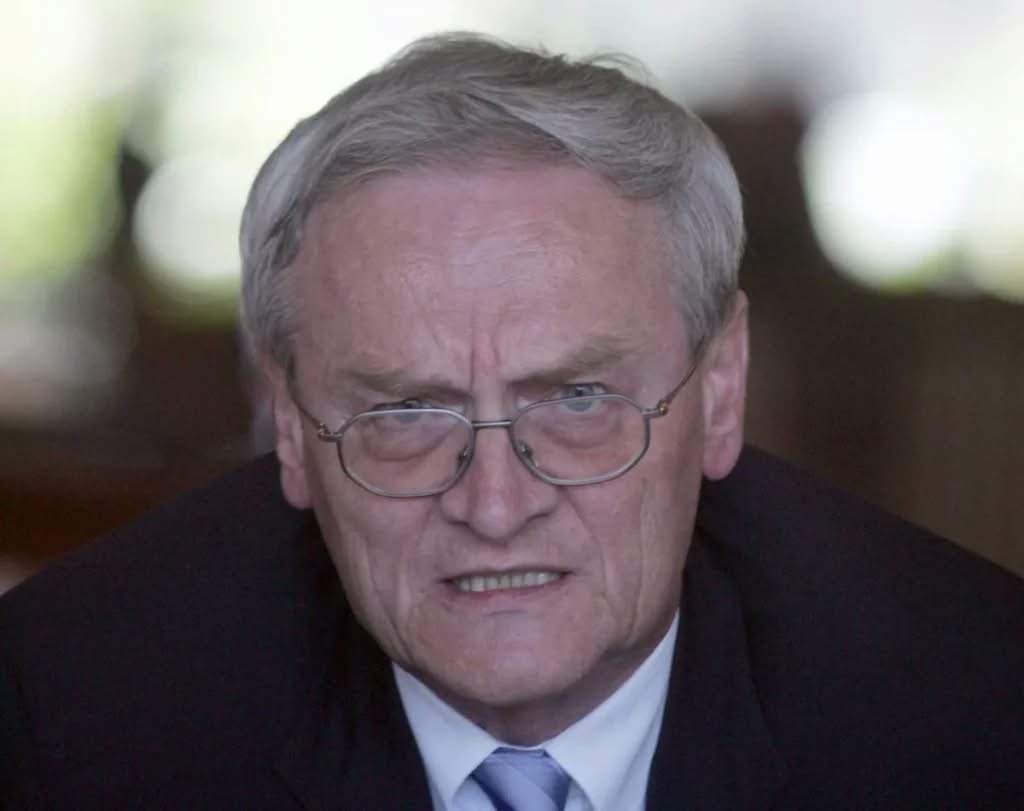
Germany has arrested former Federal Intelligence Service (BND) president August Hanning on suspicion of treasonous espionage, obtaining state secrets, attempted treason and acting as an agent for a foreign intelligence service, in a case that has raised serious questions about the handling of classified information inside one of Germany’s most sensitive institutions.
German federal prosecutors said on Tuesday, October 6, 2026, that Hanning and another German national, identified as Manfred D., were arrested under warrants issued by an investigating judge at Germany’s Federal Court of Justice.
Authorities also began searches of premises linked to the suspects in Bavaria, North Rhine-Westphalia and Berlin.
Hanning, 80, headed Germany’s foreign intelligence service from 1998 to 2005. He later served as a state secretary at the Federal Interior Ministry before leaving government service in 2009.
Former Intelligence Chief at Centre of Espionage Investigation
The arrest places a former head of Germany’s foreign intelligence service at the centre of a major national-security investigation.
According to the Federal Prosecutor’s Office, Hanning is strongly suspected of several offences under German law, including treasonous espionage, spying out state secrets, attempted treason and secret-service agent activity.
Manfred D., who was also arrested, is suspected of aiding and abetting attempted treason and treasonous espionage.
The authorities have not publicly identified the foreign intelligence service that Hanning is suspected of working with.
Reuters reported that prosecutors believe Hanning obtained classified documents and used them to prepare an analysis for a foreign intelligence officer. The identity of the foreign service has not been disclosed, while German reporting cited by Reuters indicated that Russia was not implicated in the case.
The distinction is important because the allegations remain subject to investigation. Hanning has been arrested on suspicion of crimes; the arrest itself does not establish guilt.
Alleged Access to Classified BND Material
The investigation centres partly on allegations that Hanning continued receiving confidential information from the BND after leaving his position as the agency’s president.
German broadcaster ZDF reported that Hanning allegedly received secret information for years from Manfred D., who had worked as an office manager for successive BND presidents. According to ZDF, D. held that role from March 2012 until March 2026.
Reports from German media cited in the investigation say the material included sensitive BND documents and intelligence assessments.
Reuters reported that investigators believe roughly 2,000 classified documents may have been obtained. The reported material included internal BND documents and high-level intelligence briefings prepared for the German Chancellery.
Other German reports have described material involving intelligence from foreign partner services and sensitive assessments concerning issues including Iran’s nuclear programme and the Russian military. Those details have been reported by German media and remain part of the investigation rather than established findings against Hanning.
How Investigators Discovered the Suspected Leak
The investigation reportedly emerged from a separate case involving German businesswoman Christina Block.
German authorities searched premises connected to Hanning in September 2025 during an investigation related to an alleged child abduction case involving Block. According to German media reports, investigators examining seized digital material subsequently discovered BND documents.
That discovery ultimately led investigators towards the suspected intelligence leak and the wider allegations now being handled by Germany’s Federal Prosecutor’s Office.
The development illustrates how investigations into apparently unrelated matters can uncover evidence relevant to national-security cases, particularly when digital devices contain information from multiple areas of a suspect’s activities.
Hanning’s Background in German Intelligence
August Hanning is a prominent figure in Germany’s post-Cold War security establishment.
He served as president of the BND from December 1998 until November 2005. The BND is Germany’s foreign intelligence service and is responsible for collecting and analysing intelligence outside the country.
After leaving the BND, Hanning became a state secretary at Germany’s Federal Interior Ministry, where he remained until 2009.
His previous position means the allegations carry particular significance. A former intelligence chief would have extensive knowledge of the way classified information is handled, the sensitivity of intelligence assessments and the potential consequences of disclosure.
However, his previous access and expertise do not by themselves establish that he committed the offences now under investigation.
What Prosecutors Are Alleging
The Federal Prosecutor’s Office has identified four principal areas of suspicion against Hanning.
They include:
- Treasonous espionage
- Obtaining state secrets
- Attempted treason
- Acting as an agent for a foreign intelligence service
The prosecutor’s office also accuses Manfred D. of aiding and abetting attempted treason and treasonous espionage.
The terminology reflects serious offences under Germany’s criminal law.
Prosecutors are now investigating not only whether classified information was improperly obtained but also what happened to that information and whether it was provided to foreign intelligence interests.
That distinction could prove critical to the case.
Was Information Passed to a Foreign Power?
One of the most important unanswered questions is whether classified German intelligence actually reached a foreign state or intelligence organisation.
Reuters reported that prosecutors believe Hanning used material obtained from the BND to prepare an analysis for a foreign intelligence officer and that he allegedly shared political assessments with a foreign intelligence service over a period of years.
German and international reports have not publicly identified the alleged foreign intelligence service.
The Federal Prosecutor’s Office’s announcement confirms the espionage-related allegations but does not publicly name the foreign power involved.
Until investigators establish the chain of transmission, it remains important to distinguish between the alleged acquisition of classified information and the separate question of whether that information was successfully transferred to a foreign intelligence service.
Former BND Employee Also Arrested
Manfred D. is the second major figure in the investigation.
He is suspected of helping Hanning obtain classified information and faces allegations of aiding and abetting attempted treason and treasonous espionage.
German broadcaster ZDF reported that D. worked as an office manager for several BND presidents and remained in that position until March 2026.
The alleged involvement of an individual with continuing links to the intelligence service could raise questions about internal security controls, access privileges and procedures for protecting classified material after officials leave sensitive positions.
German Intelligence Service Responds
The case has also prompted scrutiny within the BND itself.
Reuters reported that BND President Martin Jaeger said an internal investigation was launched immediately following the developments in order to uphold national-security standards.
The BND’s response is significant because the investigation concerns not only an alleged external espionage operation but also the reported removal of sensitive material from within Germany’s own intelligence system.
The case could therefore lead to renewed examination of how former officials, contractors and current employees access classified records.
Why the Case Matters
The arrest is significant beyond the individuals involved because intelligence agencies depend fundamentally on secrecy and institutional trust.
Classified intelligence can contain assessments of foreign governments, military capabilities, diplomatic positions, security threats and information supplied confidentially by partner agencies.
If such material is improperly removed or passed to an unauthorised recipient, the consequences can extend beyond Germany.
Foreign intelligence partners may reconsider what information they share with German agencies if they believe sensitive material is not adequately protected.
For Germany, the investigation could therefore become a test of the resilience of its intelligence-security system.
It also comes at a time when European governments are increasingly concerned about espionage, intelligence operations and attempts by foreign actors to obtain sensitive government information.
A Reminder of Germany’s History of Intelligence Scandals
Germany has experienced major intelligence controversies before.
The country’s security institutions have historically faced cases involving the disclosure of classified information and foreign espionage.
One of the most prominent examples came in the 1970s, when the discovery that a close aide to Chancellor Willy Brandt was an East German spy contributed to Brandt’s resignation in 1974.
The current case is different in important respects and should not be treated as equivalent to previous scandals. However, the arrest of a former intelligence chief demonstrates how damaging suspected breaches of classified information can be for public confidence.
No Foreign Power Publicly Identified
Despite reports about alleged contacts with foreign intelligence officials, German authorities have not publicly named the foreign service allegedly connected to the case.
This is one of the areas where caution is particularly important.
Attributing an espionage operation to a specific country without confirmation could have diplomatic consequences and could also compromise an ongoing investigation.
For now, the confirmed position is that prosecutors suspect Hanning of intelligence activity involving a foreign service. The identity of that service has not been publicly disclosed by the Federal Prosecutor’s Office.
What Happens Next
The investigation is expected to focus on the origin, handling and destination of the classified material allegedly obtained by Hanning.
Authorities will need to establish:
- How the documents were obtained.
- How long the alleged transfer of information continued.
- What categories of classified information were involved.
- Whether foreign intelligence personnel received the material.
- Whether any information was used for a foreign intelligence purpose.
- What role Manfred D. allegedly played.
- Whether additional individuals were involved.
The searches conducted in Bavaria, North Rhine-Westphalia and Berlin could provide investigators with further evidence.
The legal process will also determine whether prosecutors can substantiate the allegations sufficiently for further proceedings.
At this stage, the allegations remain allegations, and Hanning has not been convicted of any offence.
What Readers Should Know
The central fact is straightforward: Germany has arrested its former foreign intelligence chief over serious allegations involving classified information and suspected foreign intelligence activity.
The Federal Prosecutor’s Office says there is strong suspicion that Hanning committed offences including treasonous espionage, obtaining state secrets, attempted treason and acting as an intelligence agent. A former BND employee has also been arrested over alleged assistance.
But several major questions remain unanswered, particularly the identity of any foreign intelligence service involved and the extent to which classified information was actually transferred abroad.
The investigation will determine whether the allegations can ultimately be proven.
For now, the case represents one of the most serious espionage investigations involving a former senior German intelligence official in recent years.
Weng Global – stories beyond borders
Sources
Federal Prosecutor’s Office of Germany
Reuters
Associated Press
ZDF
ARD Tagesschau
Deutsche Welle
The Guardian
Al Jazeera
Handelsblatt