Reported by Simon Daniel Yusuph l Journalist at Weng Global
President Bola Ahmed Tinubu has declared three days of national mourning following the death of 32 people in a Nigerian Air Force aircraft crash in Ondo State, directing that national flags be flown at half-mast across the country in honour of the victims.
The Nigerian Air Force ATR-42 aircraft crashed on Monday, October 5, 2026, near a naval base in the Igbokoda area of Ilaje Local Government Area, Ondo State, while travelling from Benin City in Edo State to Lagos on what authorities described as a routine mission.
The aircraft was carrying 25 passengers and seven crew members. President Tinubu subsequently mourned those who died and ordered the Nigerian Air Force to conduct a thorough investigation into the cause of the accident.
The crash has plunged Nigeria’s Armed Forces into mourning and raised fresh questions about military aviation safety, aircraft maintenance, operational procedures and the need for transparent investigations whenever military aircraft are involved in serious accidents.
National Mourning Declared
Tinubu announced the three-day national mourning period on Monday after receiving briefings on the crash.
According to the Presidency, the President directed that flags should be flown at half-mast throughout Nigeria as a mark of respect for the Air Force personnel who lost their lives.
The decision reflects the significance of the loss to the Nigerian Armed Forces, where personnel routinely undertake missions involving national security, surveillance, transportation, logistics and other military responsibilities.
In his condolence message, Tinubu described the incident as a painful moment for the Armed Forces and the country, stressing that Nigerian Air Force personnel regularly put their lives at risk in the service of the nation.
The President also expressed condolences to the families of those on board, as well as to officers, airmen and airwomen of the Nigerian Air Force.
The names of the deceased officers were not immediately released because authorities said their families would first have to be contacted.
What Happened in Ondo
The aircraft involved was an ATR-42 operated by the Nigerian Air Force.
According to information released by Aviation Minister Festus Keyamo, air traffic controllers lost contact with the aircraft at about 9:13 a.m. local time on Monday while it was travelling towards Lagos from Benin.
Attempts to establish radio communication with the aircraft were unsuccessful.
Authorities later confirmed that the aircraft had crashed near the Naval Base in Igbokoda, a coastal community in Ondo State. The wreckage was subsequently located, prompting search-and-rescue operations involving the military and other emergency responders.
The Nigerian Air Force said the aircraft was on a routine mission from Benin to Lagos when the accident occurred.
The ATR-42 is used by the Nigerian military for specialised operations, including intelligence, surveillance and reconnaissance missions, as well as transportation and other operational duties.
The aircraft’s tail number was identified as NGR 931.
All 32 People On Board Died
Initial reports released shortly after the crash focused on the search-and-rescue operation because authorities had not immediately confirmed the fate of those aboard.
The Ministry of Aviation initially said there were 25 passengers and seven crew members on the aircraft and that rescue teams were working at the crash site.
As information from the authorities developed, the Presidency confirmed the deaths of those aboard, while Reuters and other established news organisations subsequently reported that all 32 people on the aircraft had died.
The development transformed what had initially been a rescue operation into a national tragedy.
It also highlighted the difficulty of obtaining immediate casualty information during military aircraft accidents, particularly when crashes occur in difficult terrain and authorities are still working to locate wreckage and establish the condition of those aboard.
For families awaiting information about their relatives, the period between the crash and official confirmation was inevitably one of profound uncertainty.
Families at the Centre of the Tragedy
Beyond the military significance of the crash are the individual lives lost.
Every person aboard the aircraft was connected to a family, community and network of colleagues and friends. The loss therefore extends well beyond the Nigerian Air Force as an institution.
Tinubu specifically acknowledged the families affected by the tragedy and offered condolences to them.
The Presidency said the Air Force would release the names of the officers involved after their families had been contacted.
That process is important not only for identification but also for ensuring that families receive official information before names are publicly circulated.
The tragedy also demonstrates the personal risks associated with military service. Personnel involved in aviation, surveillance, transport and other operational duties routinely work in environments where equipment failure, weather, technical problems and operational hazards can have severe consequences.
Tinubu Orders Thorough Investigation
One of the President’s most significant directives following the crash is the order for a thorough investigation into its cause.
Tinubu said the Nigerian Air Force must determine what led to the accident and use the findings to help prevent similar occurrences in the future.
The order means the immediate focus will now shift from emergency response to establishing the circumstances surrounding the crash.
Investigators will be expected to examine the aircraft’s maintenance history, operational records, flight information, communications, weather conditions, crew procedures and other relevant factors.
However, the precise cause of the crash remains unknown at this stage.
It would therefore be premature to attribute the accident to mechanical failure, human error, weather, maintenance shortcomings or any other specific factor before investigators establish the evidence.
The distinction is important because early assumptions surrounding aviation accidents can later prove inaccurate.
A credible investigation should provide the factual basis needed to determine what happened and whether corrective action is required.
Search and Rescue Response
The Nigerian Air Force activated a search-and-rescue operation after the aircraft disappeared and the crash was confirmed.
Aviation Minister Festus Keyamo also said he had spoken with the Chief of Air Staff and pledged the Ministry of Aviation’s cooperation and assistance in the response.
The wreckage was located near the naval base at Igbokoda, with emergency teams deployed to the area.
Tinubu commended the Nigerian Air Force for activating the rescue operation and also praised first responders and the Ondo State Government for their response at the crash site.
The operation was complicated by the location of the crash in the Igbokoda area, where swampy and coastal terrain presented additional challenges for responders.
Why the Investigation Matters
The investigation will be closely watched because military aviation accidents have consequences beyond the immediate loss of personnel.
Military aircraft are essential to Nigeria’s national security architecture. The Air Force depends on aircraft for surveillance, reconnaissance, transportation, logistics, emergency response and operations in different parts of the country.
When an aircraft is lost, the country loses not only personnel but also a strategic military asset.
A comprehensive investigation can therefore help determine whether the accident resulted from an isolated circumstance or whether broader safety issues need to be addressed.
If investigators identify technical, maintenance, training, operational or procedural weaknesses, the findings could inform changes designed to reduce future risks.
Transparency will also be important.
Families of the victims, military personnel and the wider public have a legitimate interest in knowing what happened. At the same time, investigators must be allowed to conduct their work without premature conclusions or political pressure.
Renewed Focus on Military Aviation Safety
The Ondo crash is likely to renew public attention on the safety record of Nigeria’s military aviation fleet.
Nigeria has previously experienced fatal military aircraft accidents involving both fixed-wing aircraft and helicopters.
Such incidents have repeatedly raised questions about aircraft age, maintenance, operational demands, training, procurement and safety oversight.
However, each accident must be investigated on its own evidence.
It would be inappropriate to conclude that the cause of the Ondo crash was connected to previous incidents without findings from the relevant investigation.
What can be established now is that the latest accident has resulted in a significant loss of life and the destruction of a Nigerian military aircraft.
The investigation therefore provides an opportunity for authorities to establish the facts and determine whether additional safety measures are required.
The Human Cost Behind the Uniform
The national mourning announced by Tinubu also serves as a reminder that military personnel are not simply numbers attached to operational statistics.
Behind every uniform is a person with relatives, responsibilities, friendships and a life outside official duties.
For the families of the victims, the loss is personal and permanent.
For colleagues in the Nigerian Air Force, it is also the loss of fellow personnel with whom they shared the demands and responsibilities of military service.
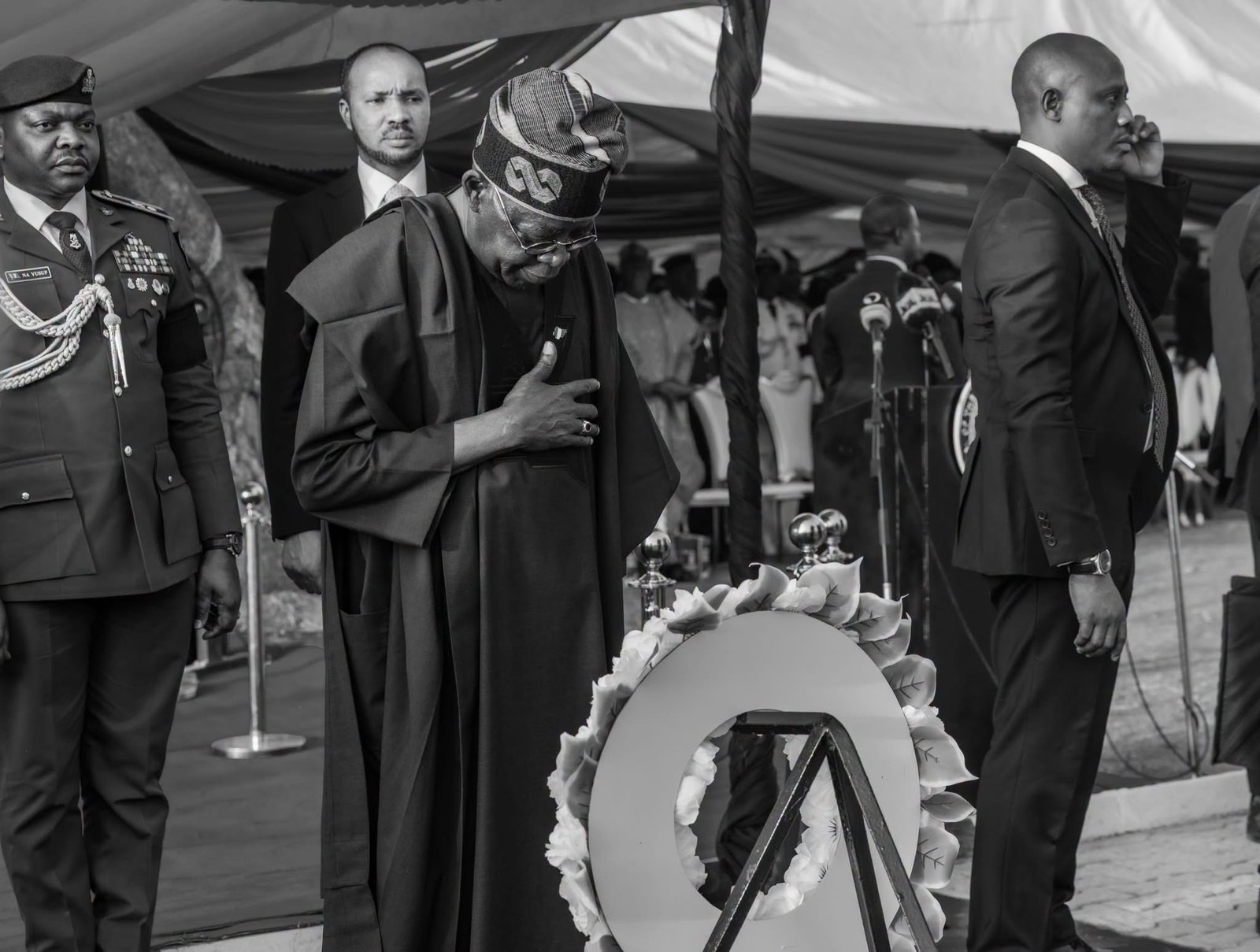
The President’s decision to lower national flags to half-mast provides a symbolic national expression of grief, but the longer-term responsibility lies in ensuring that the circumstances surrounding the accident are properly established.
Honouring those who died should include remembering their service while also learning from the circumstances of their deaths.
What Happens Next
The Nigerian Air Force is expected to continue its investigation into the accident.
The immediate priority will be to establish the identities of all victims, complete the necessary recovery and identification procedures, secure relevant evidence and determine the circumstances leading to the crash.
Investigators will also need to reconstruct the aircraft’s final moments using available flight records, communications and technical evidence.
The results of the investigation could determine whether changes are required in aircraft maintenance, operational procedures, training or other areas of military aviation.
The public should therefore be cautious about claims concerning the cause of the crash until competent authorities release verified findings.
The three-day national mourning period will also continue as Nigeria honours the victims.
A Nation Mourns
The Ondo aircraft crash represents a profound loss for Nigeria’s Armed Forces and for the families of those who died.
President Tinubu’s declaration of three days of national mourning and his order for flags to fly at half-mast provide an official expression of the country’s grief.
But the tragedy also creates a responsibility beyond mourning.
The country needs a credible account of what happened.
The families of the victims deserve accurate information. The Nigerian Air Force deserves lessons that can strengthen safety. And Nigerians deserve confidence that every reasonable measure will be taken to prevent avoidable loss of life in future military aviation operations.
For now, Nigeria mourns the 32 people who died in the crash.
The investigation into what caused the tragedy will determine what lessons must be learned.
The names and individual stories of the victims will eventually give a human face to the national grief. Until then, the country remains united in mourning the personnel and other people who lost their lives while travelling aboard a Nigerian military aircraft.
President Tinubu’s message has placed the tragedy in its broader national context: the men and women serving Nigeria’s Armed Forces accept significant risks in carrying out their duties, but the nation also has a responsibility to ensure that those risks are understood, investigated and reduced wherever possible.
Weng Global – stories beyond borders
Sources
- The State House, Abuja — Official statements by President Bola Ahmed Tinubu on the Ondo Nigerian Air Force aircraft crash, national mourning, flags at half-mast and the investigation.
- Nigerian Air Force — Information on the ATR-42 aircraft and its routine mission from Benin to Lagos.
- Federal Ministry of Aviation and Aerospace Development — Statement by Aviation Minister Festus Keyamo on the aircraft’s disappearance, location of the wreckage and the 25 passengers and seven crew members aboard.
- Reuters — Reporting confirming that all 32 people aboard the aircraft died and providing details of the crash.
- Associated Press (AP) — Reporting on the crash, the aircraft, the search-and-rescue operation and the circumstances surrounding the incident.
- Premium Times — Nigerian reporting on the crash, the aircraft’s mission and the reported deaths of those aboard.
- Channels Television — Reporting on the crash and official statements from Nigerian authorities.