Reported by Simon Daniel Yusuph l Journalist at Weng Global
An All Progressives Congress (APC) chieftain, Gloria Akobundu, has urged Nigerian women to support President Bola Ahmed Tinubu’s bid for a second term in the 2027 presidential election, arguing that the country is on a path to what she described as “renewed greatness.”
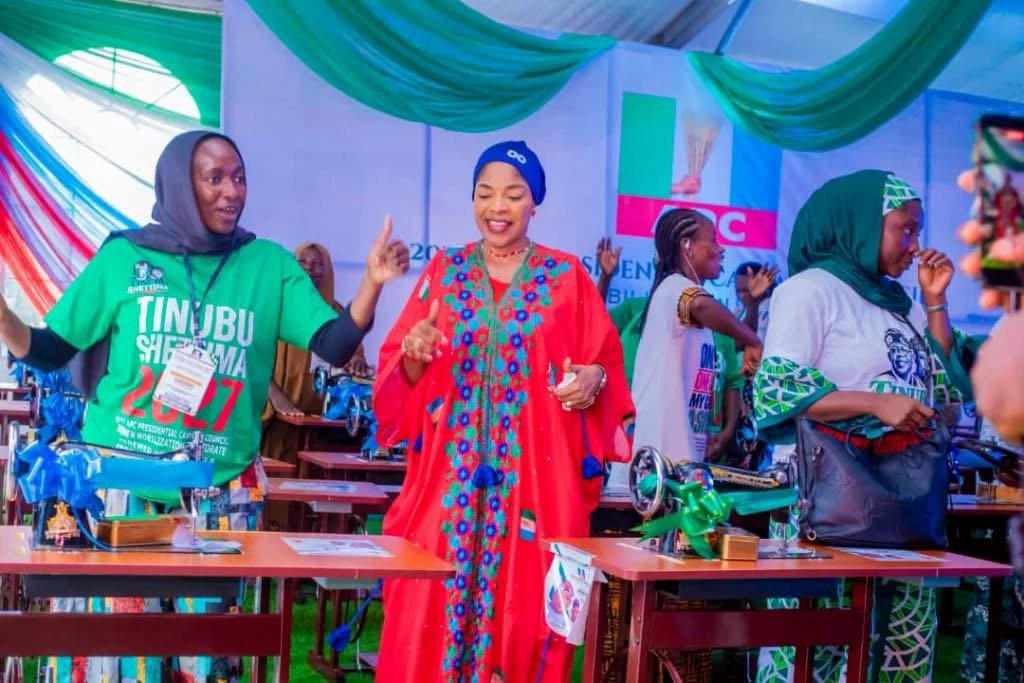
Akobundu made the call on Monday in Abuja at the APC Women Stakeholders’ Mobilisation and Empowerment Pre-Inaugural Summit convened by First Lady Oluremi Tinubu as part of the ruling party’s preparations for the 2027 general elections.
The summit brought together APC women leaders, grassroots organisers, political stakeholders and representatives of more than 500 women support groups, according to organisers and reports from the News Agency of Nigeria (NAN) and other Nigerian media outlets.
Akobundu Calls for Continuity
Akobundu, a member of the APC Presidential Campaign Council Women Mobilisation Wing and secretary of its faith-based mobilisation structure for Christians, said continuity was necessary to consolidate what she described as reforms already initiated by the Tinubu administration.
She urged women voters across the country, particularly those in the South-East, to support Tinubu and the APC in the 2027 election.
“Nigeria is on the path of renewed greatness. Continuity is essential if we are to complete the transformation that has begun,” Akobundu said, according to NAN.
Her remarks were made within the context of the APC’s ongoing political mobilisation ahead of the 2027 elections.
Akobundu also urged women to communicate the administration’s policies and programmes at the grassroots and encourage greater participation in the electoral process.
More Than 500 Women Groups Back Tinubu
A major development at the Abuja summit was the reported integration of more than 500 women support groups from across Nigeria’s six geopolitical zones into the APC Presidential Campaign Council Women Wing.
According to reports from NAN and Punch, the groups endorsed Tinubu’s re-election bid.
The reported groups include independent women-support platforms and grassroots mobilisation organisations.
The development gives the APC’s women mobilisation structure a broader organisational base as the ruling party prepares for what is expected to be a highly competitive 2027 presidential contest.
However, the reported endorsements represent the positions of the participating groups and should not be interpreted as evidence of the preferences of Nigerian women as a whole.
First Lady Leads Mobilisation Drive
The summit was convened by First Lady Oluremi Tinubu as part of efforts to strengthen the APC’s women mobilisation structure ahead of the 2027 election.
The event was themed “Renewed Hope Agenda 2.0: From Reforms to Prosperity”, while the mobilisation message was “One Voice, One Movement, One Choice, One Mandate 2027.”
The gathering followed an earlier announcement that more than 20,000 women stakeholders were expected to participate in the mobilisation programme in Abuja.
The campaign structure includes women leaders, professionals, entrepreneurs, community representatives, faith-based mobilisers and grassroots organisers.
The political objective is to strengthen the APC’s support among women voters and establish a nationwide grassroots network ahead of the election.
APC Highlights Tinubu Administration’s Programmes
In making the case for continuity, Akobundu highlighted several programmes and policies of the Tinubu administration.
Among those she cited were the Nigerian Education Loan Fund (NELFUND), infrastructure development, social protection programmes, consumer credit, digital-skills initiatives and youth empowerment.
She also referred to the Nigerian Consumer Credit Corporation (CREDICORP), which provides credit for areas including personal needs, education, home improvement and renewable energy.
Akobundu presented these programmes as evidence of the administration’s efforts to improve economic opportunities and support Nigerians.
The claims, however, represent the assessment of an APC campaign official and are therefore distinct from independent assessments of the government’s overall performance.
NELFUND and Student Financing
Akobundu also pointed to NELFUND as one of the administration’s major interventions.
According to figures she cited ahead of the summit, NELFUND had more than 1.4 million registered students, over 1.69 million loan applications and more than N191 billion in disbursements.
NELFUND was established to provide financial assistance to eligible Nigerian students through loans for education.
The scheme has become one of the administration’s prominent education policies and is likely to feature prominently in the APC’s efforts to demonstrate the impact of its policies ahead of 2027.
The figures cited by Akobundu are claims attributed to her and should be distinguished from independently audited assessments of the programme’s overall reach and impact.
Infrastructure Also Part of APC’s Case
Akobundu also highlighted infrastructure projects as part of the administration’s record.
She said more than 2,700 kilometres of highways had been constructed under the Tinubu administration, while other major roads were undergoing construction, reconstruction or rehabilitation.
Among the projects she identified were the Lagos-Calabar Coastal Highway, Sokoto-Badagry Super Highway and Abuja-Kaduna-Zaria-Kano Road.
She also referred to investments in rail, energy and housing.
Infrastructure development is expected to remain a major part of the government’s economic narrative ahead of the 2027 election, particularly as the administration seeks to demonstrate long-term investment despite the economic difficulties associated with its reforms.
Social Protection and Economic Relief
Akobundu also cited the Renewed Hope Conditional Cash Transfer Programme and other government interventions, including NG-CARES, SOLID and HOPE.
She presented the programmes as part of efforts to support vulnerable Nigerians following economic pressures associated with the removal of the petrol subsidy and other reforms.
The government’s social protection measures have become an important component of its response to the cost-of-living pressures affecting households.
At the same time, the effectiveness and reach of such interventions remain important issues for public debate, particularly as Nigerians assess the impact of economic reforms ahead of the next election.
Women as a Key Electoral Constituency
The APC’s decision to intensify its women mobilisation effort reflects the importance of women in Nigeria’s electorate.
Women constitute a major proportion of registered voters and are central to grassroots political organisation across the country’s states and local government areas.
Political parties therefore routinely seek to build strong networks among women through campaign structures, community organisations and political associations.
For the APC, strengthening this network ahead of 2027 could be particularly important as the party seeks to defend the presidency and maintain its influence across the states and federal legislature.
Akobundu specifically called for stronger mobilisation in the South-East, where the APC will seek to expand its electoral support.
Six Zonal Rallies Planned
The mobilisation campaign is expected to extend beyond the Abuja summit.
Akobundu disclosed plans for six zonal mega rallies that would eventually culminate in a grand rally in Abuja.
The planned structure is intended to take the campaign message beyond the federal capital and into Nigeria’s six geopolitical zones.
Such rallies could provide the APC with an opportunity to demonstrate organisational strength while allowing party leaders to engage directly with supporters ahead of the election.
The effectiveness of the strategy, however, will ultimately be measured by voter engagement and electoral performance rather than the size of political gatherings.
Empowerment Items Distributed to Women
The Abuja event also included an empowerment component.
Women beneficiaries received livelihood support items including tricycles, sewing machines, refrigerators and agricultural implements.
Akobundu described the items as tools intended to help beneficiaries improve their livelihoods and support their families.
She urged recipients to use them productively.
The combination of political mobilisation and economic empowerment reflects the APC’s effort to connect its campaign structure with practical support programmes.
However, the distribution of empowerment items should be assessed separately from the broader political claims being made about the administration’s record.
Political Context Ahead of 2027
President Tinubu’s decision to seek another term has already become one of the central issues in Nigerian politics ahead of the 2027 general elections.
The APC is expected to defend its control of the presidency while opposition parties and political coalitions seek to present alternative platforms to voters.
The 2027 election will therefore involve competition not only over political offices but also over competing assessments of the Tinubu administration’s economic reforms, infrastructure policies, social programmes and governance record.
The APC’s women mobilisation campaign is one part of that broader political contest.
While the party has begun strengthening its campaign structures, the formal electoral process and eventual campaign environment will determine how the various political forces compete for voters.
Political Claims Require Voter Assessment
Akobundu’s description of Nigeria as being on a path to “renewed greatness” is a political assessment rather than an independently established economic finding.
Similarly, her call for continuity reflects the APC’s argument that the Tinubu administration needs another term to complete its reform agenda.
Supporters of the government point to programmes involving student loans, infrastructure, social protection and consumer credit as evidence of progress.
Critics of the administration, however, have raised concerns about inflation, household purchasing power, hardship and the effects of economic reforms.
As the 2027 election approaches, voters will ultimately assess both the government’s stated achievements and the economic and social realities they experience.
Why It Matters
The growing mobilisation by the APC indicates that the 2027 election campaign is beginning to take a more organised form.
For Nigerian women, the development could provide greater opportunities for political participation and representation, particularly at the grassroots level.
However, political mobilisation also means voters will increasingly encounter competing claims about government performance.
The significance of the coming campaign will therefore extend beyond endorsements and rallies.
Political parties will be expected to explain how their policies have affected Nigerians and what they intend to do differently if elected.
For voters, the challenge will be to assess those claims against independently verifiable evidence.
What Happens Next
The APC’s women mobilisation structure is expected to continue organising activities across the six geopolitical zones ahead of the 2027 elections.
According to Akobundu, six zonal mega rallies are planned before a final rally in Abuja.
The party will also continue grassroots engagement involving women leaders, community organisations, faith-based mobilisers and other political stakeholders.
The wider 2027 political contest will develop as parties and candidates finalise their structures, programmes and campaign strategies.
For the APC, maintaining support for Tinubu will require the party to translate its mobilisation efforts into sustained voter engagement across Nigeria.
For voters, the coming months will provide greater opportunity to compare the governing party’s record and promises with those of opposition parties.
Conclusion
Gloria Akobundu’s call for Nigerian women to support President Bola Tinubu’s re-election has added to the APC’s growing mobilisation efforts ahead of the 2027 general elections.
Speaking at an Abuja summit convened by First Lady Oluremi Tinubu, Akobundu argued that Nigeria was on a path to renewed greatness and that continuity was necessary to consolidate the administration’s reforms.
The event also brought together hundreds of women’s support groups and featured empowerment initiatives involving livelihood equipment.
The APC is clearly positioning women mobilisation as an important component of its 2027 strategy, with plans for activities across all six geopolitical zones.
But as the election approaches, political endorsements will be only one part of the contest.
The more consequential question will be whether the APC can persuade voters that its policies have delivered sufficient improvements in their daily lives and that another term offers the best path forward.
For Nigerian voters, including the women being targeted by the mobilisation campaign, the final decision will rest with the electorate when the country goes to the polls in 2027.
Weng Global – stories beyond borders
Sources
- News Agency of Nigeria (NAN) — Reporting on Gloria Akobundu’s support for Tinubu’s re-election and the APC women’s mobilisation summit.
- Punch Newspapers — Reporting on the APC Women Stakeholders’ Mobilisation and Empowerment Summit and the reported support of more than 500 women groups.
- Vanguard — Reporting on the women’s groups’ mobilisation and Akobundu’s comments on Tinubu’s 2027 bid.
- The Guardian Nigeria — Additional Nigerian political reporting on the Tinubu administration and 2027 mobilisation.
- The Sun Nigeria — Reporting on the APC’s women mobilisation plans and programmes cited by Akobundu.