Reported by Simon Daniel Yusuph l Journalist at Weng Global
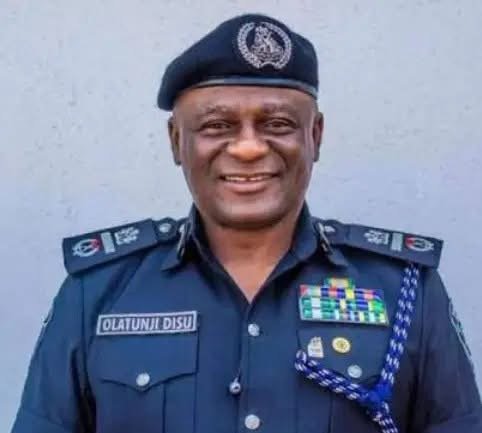
Inspector-General of Police Olatunji Rilwan Disu’s first months in office have been marked by increased operational activity, new tactical structures, internal disciplinary measures and renewed attention to community-based policing, with police-reported figures showing hundreds of arrests and more than 1,000 kidnapped victims rescued during the period under review.
Disu assumed office as Inspector-General of Police on February 25, 2026, succeeding Kayode Egbetokun. Since then, the Nigeria Police Force has reported a series of nationwide anti-crime operations, including the arrest of suspected terrorists, kidnappers, armed robbers, murder suspects and cultists, as well as the recovery of firearms and ammunition.
The figures provide an indication of the scale of police operations under the new leadership. They do not, however, by themselves establish that insecurity has declined across Nigeria or that public confidence in the police has improved.
Those broader questions depend on additional indicators, including crime trends, successful prosecutions, police response times, victim experiences, accountability and the ability of reforms introduced at the national level to translate into everyday policing.
A New Police Administration Takes Shape
Disu became Nigeria’s Inspector-General of Police at a time when the Force was confronting multiple security threats, including kidnapping, armed robbery, terrorism, banditry, cult-related violence and other forms of organised crime.
His administration has responded by placing greater emphasis on intelligence-led operations, closer supervision of commands, tactical restructuring and internal accountability.
One of the earliest major policy initiatives came on March 4, when Disu inaugurated a committee to examine the implementation of state policing. The committee was tasked with considering issues including operational structures, recruitment, training, resource allocation and coordination.
The initiative placed the police leadership within the broader national debate over whether policing responsibilities should be brought closer to communities through state-level structures.
Disu has said the Nigeria Police Force should contribute to the development of a workable state-policing system rather than regard decentralised policing as a threat to the federal institution.
The issue remains tied to wider constitutional and institutional discussions about how Nigeria should organise internal security.
Police Report Significant Operational Activity
The clearest measurable aspect of the administration so far has been its reported operational output.
For April 2026, the Nigeria Police Force said intelligence-led operations resulted in the arrest of 280 suspects nationwide.
The April figures included 28 suspected terrorists, 51 murder suspects, 62 suspected armed robbers, 85 suspected kidnappers and 54 suspected cultists.
During the same period, police reported rescuing 189 kidnapped victims and recovering 140 firearms, 1,074 rounds of ammunition and 37 stolen vehicles.
The figures were released as the police leadership outlined its operational reforms and sought to strengthen the Force’s response to violent crime.
A subsequent operational update showed an even larger number of arrests.
Police said operations conducted from June 9 into July resulted in 1,198 arrests for various offences. The reported figure included suspects linked to murder and culpable homicide, armed robbery, kidnapping, cultism and unlawful possession of firearms. Police also reported the rescue of 166 kidnapped victims and the recovery of 166 firearms, 1,475 rounds of ammunition and 47 stolen vehicles.
These figures should be understood as police operational statistics rather than independent measurements of the overall level of crime in Nigeria.
An increase in arrests or weapons recovered can demonstrate operational activity, but it does not automatically show whether criminal activity nationally has increased or decreased.
The Numbers Do Not Tell the Whole Security Story
The distinction is important because Nigeria’s security problems extend beyond the number of suspects arrested in individual police operations.
The country continues to face different forms of insecurity across its geopolitical zones, with the nature and intensity of criminal activity varying considerably from one area to another.
Kidnapping, terrorism, banditry, communal violence, armed robbery, cult violence and other criminal activities place different demands on security agencies.
The Nigeria Police Force also operates alongside the Armed Forces, intelligence agencies and other security institutions. As a result, national security outcomes cannot be attributed to police operations alone.
The police themselves have repeatedly stressed the importance of cooperation with other agencies and members of the public.
That cooperation was highlighted during security operations in which police said timely intelligence and inter-agency coordination contributed to successful rescue missions.
For citizens, therefore, the more significant question is whether operational activity ultimately produces safer communities, faster responses to emergencies, effective investigations and successful prosecution of offenders.
New Violent Crime Response Unit
One of the administration’s major structural changes has been the creation of the Violent Crime Response Unit, known as the VCRU.
The unit was introduced in May as a restructured tactical formation intended to strengthen the Force’s response to serious and violent crimes.
The police leadership described the initiative as more than a change of name, presenting it as a new approach to tackling violent crime through intelligence, specialised training and defined oversight.
The VCRU has subsequently been introduced by police commands in different parts of the country.
In Cross River, for example, the unit was presented as a more coordinated framework for responding to kidnapping, armed robbery, cult-related violence and other serious offences.
The development reflects an attempt to consolidate tactical capabilities rather than rely solely on conventional policing structures.
Its effectiveness, however, will ultimately depend on operational discipline, intelligence quality, accountability and whether specialised units can maintain public confidence while responding to violent crime.
Accountability Has Become a Central Test
Another defining feature of Disu’s early tenure has been the emphasis on internal discipline.
The issue became particularly prominent following the death of a suspect in Delta State in April.
The Nigeria Police Force said officers involved in the incident had acted unlawfully. The officers were dismissed and referred for criminal prosecution following an internal disciplinary process.
The action was significant because police accountability remains a longstanding concern in Nigeria.
Disu has repeatedly directed officers to comply with operational rules, including regulations governing the use of firearms.
The Delta case therefore became a practical test of the administration’s stated position that police officers should be subject to disciplinary and legal consequences when they violate established rules.
The broader challenge is ensuring that accountability is not limited to high-profile incidents.
For reforms to have lasting institutional value, disciplinary procedures must operate consistently across commands and ranks, while investigations into allegations of misconduct must be credible and transparent.
Complaints, Oversight and Professional Conduct
The administration has also placed renewed attention on internal oversight mechanisms.
Police leadership has directed greater attention to the Complaints Response Unit and the X-Squad, alongside instructions to senior commanders to enforce discipline and address misconduct.
In July, Disu told senior officers that professionalism and due diligence should remain central to policing, while warning against unauthorised case transfers and interference in investigations.
Such measures are important because policing involves more than confronting armed criminals.
A citizen’s experience with the police may involve reporting a crime, giving a statement, seeking assistance, passing through a checkpoint, following up on an investigation or making a complaint against an officer.
The credibility of the Force is therefore shaped by everyday interactions as much as by major security operations.
Bringing Police Leadership Closer to Operations
Disu has also sought to change how senior police leadership is positioned across the country.
In June, the Nigeria Police Force announced the deployment of Deputy Inspectors-General of Police to the country’s geopolitical zones.
According to the Force, the arrangement was intended to bring strategic leadership closer to operational areas, strengthen supervision and improve coordination in responding to emerging security threats.
The approach reflects an attempt to reduce the distance between national police leadership and field operations.
For such a structure to deliver sustained results, however, the deployment of senior officers must translate into better coordination at state and local levels rather than simply create another layer of administration.
Community Policing Remains Important
Another component of Disu’s approach is stronger engagement with communities.
The police leadership has encouraged Commissioners of Police to maintain contact with traditional rulers, religious leaders, youth organisations, market associations and other community stakeholders.
This reflects the principle that effective policing depends partly on citizens being willing to provide information about criminal activity.
In kidnapping and organised crime cases, information from residents can be particularly important because communities often have knowledge of local movements and relationships that may not be immediately available to security agencies.
But community policing also depends on trust.
Citizens who fear harassment, extortion or retaliation may be reluctant to approach police officers. Building confidence therefore requires not only asking communities for information but demonstrating that such information will be handled responsibly.
Technology and Public Access
The police administration has also moved toward greater use of technology.
In September, Disu unveiled the Nigeria Police Force Vigilant App alongside an NPF-MTN Closed User Group network as part of efforts to improve communication and make crime reporting more accessible.
The technology initiative was presented as a way of strengthening communication between citizens and the police while improving internal coordination.
Digital tools could become increasingly relevant as criminal networks also exploit technology for communication, fraud and coordination.
However, technology alone cannot solve policing challenges.
Its effectiveness will depend on reliable infrastructure, trained personnel, rapid response to reports and confidence that citizens can use the platforms without their information being mishandled.
Welfare and Personnel Development
Police reform also depends on the condition of the officers expected to implement it.
Reports on the administration’s personnel programme indicate that more than 33,000 police personnel have been promoted during the period, including 17,952 junior officers. The administration has also highlighted issues involving welfare, housing and pensions.
The Nigeria Police Force separately confirmed the promotion and decoration of 30 senior officers in July, including 13 Assistant Inspectors-General and 17 Commissioners of Police.
Personnel development can affect morale, command structure and professional performance.
At the same time, promotion figures alone cannot establish whether the welfare problems affecting rank-and-file officers have been fully addressed.
Housing, remuneration, equipment, training, working conditions and access to appropriate operational resources remain important components of police effectiveness.
State Police Debate Adds Another Dimension
The debate over state police represents one of the most consequential structural questions facing Nigerian policing.
Disu’s decision to establish a committee on the issue placed the Nigeria Police Force directly within the process of examining how decentralised policing could operate.
The committee was expected to consider recruitment, training standards, resource allocation and oversight mechanisms.
Supporters of state policing argue that policing closer to communities could improve local intelligence and response to security problems.
The proposal also raises questions about accountability, political influence, professional standards, funding and coordination between state-level structures and the existing federal police system.
Those questions cannot be resolved through operational statistics alone. They require legal, constitutional and institutional decisions involving the executive, legislature, police leadership and other stakeholders.
What the Early Figures Actually Show
Taken together, the available figures show that the Nigeria Police Force under Disu has maintained a high level of operational activity.
Police have reported arrests, hostage rescues, weapons recoveries and the disruption of criminal networks.
The administration has also introduced a specialised tactical unit, reorganised senior operational supervision, strengthened internal disciplinary messaging, expanded community engagement and participated in the state-policing debate.
But the statistics should not be treated as proof that Nigeria’s security crisis has been solved.
The police themselves operate within a broader national security environment in which several agencies and institutions share responsibility.
More importantly, arrests do not automatically translate into convictions, weapons recoveries do not by themselves eliminate criminal networks, and rescued victims do not erase the circumstances that allowed kidnappings to occur.
The long-term measure of reform will be whether criminal investigations lead to successful prosecution, whether communities experience improved safety, whether police misconduct is effectively addressed and whether citizens become more willing to trust and cooperate with law enforcement.
Why It Matters
The significance of Disu’s first months extends beyond the number of arrests recorded by the police.
Nigeria’s population and geographical size make policing particularly complex. The Force must respond simultaneously to violent crime, terrorism, kidnapping, organised criminal networks, cyber-enabled offences and community-level disputes.
At the same time, it must maintain public legitimacy.
That means operational capacity and accountability must develop together.
A police force that can arrest suspects but cannot secure credible case outcomes faces one problem. A police force that seeks public cooperation without addressing misconduct faces another.
The emerging direction under Disu therefore combines operational enforcement with institutional reforms.
Whether that combination produces measurable improvements in public safety will require continued assessment using evidence beyond headline figures.
What Happens Next
The next phase of the Disu administration will likely be judged by how effectively the reforms already announced become routine practice across police commands.
Key areas to watch include the performance of the Violent Crime Response Units, the outcome of criminal cases arising from police investigations, implementation of disciplinary measures, community response to new reporting channels and progress in the state-policing debate.
The Force will also continue to operate within a wider national security system involving the military, intelligence services and other law-enforcement bodies.
For Nigerians, the most meaningful measure will ultimately be what happens at community level: whether victims can report crimes and receive timely assistance, whether investigations progress, whether officers act within the law and whether communities experience greater security.
The figures released so far show the scale of police activity under IGP Disu. The harder test is whether that activity develops into durable improvements in public safety, institutional accountability and confidence in policing.
Weng Global – stories beyond borders
Sources
- Nigeria Police Force — official statements and operational updates.
- Vanguard — review of IGP Disu’s early tenure and reported policing figures.
- Punch Newspapers — reports on nationwide police operations and state-policing reforms.
- Channels Television — report on police disciplinary action following the Delta State killing.
- Voice of Nigeria — report on the establishment of the Violent Crime Response Unit.
- TheCable — report on the state-policing committee inaugurated by IGP Disu.