Reported by Weng Patrick Atokor l Journalist at Weng Global
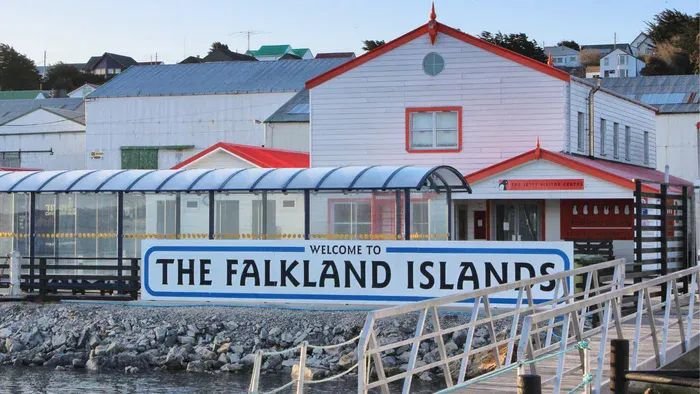
Some Falkland Islanders are calling for restrictions on Argentine visitors following reports of tourists displaying Argentine flags and messages rejecting British sovereignty over the South Atlantic territory.
The issue has emerged amid renewed tensions between Argentina and the United Kingdom over the Falkland Islands, which Argentina refers to as the Islas Malvinas.
Michael Goss, a member of the Falkland Islands Legislative Assembly representing Camp, said some residents had been vocal about preventing Argentine visitors from entering the islands. However, he acknowledged that any such restriction would have to comply with existing laws.
According to Punch Newspapers, Goss said the Assembly was examining possible measures but could not simply prevent Argentine visitors from entering without considering the legal and administrative implications.
Islanders Raise Concerns Over Argentine Flags
The reported dispute centres partly on the display of Argentine national symbols by visitors.
The Falkland Islands Government’s official guidance warns that publicly displaying Argentine flags or wearing Argentine military uniforms anywhere in the islands has the potential to cause public concern and distress.
Visitors are therefore asked to refrain from such displays while in the territory.
The guidance reflects the continuing sensitivity surrounding the 1982 Falklands War and the unresolved sovereignty dispute between Argentina and the United Kingdom.
The islands were occupied by Argentina during the 1982 conflict before British forces regained control. The sovereignty dispute has continued decades after the war.
No General Ban on Argentine Visitors
Despite the calls from some residents, the Falkland Islands Government has not announced a general ban on Argentine visitors.
Existing immigration rules allow visitors to enter the territory provided they meet the relevant requirements.
According to the Falkland Islands Government, visitors may be required to provide proof of onward travel, accommodation, sufficient funds and appropriate medical insurance.
Goss’s comments indicate that possible measures are being examined rather than that a ban has already been introduced.
The distinction is significant because calls from residents or individual legislators do not automatically constitute a change to immigration policy.
Argentina Continues to Claim the Islands
Argentina continues to assert sovereignty over the Falkland Islands, while the United Kingdom maintains that the territory is British and supports the islanders’ right to self-determination.
The UK Government’s current position is that the Falkland Islands are a British Overseas Territory and that sovereignty will not be discussed unless the islanders themselves wish to do so.
The British government has also continued to defend the islands’ right to develop their natural resources and conduct economic activities.
In a statement issued on September 18, 2026, UK Minister for Overseas Territories Uma Kumaran said Britain remained committed to supporting the Falkland Islanders and their right to determine their future.
Argentina, however, maintains its longstanding claim to the territory.
Sovereignty Dispute Remains Highly Sensitive
The disagreement over visitors is taking place against a broader diplomatic dispute that continues to affect relations between Argentina and Britain.
For many Falkland Islanders, expressions of Argentine sovereignty claims are closely connected to the history of the 1982 conflict and the question of the territory’s political status.
The Falkland Islands Government’s visitor guidance specifically asks tourists to respect local sensitivities associated with the war and its aftermath.
The government also advises visitors that the Argentine term “Malvinas” is considered offensive by many people in the islands because of its association with Argentina’s sovereignty claim.
At the same time, Argentine visitors remain subject to the territory’s established immigration framework.
Wider Dispute Continues Beyond Tourism
The latest disagreement is not an isolated development in the Falklands sovereignty dispute.
Argentina has continued to raise its claim in international forums, while Britain has repeatedly reaffirmed its position that the islanders have the right to determine their own political future.
The dispute has also extended into areas such as economic activity, natural resources and international sporting events.
In July 2026, FIFA opened an investigation after Argentine players displayed a political banner concerning the Falklands following their World Cup semi-final against England, according to Al Jazeera and Associated Press reporting.
These developments demonstrate how the sovereignty issue continues to surface in different international settings.
What Happens Next?
The immediate question is whether the Falkland Islands Legislative Assembly will pursue any formal changes to rules affecting Argentine visitors.
For now, there is no announced general ban on Argentine visitors. Any new restriction would have to be considered within the territory’s legal and administrative framework.
The Falkland Islands Government’s existing guidance already places restrictions and warnings around politically sensitive behaviour, including the public display of Argentine flags.
The latest calls therefore represent a further development in the long-running sovereignty dispute rather than a confirmed change to the islands’ immigration policy.
Weng Global – Stories beyond borders
Sources
- Punch Newspapers — Falkland Islanders seek ban on Argentine visitors over flag row, October 2, 2026.
- Falkland Islands Government — Customs & Immigration FAQ, including guidance on Argentine flags and visitor conduct.
- Falkland Islands Government — Visitor Permit requirements and immigration information.
- UK Government — Doing business with the Falkland Islands, including the UK’s position on sovereignty and self-determination.
- UK Government / Foreign, Commonwealth & Development Office — Minister for Overseas Territories statement on the Falkland Islands, September 18, 2026.