Reported by Simon Daniel Yusuph l Journalist at Weng Global
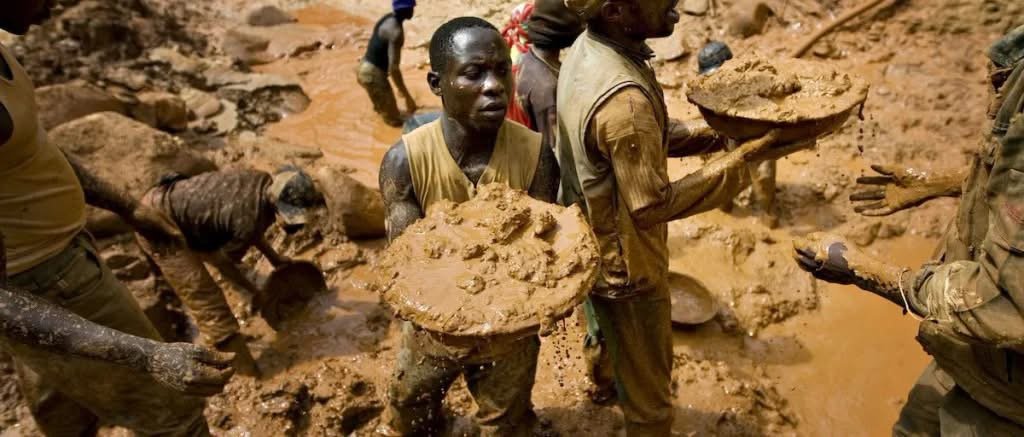
The growing attraction of artisanal gold mining in Niger State is raising fresh concerns over child labour and school attendance, after Governor Umar Bago said boys in some communities were leaving junior secondary schools to work at mining sites.
Bago said the financial returns associated with artisanal mining were making it difficult to persuade some children to return to school, particularly in communities where mining has become an increasingly important source of income.
The governor’s comments came amid wider scrutiny of illegal and artisanal mining in Niger State following the deaths of 37 suspected illegal miners in the custody of the Nigeria Security and Civil Defence Corps (NSCDC) in Minna in September.
The incident has triggered investigations by state and federal authorities, while drawing renewed attention to the wider conditions surrounding informal mining, including the involvement of young people.
Bago has also said stronger federal intervention is needed to restrict mining in locations considered problematic because the regulation of mineral resources is primarily a federal responsibility.
Children Leaving Classrooms for Mining
The immediate concern is not only the legality of mining operations but what the expansion of artisanal mining could mean for children’s education.
Bago has said some boys in Niger State are abandoning junior secondary education because they have become attracted to the income available at mining sites.
During a television interview, the governor said the children had become accustomed to the financial benefits of mining and were reluctant to leave the sites for classrooms.
He also cited what he described as a UNICEF projection concerning Shiroro and other local government areas, warning that the number of boys remaining in junior secondary education could fall sharply if the trend continues.
However, the specific UNICEF projection cited by the governor could not be independently verified from publicly accessible UNICEF material reviewed for this report. It should therefore be treated as a claim attributed to the governor rather than as an independently confirmed UNICEF finding.
The broader concern about children leaving school for work is, however, well established.
The International Labour Organisation and UNICEF estimated in 2025 that nearly 138 million children worldwide were engaged in child labour in 2024, including about 54 million involved in hazardous work. The agencies said industry, which includes mining and manufacturing, accounted for 13 per cent of child labour globally.
The ILO defines child labour as work that is hazardous, interferes with education or is performed by children below the minimum age for employment.
For children living in mining communities, the problem can therefore extend beyond school attendance. Work at mining sites can expose them to physical hazards while reducing the time and opportunity available for formal education.
Niger’s Mining Crisis
Niger State has significant mineral resources and has experienced increased activity around artisanal and small-scale mining.
Gold mining has attracted workers and businesses into several communities, but authorities have also raised concerns about illegal operations and the difficulties involved in enforcing mining regulations.
The issue became particularly serious in September when 37 suspected illegal miners died while in NSCDC custody in Minna.
The victims were among people arrested during enforcement operations at mining locations around the M.I. Wushishi and Lukoto areas on September 15 and 16, according to reports from Nigerian media.
Governor Bago said 67 artisanal and suspected illegal miners had been detained, with 37 later dying in custody.
The exact cause of the deaths has remained subject to investigation. The NSCDC initially referred to a suspected disease outbreak, while other accounts raised questions about overcrowding, ventilation and possible exposure to hazardous substances. Authorities have not established a definitive cause publicly.
President Bola Ahmed Tinubu ordered an investigation, while senior NSCDC officials were suspended as authorities examined the circumstances surrounding the deaths. A federal investigative committee was subsequently established.
The incident has consequently become part of a larger debate about how illegal mining should be controlled without exposing suspects, workers or communities to further harm.
The Federal-State Regulatory Challenge
One of the difficulties highlighted by the Niger State government is the division of responsibilities over mining.
Bago has argued that the state government does not possess sufficient authority to independently stop mining activities because mineral resources are regulated at the federal level.
Following the deaths in NSCDC custody, he called for an executive order from the Presidency or the Federal Ministry of Solid Minerals Development to prohibit mining in locations identified as particularly problematic.
That argument is important to the education question because preventing children from entering mining sites requires more than simply instructing them to remain in school.
Effective enforcement would require authorities to identify mining locations where children are present, prevent underage workers from being recruited or allowed to work, hold exploitative operators accountable and provide families with alternatives that do not depend on children’s earnings.
Without those measures, enforcement alone could push vulnerable families from one form of economic hardship into another.
Poverty Remains a Major Driver
Child labour is rarely caused by a single factor.
The ILO and UNICEF have identified poverty, limited access to social protection, inadequate decent work opportunities for adults and barriers to quality education as factors that contribute to child labour.
The latest global estimates show that sub-Saharan Africa continues to carry the largest regional burden of child labour. The ILO reported that about 87 million children in the region were engaged in child labour in 2024, nearly two-thirds of the global total.
This makes the Niger State situation part of a wider African development challenge.
When families depend heavily on informal economic activities for survival, children can become additional sources of income.
Mining can be particularly attractive because mineral resources may generate cash more quickly than some traditional rural livelihoods.
For a family facing immediate financial pressure, the long-term benefits of education may appear less valuable than income that can be earned immediately.
That creates a difficult cycle: children leave school to earn money, their education is interrupted, and their reduced educational opportunities can limit their ability to obtain better-paying and safer employment later in life.
The ILO has warned that child labour can deprive children of education and contribute to intergenerational poverty and inequality.
Mining Also Creates Health and Safety Risks
The educational consequences of child mining cannot be separated from the physical risks associated with the work.
Mining and quarrying can expose children to dangerous machinery, unstable ground, dust, chemicals and other hazards.
The ILO’s global estimates classify hazardous work as work likely to jeopardise children’s health, safety or development. In 2024, about 54 million children globally were estimated to be involved in such work.
Artisanal and small-scale mining can create additional risks because operations may take place outside formal regulatory systems.
Children working in such environments can also be particularly vulnerable because they may lack the knowledge, protective equipment or bargaining power needed to protect themselves.
The consequences can extend into adulthood if exposure to hazardous work causes injury, illness or the loss of educational opportunities.
Africa Has Faced Similar Challenges
Niger State is not alone in confronting the relationship between mining, poverty and children’s education.
Across Africa, children have been involved in artisanal and small-scale mining in countries including the Democratic Republic of Congo and other mineral-producing states.
The Democratic Republic of Congo provides an example of efforts to reconnect children affected by mining with education.
Save the Children has reported using Catch-Up Clubs to help children who have fallen behind academically because of mining and other circumstances. The programme provides accelerated learning and support designed to help children regain literacy and return to formal education.
Save the Children said it launched the Catch-Up Clubs in 2021 and subsequently expanded the programme to 10 countries. In mining communities in the DRC, the organisation has combined educational support with assistance aimed at strengthening child protection and helping vulnerable children remain in or return to school.
The experience illustrates an important point for Nigeria: removing children from mining sites is only one part of the solution.
Children who have spent months or years outside classrooms may need structured support before they can successfully return to their former level of education.
Education Must Be Part of Mining Enforcement
Any strategy to tackle child labour in Niger State will therefore need to connect mining enforcement with education policy.
Authorities can identify communities where children are leaving school for mining and establish targeted interventions.
These could include stronger school monitoring, accelerated learning programmes for children who have dropped out, assistance for families facing extreme economic hardship and vocational programmes for older adolescents who are legally permitted to receive skills training.
Schools in mining communities also need adequate teachers, learning materials and facilities.
If families perceive mining as offering a more immediate economic benefit than schooling, government and community leaders must address the economic conditions behind that decision.
The ILO and UNICEF have emphasised the importance of legal safeguards, social protection, free and quality education and decent work opportunities for adults in efforts to eliminate child labour.
That approach is relevant to Niger State because preventing child labour without supporting families could leave the underlying economic pressures untouched.
Traditional and Community Leaders Have a Role
Government intervention will also need support from communities.
Traditional rulers, religious leaders, teachers, parents and community organisations can help identify children who have left school and encourage their return.
Mining communities can also participate in reporting operators who employ children.
Parents remain central to the process. But responsibility should not be placed entirely on families when poverty and limited employment opportunities are major factors influencing household decisions.
A sustainable response requires adults to have realistic alternatives for earning income.
Agriculture, small businesses, vocational training and other livelihood programmes could help reduce the dependence of households on children’s earnings.
The objective should not be to criminalise poverty. It should be to ensure that children are protected from hazardous work while families receive enough support to keep them in school.
Stronger Action Against Those Who Exploit Children
Where operators deliberately employ children in prohibited or hazardous mining activities, enforcement agencies should investigate and prosecute cases in accordance with Nigerian law.
Such enforcement should focus on those responsible for exploiting children rather than treating children themselves as the principal offenders.
The September deaths of suspected illegal miners in NSCDC custody also underline the importance of lawful and accountable enforcement.
The federal government has established an investigative process to determine what happened in the Minna detention facility. The state government has also inaugurated a judicial commission of inquiry.
The findings of those investigations will be important for establishing responsibility and determining whether changes are required in the way mining enforcement operations and detainees are handled.
What Happens Next
The immediate challenge for Niger State is to address illegal mining while preventing children from being drawn further into the sector.
The federal and state governments will also need to clarify how mining enforcement will be coordinated in communities where children are reportedly leaving school for artisanal mining.
The investigation into the deaths of the 37 suspected miners remains a separate but related matter. Its findings should establish the circumstances surrounding the deaths and identify any responsibility where evidence supports it.
At the education level, authorities will need reliable data showing how many children have actually left school for mining, which communities are most affected and what interventions can successfully return them to classrooms.
Claims about future school populations should likewise be supported by publicly available evidence so that policymakers, communities and the public can distinguish verified trends from warnings or projections.
The wider lesson is clear: mineral wealth should not come at the expense of children’s education.
Mining can provide livelihoods and contribute to economic development when properly regulated. But when children leave classrooms for hazardous work, the immediate income comes with a long-term social cost.
For Niger State, the challenge is therefore not simply to stop children from entering mining sites. It is to make education accessible, safe and economically realistic for the families whose children are being drawn into the mines.
A lasting response will require cooperation between federal and state authorities, schools, communities, traditional and religious institutions, mining operators and civil society organisations.
Weng Global – stories beyond borders
Sources
International Labour Organization (ILO)
UNICEF
Channels Television
Reuters
Associated Press (AP)
Save the Children International
Niger State Government