Reported by Simon Daniel Yusuph l Journalist at Weng Global
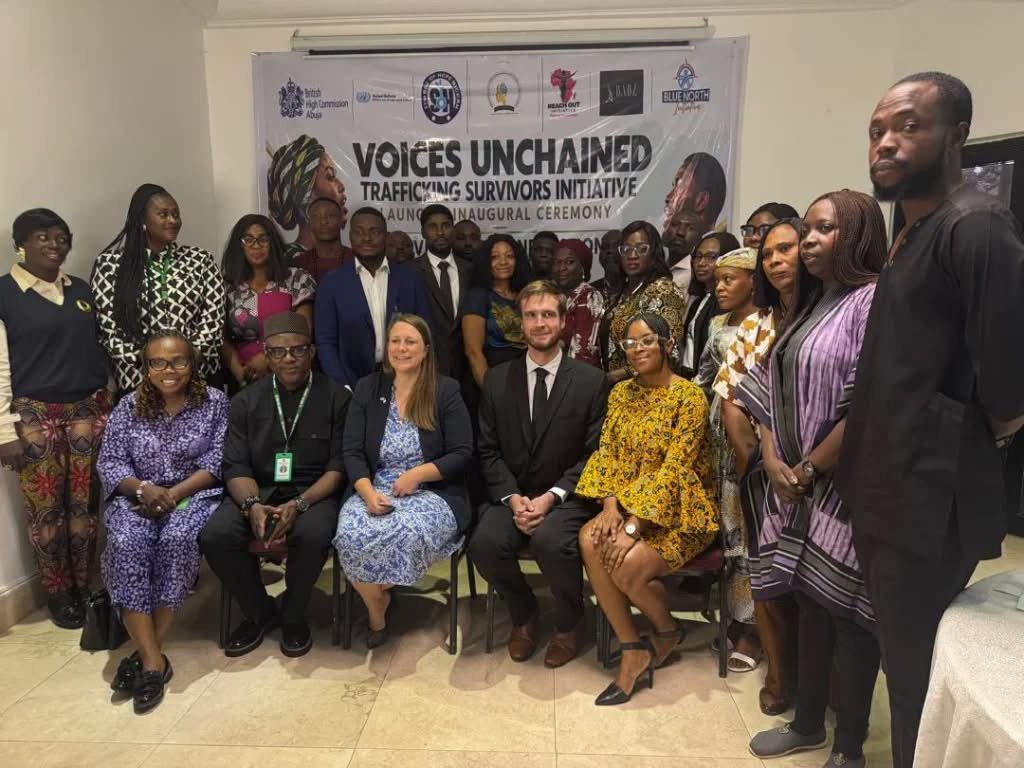
Nigerian survivors of human trafficking are seeking a stronger role in shaping policies, prevention programmes and support interventions after establishing the Voices Unchained Trafficking Survivor Initiative, a survivor-led organisation focused on ensuring that lived experiences become part of Nigeria’s response to human trafficking.
The initiative has begun engaging organisations involved in the fight against trafficking, including the Network Against Child Trafficking, Abuse and Labour (NACTAL), with discussions centred on survivor participation, public awareness, rehabilitation, reintegration and safe migration.
The development comes as Nigeria continues to confront human trafficking both within the country and across international migration routes, with government agencies, civil society organisations and international partners working to improve victim identification, protection, prosecution and long-term reintegration.
Survivors Push for a Voice in Policy and Intervention
Representatives of the Voices Unchained Trafficking Survivor Initiative held a strategic engagement with NACTAL at the network’s national secretariat in Abuja on July 31, 2026.
The meeting focused on exploring collaboration between the survivor-led organisation and NACTAL, particularly in advocacy, prevention and responses to human trafficking and irregular migration.
According to information from the Anambra State Government and NACTAL, the engagement also examined ways of strengthening the participation of trafficking survivors in the formulation of policies and implementation of programmes that directly affect them.
NACTAL National Secretary and Head of Programmes, Osita Osemene, received the delegation and outlined the network’s mandate and ongoing activities.
The engagement reflects a broader shift in anti-trafficking discussions towards approaches in which survivors are not regarded only as recipients of assistance but also as participants in designing prevention and protection strategies.
For survivors, their experiences can provide practical insight into how traffickers recruit victims, how deceptive employment and migration arrangements operate, and the challenges people face after returning from exploitation.
What the Voices Unchained Initiative Wants to Achieve
The Voices Unchained Trafficking Survivor Initiative describes itself as a survivor-led organisation working around safe and regular migration, trafficking awareness, survivor empowerment, rehabilitation and community engagement.
Its representatives told NACTAL that they want to use survivors’ lived experiences to strengthen public education and help communities recognise the risks and recruitment methods associated with human trafficking.
The initiative also seeks to support the reintegration of people who have returned from trafficking situations while empowering survivors to become advocates within their communities.
The organisation’s approach places emphasis on the idea that people who have experienced trafficking can contribute to prevention efforts in ways that complement the work of government agencies and professional service providers.
That can include helping to develop awareness messages, identifying vulnerabilities within communities, supporting outreach programmes and providing practical information about the tactics used by traffickers.
NACTAL said survivor perspectives could strengthen advocacy, prevention and response initiatives because people with direct experience can provide insights that may not be captured through conventional policy processes.
NACTAL Pledges Support for Survivor-Led Action
Osemene reaffirmed NACTAL’s commitment to supporting the institutional development of Voices Unchained through mentorship and capacity building.
He also stressed the importance of leadership, organisational structures and strategic partnerships to the sustainability of survivor-led organisations.
The two sides agreed to continue discussions and deepen cooperation around survivor-led initiatives, anti-trafficking advocacy and the promotion of safe and regular migration.
The planned cooperation is expected to cover areas including community sensitisation, policy engagement and programmes designed to strengthen support for survivors.
The engagement is significant because survivor-led organisations often face challenges beyond the immediate needs of people rescued from trafficking. Building a sustainable organisation requires funding, technical capacity, institutional systems, partnerships and mechanisms for ensuring that survivors can participate safely and meaningfully.
Why Survivor Participation Matters
Human trafficking is not limited to one form of exploitation or one geographical route.
Nigerians can be trafficked within the country or across international borders for sexual exploitation, forced labour and other forms of exploitation. Recruitment can involve fraudulent employment offers, deceptive migration arrangements and other forms of coercion or abuse.
The 2025 Trafficking in Persons Report on Nigeria said the government identified and referred 2,058 trafficking victims to services during the reporting period covered by the report. They included 1,076 sex-trafficking victims, 508 labour-trafficking victims and 474 victims whose form of trafficking was unspecified.
The report also said Nigeria maintained 14 NAPTIP shelters across its 10 zonal commands and that government and partner organisations provided services to identified victims.
However, it identified continuing challenges, including insufficient resources, gaps in identifying victims among vulnerable populations and limitations in shelter and reintegration services.
These challenges underline why survivors are seeking a more active role in the development of interventions.
A policy designed without sufficient understanding of the experiences of people who have gone through trafficking can overlook practical barriers faced during rescue, rehabilitation and reintegration.
Survivor participation does not replace the responsibilities of government institutions, law enforcement agencies or professional service providers. Instead, it can provide another source of evidence and experience for improving programmes.
Nigeria’s Existing Anti-Trafficking Framework
The National Agency for the Prohibition of Trafficking in Persons, NAPTIP, remains the federal government’s lead agency for combating human trafficking.
Its responsibilities include prevention, victim protection, investigation and prosecution, as well as coordination with other government institutions and civil society organisations.
Nigeria is also implementing a National Action Plan covering 2022 to 2026, while state-level anti-trafficking structures operate in several parts of the country.
The United States Department of State’s 2025 assessment noted that NAPTIP continued to lead federal anti-trafficking efforts but faced resource constraints in fully executing its broad mandate. It also identified the need for stronger victim identification and protection mechanisms for vulnerable groups.
The same assessment said NAPTIP continued awareness campaigns through radio, social media, schools, communities, religious centres and other platforms, while working with civil society organisations and international partners.
It also reported that the government had engaged survivors in reviewing awareness campaign materials and had employed survivors in key anti-trafficking positions.
The involvement of survivor-led organisations therefore builds on an existing recognition that lived experience can contribute to anti-trafficking work.
Reintegrating Survivors Remains a Major Challenge
Rescue is only one stage in the response to human trafficking.
For many survivors, returning to Nigeria can be followed by difficult questions about housing, employment, education, health, family relationships, psychological recovery and social acceptance.
The European Union Agency for Asylum reported in January 2026 that several Nigerian government agencies, international organisations and civil society groups are involved in the reintegration of returnees.
It identified NAPTIP as one of the institutions providing rehabilitation support to returned trafficking victims, while the International Organization for Migration also supports Nigerian returnees through assisted voluntary return and reintegration programmes.
The EUAA report also noted that overcrowding and limited accommodation can create difficulties for victims requiring support, with some organisations referring people to partner NGOs when government shelters lack capacity.
These realities make long-term survivor participation particularly important.
A person who has experienced trafficking may need assistance long after the initial rescue operation. Survivor-led organisations can potentially help bridge the gap between formal intervention and the realities faced by people rebuilding their lives.
New Forms of Trafficking Are Increasing the Need for Survivor Voices
The nature of trafficking affecting Nigerians is also changing.
In February 2026, NAPTIP and the British High Commission in Abuja organised a survivor-centred event focused on Nigerians trafficked into cyber-enabled scam operations in Southeast Asia.
The event followed the rescue and return of 23 Nigerians who had been trafficked to countries including Myanmar, Laos, Cambodia and Thailand after being lured by fraudulent employment opportunities.
The cases highlighted how traffickers can exploit the search for employment and better economic opportunities to move people across borders.
Survivors at the Abuja event described being promised jobs before being subjected to coercive and abusive conditions.
The development demonstrated the importance of adapting anti-trafficking strategies as criminal networks adopt new recruitment methods and exploit emerging migration trends.
Survivors can contribute to that process by helping authorities and communities understand how recruitment schemes are presented to potential victims.
Beyond Awareness Campaigns
Public awareness remains an important part of preventing trafficking, but survivor organisations argue that prevention must also address the circumstances that make people vulnerable.
False employment offers, misinformation about overseas jobs, unsafe migration routes and limited knowledge of trafficking indicators can expose people to exploitation.
Awareness campaigns can help potential migrants identify warning signs, but prevention also requires effective labour recruitment systems, accessible information, cross-border cooperation and mechanisms for reporting suspected trafficking.
The 2025 Trafficking in Persons assessment recommended stronger efforts to prevent exploitation of Nigerians abroad, including investigating fraudulent labour recruiters, prohibiting worker-paid recruitment fees and increasing awareness of fraudulent recruitment practices.
A survivor-led approach can contribute to these efforts by incorporating real experiences into prevention messages.
Rather than relying only on abstract warnings, campaigns can explain how apparently legitimate offers can become pathways to exploitation, while protecting survivors from unnecessary exposure or retraumatisation.
Protecting Survivors While Giving Them a Platform
Greater survivor participation also requires safeguards.
People who have escaped trafficking may still face threats from traffickers, stigma within their communities, privacy concerns or emotional distress connected to recounting their experiences.
For that reason, survivor participation in policy and public advocacy needs to be voluntary, informed and sensitive to individual circumstances.
Survivors should not be expected to repeatedly disclose traumatic experiences simply to justify the need for support or policy change.
The goal of survivor-led advocacy is therefore not simply to put survivors in front of cameras or at public meetings. It is to create meaningful opportunities for their knowledge and perspectives to influence decisions while respecting their safety, privacy and dignity.
A Broader Role for Survivor-Led Organisations
The Abuja engagement between Voices Unchained and NACTAL provides an example of how survivor-led organisations can become part of the wider network responding to human trafficking.
The immediate areas of cooperation include advocacy, awareness, rehabilitation, community engagement and safe migration education.
The longer-term significance will depend on whether such partnerships translate into sustained participation in policy discussions and programmes.
For survivor-led organisations, institutional capacity will also be important. NACTAL has indicated that mentorship and capacity building can help such groups develop stronger leadership and organisational systems.
For government and established anti-trafficking institutions, meaningful engagement will require creating practical channels through which survivor perspectives can influence policy rather than simply consulting survivors after decisions have already been made.
What Happens Next
Voices Unchained and NACTAL have agreed to sustain dialogue and explore deeper collaboration.
The next stage will be determining how the proposed partnership can translate into practical programmes, including community sensitisation, survivor advocacy, policy engagement and reintegration support.
The initiative’s development also comes at a time when Nigeria’s anti-trafficking response is dealing with both longstanding forms of exploitation and newer patterns linked to international migration and cyber-enabled criminal networks.
For policymakers, the central issue will be ensuring that survivor participation becomes meaningful, safe and sustainable.
For survivors, the establishment of a dedicated organisation provides a platform through which their experiences can be organised into advocacy and community action.
For the wider anti-trafficking system, the Abuja initiative highlights a basic principle: people who have experienced trafficking are not only people who require protection. Their knowledge can also contribute to understanding how trafficking works and how prevention and support programmes can be improved.
The success of that approach will ultimately depend on whether survivor voices are incorporated into decisions, programmes and accountability mechanisms in ways that produce measurable improvements in prevention, protection and reintegration.
Weng Global – stories beyond borders
Sources
- Network Against Child Trafficking, Abuse and Labour (NACTAL)
- Anambra State Government
- National Agency for the Prohibition of Trafficking in Persons (NAPTIP)
- United States Department of State, 2025 Trafficking in Persons Report
- European Union Agency for Asylum
- Channels Television
- Punch