Reported by Simon Daniel Yusuph l Journalist at Weng Global
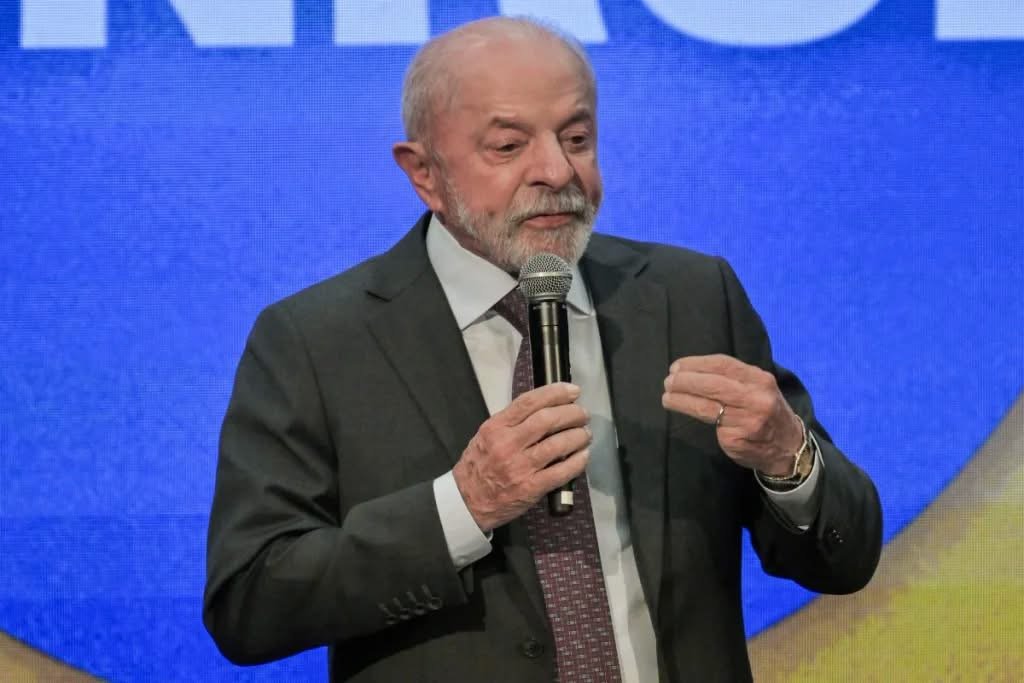
Brazilian President Luiz Inácio Lula da Silva has signed a measure banning fixed-odds sports betting and online gambling across the country, just nine days before the first round of the presidential election.
The measure, signed on Friday, September 25, 2026, prohibits the operation, offering, intermediation and advertising of so-called “bets” in Brazil. It covers both sports betting and online games, including activities operated under state and federal authorisations.
The decision comes as Lula seeks another term in office and as the October 4 election approaches. His government has justified the crackdown primarily on concerns over household debt, gambling addiction and the social consequences of the rapid expansion of online betting.
The timing of the measure has also placed the issue firmly within Brazil’s election debate, with political opponents questioning the government’s motives while the administration presents the ban as a public-interest and consumer-protection measure.
Lula Signs Emergency Measure
The ban was introduced through a provisional measure, known in Brazil as a Medida Provisória, which takes effect immediately but must be approved by Congress within 120 days to remain in force.
Under the measure, betting operators that had previously been authorised in Brazil can no longer accept new deposits or provide betting services.
The government has also ordered the removal of betting advertisements and sponsorship material. According to Brazil’s Ministry of Health, companies have until October 5 to remove advertising and sponsorship material from physical locations and outdoor advertising.
The websites and applications are scheduled to go offline from October 6.
The government has established a process for returning money remaining in bettors’ accounts. Bettors have until October 5 to voluntarily withdraw their balances, after which betting companies must provide financial institutions with information about remaining balances. Banks will then process the refunds between October 9 and October 14.
The measure does not abolish other forms of lotteries that are already legally authorised under Brazilian law.
Why Brazil Is Targeting Betting
The Lula administration says the expansion of betting has contributed to increasing financial pressure on Brazilian households.
Brazil spent several years moving towards regulation of the betting industry. The government subsequently established a legal framework intended to bring operators into a regulated market, collect taxes and impose controls on the sector.
The latest decision reverses that direction less than two years after the regulatory framework was introduced.
Reuters reported that the government’s latest action followed growing concerns about household spending on gambling and rising indebtedness. The news agency also reported that recent polling indicated strong public support for a total ban on online betting.
Brazil’s Ministry of Health has described gambling addiction as a public-health concern, while the government says the new measures are intended to protect families from excessive gambling and its financial consequences.
The government has also announced additional measures targeting illegal betting activity and plans to send legislation to Congress that would strengthen penalties for activities connected to unlawful gambling.
Lula Calls Gambling a Serious Social Problem
Lula has repeatedly criticised the rapid growth of online betting and has compared the spread of gambling addiction to other social problems that Brazil has struggled to contain.
At the announcement of the latest measures, the president described the betting industry in highly critical terms and argued that the country had allowed gambling to enter people’s homes through mobile phones and digital platforms.
AFP reported that Lula has previously described the betting industry as a “cancer”, while other reports from the announcement quoted him comparing uncontrolled gambling to the early spread of crack cocaine in Brazil.
The comments reflect the government’s argument that betting should no longer be treated simply as an entertainment or commercial activity but as a wider social and public-health issue.
However, the government’s decision has also generated opposition from parts of the betting industry and Brazilian football.
Impact on Brazilian Football
The betting industry has become a major source of sponsorship for Brazilian football clubs and competitions.
Many clubs have entered commercial agreements with betting companies, making the industry an important part of the financial ecosystem surrounding professional football.
AFP described betting companies as major sponsors of Brazilian football clubs and noted that the new restrictions could therefore have consequences beyond betting operators themselves.
Football organisations have previously expressed concern about restrictions on betting sponsorship, particularly because clubs have become increasingly dependent on commercial partnerships with gambling companies.
The new prohibition therefore creates a potential financial adjustment for clubs, competitions, broadcasters and other businesses that have benefited from betting-related advertising.
The government’s decision means those commercial relationships will have to change if the ban remains in force.
Political Opposition Questions Timing
The timing of the ban has become an important part of the political debate.
Brazil’s first-round presidential election is scheduled for October 4, meaning the government announced the measure just nine days before voters are due to go to the polls.
Lula is seeking another presidential term, while Senator Flávio Bolsonaro is among his principal challengers.
Flávio Bolsonaro criticised the betting ban during a campaign event in Rio de Janeiro, describing the measure as “populist, hypocritical and politically motivated”, according to Reuters. That characterisation is the opposition candidate’s political assessment and has not been independently established as fact.
The timing has consequently created two competing interpretations of the government’s decision.
The administration says the measure responds to a growing social and economic problem and is intended to protect Brazilian families.
Its opponents argue that announcing such a popular restriction immediately before voting raises questions about its political significance.
Those competing interpretations are part of the election debate and should be distinguished from the documented fact that the government has issued the measure and that it takes effect immediately.
From Regulation to Prohibition
The decision represents a significant change in Brazil’s approach to online betting.
Instead of continuing to regulate a legal betting industry, the government has moved to eliminate the operation of fixed-odds betting platforms.
The government’s earlier regulatory approach was designed to bring betting companies into a controlled legal framework.
The latest measure effectively ends that framework unless Congress approves a different arrangement or modifies the government’s proposal during the legislative process.
Reuters reported that the provisional measure must receive congressional approval within 120 days to remain valid. If that does not happen, the measure could lose its legal effect.
That legislative process means the September 25 announcement does not necessarily represent the final legal position of Brazil on online betting.
What Happens to Bettors’ Money?
The government has provided a timetable for people who still have money in betting accounts.
The first stage began with publication of the provisional measure on September 25, when new deposits into betting platforms were prohibited.
Bettors have until 11:59 p.m. on October 5 to withdraw their available balances voluntarily.
From October 6, betting websites and applications are expected to go offline.
Between October 7 and 8, betting operators must provide banks with information about remaining balances associated with individual bettors.
Banks will then have from October 9 to 14 to return the money.
Where an obstacle prevents banks from completing the refund process, Caixa Econômica Federal is expected to receive the remaining funds and facilitate their return to bettors.
The government has therefore presented the withdrawal process as part of the transition from the regulated betting market to the new prohibition.
Wider Economic Questions
The ban could also generate economic and legal questions.
Before the prohibition, betting had become a significant commercial sector in Brazil, contributing to government revenues and supporting advertising and sponsorship arrangements.
Earlier reporting by Reuters indicated that the government had previously expected significant revenue from the regulated betting industry. The latest prohibition could therefore affect public revenue as well as companies operating in the sector.
There are also potential legal questions surrounding companies that received government authorisations to operate.
The Ministry of Health said the extinction of those authorisations on public-interest grounds does not create an entitlement to compensation for lost profits, investments or expectations of continued operation.
Whether affected companies challenge the measure through Brazil’s legal system could become an important part of the next phase of the dispute.
Why the Decision Matters
Brazil is one of the world’s largest football markets, and betting has become deeply connected to the country’s sporting economy.
The decision therefore affects more than online gambling companies.
It has implications for football clubs, sports organisations, advertising agencies, media companies, financial institutions, consumers and government revenue.
For Brazilian households, the government’s argument is that restricting betting will reduce financial harm and help address gambling addiction.
For businesses and sports organisations, the measure removes an important source of commercial income.
For the political system, the timing means the issue will remain part of an already closely contested election campaign.
The effectiveness of the policy will depend partly on enforcement, particularly against operators that attempt to continue serving Brazilian customers from outside the country’s regulated market.
What Happens Next
The immediate next step is the implementation of the government’s timetable, including the withdrawal of bettors’ remaining balances and the removal of betting websites and applications.
The provisional measure will also face scrutiny in Congress. Lawmakers have up to 120 days to approve it if it is to continue in force.
The government is simultaneously seeking stronger legislation against illegal betting operations.
The political implications will also continue to unfold as Brazil approaches the October 4 presidential election.
For now, the key fact is that Brazil has moved from regulating fixed-odds betting to imposing a nationwide prohibition on the operation, offering, intermediation and advertising of those betting services.
The decision places public-health concerns, household debt, football financing, government revenue and electoral politics at the centre of a major policy shift that could reshape Brazil’s gambling industry.
Weng Global – stories beyond borders
Sources
- Brazil Ministry of Health
- Brazil Ministry of Justice and Public Security
- Agência Gov
- Reuters
- AFP
- Associated Press
- CNN Brasil
- EFE