Reported by Weng Patrick Atokor l Journalist at Weng Global
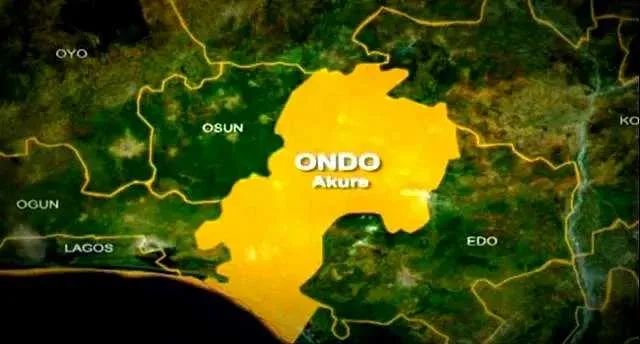
The renewed push to develop the Olokola Free Trade Zone in Ondo State has opened a new debate over land ownership, host-community participation and the boundaries of proposed industrial development after the Aheri Kingdom in Ilaje Local Government Area raised objections to what it described as attempts to acquire ancestral land beyond the established coastal zone.
The dispute comes as the long-delayed Olokola project receives fresh attention following renewed investment interest from Dangote Industries Limited and the Ondo State Government.
The Aheri Development Council has made clear that its objection is not to industrial investment itself. Rather, the community says it supports development within the established Olokola Free Trade Zone along the Atlantic corridor while opposing proposed acquisition of land in its hinterland around Alape Lagoon and the Lagos-Calabar Coastal Highway.
The position was communicated following a meeting convened by the Maporure of Aheri, Oba Ilesanmi Raphael Ikuemonisan-Mafo, at Zion-Pepe in Ilaje on September 5, 2026. Representatives of the Ondo State Government and Dangote Industries Limited were reported to have attended the meeting.
The development has placed a significant question alongside the economic ambitions surrounding Olokola: how can a major industrial project proceed while addressing the land rights, expectations and participation of communities located within its proposed development area?
A project with a long history
The Olokola Free Trade Zone is not a new proposal.
The zone has been associated with plans for a major industrial and maritime development along the Ondo-Ogun coastal boundary for many years. The Nigeria Export Processing Zones Authority lists the Olokola Free Trade Zone as an Ondo and Ogun project covering about 10,500 hectares, with oil and gas and manufacturing among its designated areas of activity. NEPZA records its year of designation as 2004.
The project has also been linked historically with plans for a deep seaport and large-scale industrial activities.
The Nigerian Ports Authority continues to list an Olokola Deep Sea Port among its greenfield projects, with proposed facilities covering main and general cargo, containers and roll-on/roll-off operations, liquid products and dry bulk cargo.
For Ondo State, the strategic attraction is clear. A functioning industrial and maritime hub could connect manufacturing, logistics, energy, exports and other commercial activities to Nigeria’s Atlantic coastline.
But the project’s long history has also demonstrated that infrastructure ambitions cannot be separated from questions about land, communities and local participation.
Dangote’s renewed interest changes the conversation
The latest phase of the Olokola story gained momentum in June when Aliko Dangote announced plans to develop what he described as a major industrial and free trade zone at Olokola.
The Ondo State Government reported that Dangote planned an industrial hub incorporating power generation, cement production, gas infrastructure and manufacturing, with construction expected to begin in the last quarter of 2026.
The proposed model is intended to provide investors with infrastructure such as electricity, water, gas and logistics services, allowing manufacturers to operate within an environment designed to reduce some of the infrastructure constraints that have historically affected Nigerian industry.
Voice of Nigeria similarly reported that Dangote’s renewed plan envisages ready-to-use infrastructure and a large industrial ecosystem designed to attract manufacturing investment.
The renewed private-sector interest has therefore given fresh momentum to a project that has spent years moving between planning, political commitments and implementation challenges.
For Ondo State, the attraction extends beyond one company.
A functioning industrial zone could potentially create demand for transport, logistics, construction, manufacturing, services and other businesses. It could also strengthen the state’s position within Nigeria’s emerging coastal and blue-economy ambitions.
However, those potential economic gains depend partly on resolving the underlying land and community questions.
Why the Aheri position matters
The Aheri Development Council has drawn a distinction between two forms of development.
According to reports on the council’s position, the community supports genuine investment within the established Olokola Free Trade Zone along the Atlantic coast.
Its objection concerns proposed acquisition of large portions of ancestral land in the hinterland, including areas around Alape Lagoon and the Lagos-Calabar Coastal Highway.
Punch reported that the kingdom also questioned the involvement of host communities in the technical process surrounding the development and raised concerns about surveys and environmental impact assessment activities allegedly taking place without sufficient information about the proposed scope of acquisition.
Vanguard reported a similar position, saying the Aheri Kingdom endorsed the Olokola Free Trade Zone while rejecting what it described as an unauthorised attempt to acquire ancestral land for a proposed Dangote Industrial City.
That distinction is important.
The disagreement should not simply be interpreted as a community rejecting industrialisation. The documented position is more specific: the community says it welcomes investment but wants the boundaries, process and treatment of ancestral land clearly defined.
That puts land governance and consultation at the centre of the Olokola debate.
The difference between the FTZ and a wider industrial city
One of the central issues emerging from the dispute is the distinction between the existing or proposed boundaries of the Olokola Free Trade Zone and a potentially wider industrial development.
The Aheri Development Council has indicated that its support is directed toward development within the established coastal FTZ area.
The council has opposed what it considers an expansion into hinterland areas that could affect ancestral land.
This distinction matters because the economic opportunities associated with a free trade zone do not automatically settle questions about every piece of land that may subsequently be considered for supporting infrastructure, industrial estates, residential developments or related projects.
A large industrial ecosystem requires roads, housing, utilities, warehouses, logistics facilities and other supporting infrastructure. Where those facilities are proposed outside an established project boundary, communities are likely to ask how the land was selected, who owns it, how acquisition will occur and what benefits affected residents will receive.
These are not merely local questions. They can determine whether major infrastructure projects enjoy sustainable community support.
Land is at the centre of the disagreement
Land acquisition is often one of the most sensitive issues surrounding major infrastructure projects because it combines economic development with questions of ownership, compensation, displacement and community identity.
In the Olokola case, the Aheri position highlights the importance of establishing exactly which land is required, for what purpose and under what legal and administrative process.
The community has also expressed concern about being excluded from decision-making structures.
That concern comes at a time when the Ondo State Government has been attempting to revive the project through technical and investment-focused mechanisms.
Earlier in 2026, the state said it had taken steps to reactivate the Olokola Free Trade Zone after years of dormancy. The renewed effort has included engagement with investors and the creation of mechanisms intended to coordinate the project’s development.
For the project to move from renewed announcements to physical implementation, coordination between government, investors and host communities will therefore be significant.
The Lagos-Calabar Coastal Highway adds another dimension
The dispute is also unfolding alongside the development of the Lagos-Calabar Coastal Highway.
The highway is changing the connectivity of Nigeria’s southern coastline and has particular significance for communities and investment zones along the route.
Recent reporting indicates that active construction has reached sections of the corridor around the Olokola area, increasing the strategic value of locations that previously faced serious connectivity challenges.
Better road access could make the Olokola area more attractive to manufacturers, logistics operators and other investors.
At the same time, improved connectivity can increase pressure on land because areas previously considered remote become commercially more valuable.
That makes early consultation and transparent land administration increasingly important as infrastructure development progresses.
What is at stake for Ondo State?
The Olokola project represents more than another industrial development proposal.
If successfully implemented, it could form part of a broader economic network linking industrial production, maritime transport, logistics, energy and exports.
NEPZA’s classification of the zone includes oil and gas and manufacturing, while the Nigerian Ports Authority’s plans for an Olokola Deep Sea Port demonstrate the wider maritime significance attached to the location.
For young people in Ondo State, the most immediate question will ultimately be whether large investments translate into meaningful employment and business opportunities.
For local communities, another question is equally important: whether the economic benefits of development will reach the people whose land and environment support the projects.
For investors, clarity over land ownership and community relations can reduce uncertainty.
For government, the challenge is to demonstrate that investment promotion and community interests can operate within the same development framework.
Development and community rights do not have to be opposing ideas
The current dispute illustrates a broader issue facing infrastructure development across Africa.
Governments often seek large-scale investment because industrial projects can create jobs, expand infrastructure and increase economic activity.
Communities, meanwhile, may view ancestral land not simply as an economic asset but as a source of identity, history, livelihood and social continuity.
Those interests can come into conflict when project boundaries are unclear or when communities believe decisions affecting their land are being made without sufficient consultation.
The Olokola case therefore presents an opportunity for all sides to establish a transparent process.
That could include clearly publishing proposed project boundaries, identifying the specific land required for each component, explaining the legal basis for acquisition, conducting appropriate environmental assessments and ensuring affected communities have channels to participate in discussions.
It would also allow investors to understand the local environment before major construction begins.
What happens next?
The immediate issue is whether the Ondo State Government, Dangote Industries Limited and community representatives can resolve the disagreement over the proposed land areas and development arrangements.
The government has previously said the revived Olokola project is expected to move toward construction later in 2026, while Dangote has outlined plans for major industrial infrastructure at the site.
At the same time, the Aheri Development Council has made its position clear: it supports investment in the established Olokola Free Trade Zone but opposes what it considers attempts to extend acquisition into its ancestral hinterland.
The next stage will therefore require more than investment announcements.
It will require clear documentation, meaningful stakeholder engagement and agreement over land, project boundaries and community participation.
For Ondo State, the stakes are considerable. Olokola has spent years as an ambitious industrial vision waiting for implementation. Its renewed momentum could eventually transform the economic landscape of the state’s coastline.
But the project’s success will also depend on how effectively development plans accommodate the communities that already live on and depend on the land.
The central question is no longer simply whether Olokola can attract major investment.
It is whether the investment can be developed through a process that gives government, investors and host communities sufficient clarity and confidence to move forward.
That question will become increasingly important as construction plans, coastal infrastructure and industrial investment converge around one of Nigeria’s most strategically positioned development corridors.
Weng Global – Stories beyond borders
Sources
- Nigeria Export Processing Zones Authority (NEPZA) — Olokola Free Trade Zone operational-zone information.
- Ondo State Government — announcement on Dangote’s planned industrial hub at Olokola.
- Punch — report on the Aheri Kingdom’s opposition to ancestral-land acquisition.
- Vanguard — report on the Aheri community’s position on the Olokola project.
- Nigerian Ports Authority — Olokola Deep Sea Port greenfield project information.
- Voice of Nigeria — report on Dangote’s renewed Olokola industrial plans.
- Ondo State Development and Investment Promotion Agency — information on the revival of the Olokola project.