Reported by Weng Patrick Atokor l Journalist at Weng Global
The University of Uyo (UNIUYO) is preparing to introduce a new sports policy aimed at making sporting activities at the institution more sustainable, commercially viable and compatible with students’ academic responsibilities.
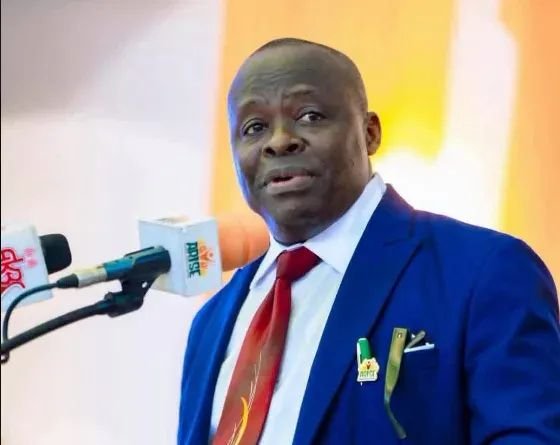
The university’s Vice Chancellor disclosed the plan while discussing the institution’s approach to developing sports and creating greater opportunities around its sporting activities.
The proposed policy is expected to provide a more structured framework for managing sports at the University of Uyo, with emphasis on sustainability, revenue generation and the need to maintain a balance between sporting commitments and academic work.
UNIUYO Seeks a More Sustainable Sports Model
Universities traditionally use sports to promote physical fitness, student engagement, talent development and institutional representation. However, maintaining competitive sports programmes requires funding for facilities, equipment, coaching, competitions, transportation and athlete development.
The proposed UNIUYO policy points towards a broader approach in which sports could also contribute to the institution’s financial sustainability.
Rather than treating sports solely as an extracurricular activity, the university’s proposed direction suggests that sporting assets, competitions, talent and related activities could be developed within a framework capable of generating sustainable value.
The move also reflects a wider discussion about the role of sports in higher education and the potential for universities to participate more actively in the sports economy.
Research involving University of Uyo academics has previously examined the economic and social dimensions of sports, including sports diplomacy and the expectations of stakeholders within the sports industry.
Balancing Sports With Academic Responsibilities
One of the key issues facing university sports programmes is ensuring that students can participate competitively without compromising their education.
The Vice Chancellor’s comments indicate that the proposed policy will seek to address this balance.
For student-athletes, intensive training and competitions can require significant time away from classrooms. A structured university sports policy could therefore provide clearer arrangements for managing sporting commitments alongside academic responsibilities.
The objective, as presented, is not simply to increase sporting activity but to establish a system in which athletics and education can develop alongside each other.
That approach could also help universities create clearer pathways for identifying talented students while maintaining their academic progression.
Sports and Revenue Generation
The commercialisation of sports has become an increasingly important issue across the global sports industry.
Revenue can come from several areas, including sponsorships, competitions, broadcasting, facility use, partnerships, merchandise, advertising and talent development.
For a university, developing these areas requires appropriate governance and transparent financial structures.
A successful sports policy would therefore need to establish how commercial opportunities are managed, how revenues are accounted for and how benefits are distributed between the institution, athletes and other stakeholders.
The announcement does not, however, provide sufficient publicly available details to establish the specific revenue mechanisms UNIUYO intends to introduce.
It would therefore be premature to assume that particular commercial arrangements have already been approved.
Why the Policy Could Matter
The proposed policy could have implications beyond the university’s sports teams.
A stronger sports system could potentially create opportunities for students interested in careers beyond playing, including sports management, marketing, broadcasting, media production, event management, fitness, coaching and entrepreneurship.
It could also provide a platform for partnerships between the university and private-sector organisations interested in sports development.
For athletes, structured programmes can potentially provide greater opportunities to develop their skills while pursuing university education.
For the institution, professionally managed sporting activities could strengthen its public profile and create opportunities for engagement with communities, sponsors and other sporting organisations.
These potential outcomes, however, would depend on the final policy, its implementation and the resources made available to execute it.
The Wider Nigerian University Sports Landscape
The development comes at a time when questions around funding, employability and entrepreneurship are increasingly important within Nigerian higher education.
Universities are under pressure to provide students with education that prepares them not only for traditional employment but also for opportunities in emerging industries.
Sports is one area with potential economic value.
Nigeria has a large population of young people and a strong sporting culture, particularly in football and athletics. Yet talent development often faces challenges involving infrastructure, funding, professional management and pathways from amateur to elite competition.
Universities can play a role in bridging some of these gaps by combining education with structured athlete development.
A commercial sports model could also expose students to the business side of the industry rather than focusing exclusively on competition.
Implementation Will Be Key
The effectiveness of the proposed UNIUYO sports policy will ultimately depend on how it is implemented.
A policy designed to generate revenue would need clear rules governing sponsorships, partnerships, facilities, competitions and other commercial activities.
There would also need to be safeguards to ensure that commercial objectives do not undermine students’ academic responsibilities or the educational purpose of university sports.
Similarly, athletes would need appropriate support, while the university would need mechanisms for monitoring performance, financial management and accountability.
At this stage, details of the policy’s implementation timeline, specific commercial programmes and expected revenue targets have not been sufficiently established in the publicly accessible material reviewed for this report.
What Happens Next
The next significant development will be the formal unveiling or publication of the University of Uyo’s sports policy.
Details of the policy should clarify the university’s plans for sports financing, athlete development, commercial partnerships, facility management and the relationship between sporting commitments and academic programmes.
Until those details are formally released, the Vice Chancellor’s announcement establishes the direction of the proposed reform rather than a complete picture of how the new system will operate.
The initiative nevertheless places sports within a broader conversation about sustainability, education and the economic potential of the Nigerian sports industry.
For UNIUYO students and athletes, the eventual policy will be particularly important because its implementation will determine how the institution balances competitive sport, academic achievement and the commercial opportunities associated with athletics.
Weng Global – Stories beyond borders
Sources
- University of Uyo — institutional and academic information.
- University of Uyo-related academic research on sports industry expectations and sports policy.
- Additional publicly available reporting reviewed during research.