Reported by Weng Patrick Atokor l Journalist at Weng Global
The High Court has upheld the Independent Electoral and Boundaries Commission’s (IEBC) authority to tally and verify presidential election results at the national level, while ruling that the commission cannot alter results already declared and certified by constituency returning officers.
Justice Gregory Mutai delivered the judgment on Tuesday, September 22, 2026, dismissing a constitutional challenge brought by Busia Senator Okiya Omtatah and other petitioners who sought to have national-level verification of presidential results scrapped.
The ruling preserves the national tallying framework ahead of Kenya’s 2027 General Election but places clear limits on what the IEBC can do with constituency results once they have been declared and certified.
Court Upholds National Verification
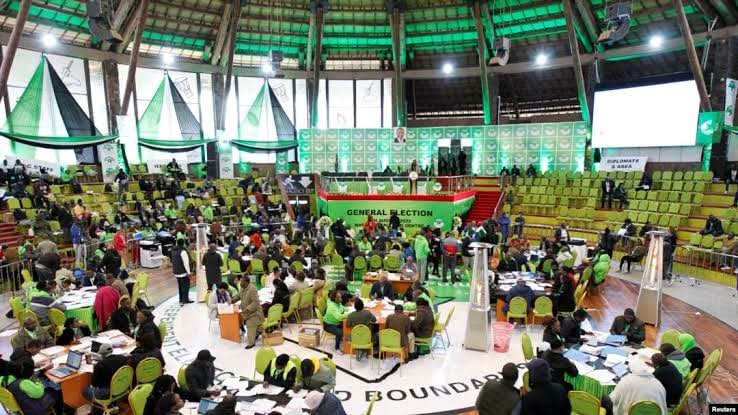
At the centre of the case was the question of whether the IEBC can verify and tally presidential results at the national tallying centre after constituency returning officers have declared the results.
The petitioners argued that the constituency should be the final point for tallying, verification and declaration of presidential results. They challenged provisions including Section 39 of the Elections Act and Regulation 83(2) of the Elections (General) Regulations.
Their position was that the national tallying centre should primarily collate results transmitted from Kenya’s 290 constituencies and establish whether a presidential candidate had met the constitutional requirements for election.
Justice Mutai rejected the challenge, holding that national tallying and verification form part of the constitutional and statutory framework governing presidential elections.
The Constitution requires the IEBC to tally and verify presidential votes after they have been counted at polling stations. A presidential candidate must also meet both the national vote threshold and the county-level threshold set out in Article 138(4).
IEBC Cannot Change Certified Constituency Results
Although the court upheld national tallying, it drew a distinction between verification and alteration.
The IEBC may aggregate figures received from constituencies and check that the national totals correspond with certified constituency results. It cannot, however, use the national verification process to change figures that have already been declared and certified by constituency returning officers.
Justice Mutai said verification does not give the commission authority to add, subtract, cancel or otherwise revise individual constituency figures.
The ruling therefore maintains two principles at the same time: the IEBC has a national constitutional role in tallying and verifying presidential results, but certified constituency figures cannot simply be altered during that national exercise.
This distinction is important because previous Kenyan electoral litigation has also examined the relationship between constituency-level declarations and the IEBC’s national tallying responsibilities.
In 2017, the Court of Appeal in IEBC v Maina Kiai held that the IEBC chairperson’s role at the national tallying centre included accurately tallying results received from constituency returning officers without changing the figures. The court also recognised the constitutional requirement to establish whether a presidential candidate had met the Article 138 threshold.
Certified Forms to Remain the Primary Reference
Justice Mutai further directed that certified election results displayed at constituency tallying centres should form the primary documentary basis for national aggregation.
The court referred to certified Forms 34A and 34B, or their successors under the applicable electoral framework, as the documents that should be relied upon when national presidential results are aggregated.
This means the national tallying process is not intended to create a fresh count of votes already declared at constituency level.
Instead, the national exercise involves bringing together the certified constituency results, verifying the figures and determining whether the presidential candidate who has received the required number of votes has also satisfied the constitutional county threshold.
Article 138(4) requires a presidential candidate to receive more than half of all votes cast and at least 25 per cent of the votes cast in more than half of Kenya’s counties.
National Verification to Involve the Whole Commission
The judgment also addressed how the national verification exercise should be conducted.
Justice Mutai directed that verification should be undertaken collectively by the IEBC, with commissioners participating and having access to the underlying data.
Candidates’ agents and observers should also have access to the same information available to the commission during the national tallying and verification process, according to reports on the judgment.
The emphasis on collective decision-making is consistent with earlier Supreme Court jurisprudence. In the 2022 presidential election petitions, the Supreme Court held that the power to verify and tally presidential results at the national tallying centre belongs to the IEBC as a commission rather than to its chairperson acting alone.
The chairperson retains the constitutional responsibility to declare the presidential result after the tallying and verification process.
What Happens When Figures Differ?
The court also set out requirements for dealing with discrepancies between electronically transmitted results and physical election documents.
Where the electronic transmission differs from the physically delivered records, the IEBC should document the discrepancy, explain how it was resolved and make the relevant record public by the time the final presidential result is declared.
The requirement places emphasis on traceability during the national tallying process.
Rather than allowing an unexplained difference between electronic and physical records, the process should establish what the discrepancy was, which record was relied upon and how the commission reached its conclusion.
Background to Kenya’s Tallying Dispute
The legal debate over presidential tallying has existed for several election cycles.
Kenya’s Constitution establishes a presidential election process that begins with voting and counting at polling stations before results move through the electoral structure. Article 138 provides for tallying and verification and gives the IEBC chairperson the responsibility of declaring the presidential result within the constitutional framework.
The 2017 Maina Kiai litigation became particularly significant in defining the finality of constituency-level results. The High Court held that the electoral framework required results to be openly and accurately collated and announced, while subsequent appellate litigation addressed the respective roles of constituency returning officers, the IEBC and its chairperson.
The Supreme Court also affirmed in later presidential-election litigation that the national verification and tallying function belongs to the commission collectively.
The latest High Court judgment therefore comes against a substantial body of Kenyan electoral jurisprudence concerning how results move from polling stations to the national declaration.
Why the Ruling Matters Ahead of 2027
The decision provides a judicial framework for the national handling of presidential results ahead of the 2027 General Election.
For voters, candidates, political parties and election observers, the key distinction is that national tallying remains part of the presidential election process, but it is not intended to provide an avenue for changing certified constituency figures.
The ruling also places greater emphasis on documentary evidence, collective IEBC responsibility and transparency where discrepancies arise.
The judgment could therefore influence preparations for the next presidential election, particularly in relation to how the national tallying centre operates, how commissioners participate in verification and how election data is made available to candidates and observers.
It also reinforces the importance of certified constituency records in the national aggregation process.
What Happens Next
The IEBC will retain its national tallying and verification role under the framework upheld by the High Court.
The commission will, however, be required to conduct the process within the limitations identified by Justice Mutai, including respecting certified constituency results and documenting discrepancies between electronic and physical records.
The ruling comes as Kenya prepares for the 2027 General Election, making the court’s interpretation relevant to future electoral preparations and any reforms concerning presidential result management.
The judgment does not eliminate the possibility of legal challenges to election results. Presidential election disputes remain subject to the constitutional and statutory mechanisms governing election petitions.
For the 2027 presidential vote, the central legal position emerging from the ruling is that national tallying and verification will continue, but certified constituency results cannot be altered through that process.
Weng Global – Stories beyond borders
Sources
- The Star — report on the High Court judgment and Justice Gregory Mutai’s findings.
- Pulse Kenya — report on the petition, national verification and implications for the 2027 election.
- Kenya Law — Independent Electoral and Boundaries Commission v Kiai & 5 others (2017), on the IEBC’s national tallying role.
- Kenya Law — Maina Kiai & 2 others v IEBC (2017), on presidential result declaration and tallying.
- Supreme Court of Kenya — presidential election jurisprudence on collective IEBC verification and tallying.