Reported by Weng Patrick Atokor l Journalist at Weng Global
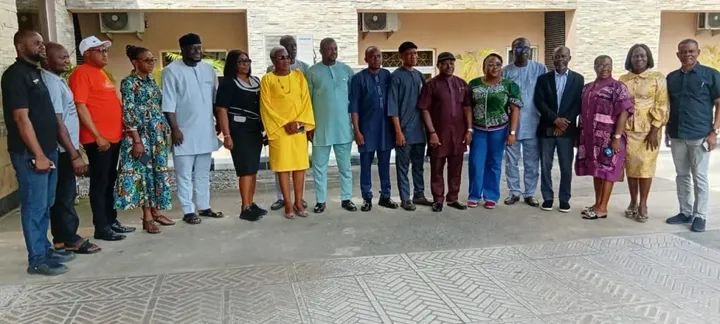
Solidaridad Nigeria has unveiled a Sustainable Management Plan aimed at improving oil palm productivity, strengthening smallholder farmers’ livelihoods and promoting more sustainable development of the oil palm sector in Akwa Ibom and other parts of Nigeria.
The plan is significant because oil palm remains an important agricultural commodity for thousands of Nigerian farmers, while the sector continues to face challenges including ageing plantations, low productivity, limited access to improved planting materials and concerns over the environmental impact of agricultural expansion.
According to reporting from Uyo, Solidaridad Nigeria Programme Manager Ernest Ita said some farmers continue to cultivate oil palm trees inherited from previous generations, with some plantations containing trees estimated to be 50 to 60 years old. He identified ageing palms as one of the factors limiting productivity and farmers’ incomes.
But what exactly does the new plan seek to achieve, and why does it matter to Akwa Ibom’s farmers?
What is Solidaridad’s Sustainable Management Plan?
The Sustainable Management Plan, or SMP, is designed as a framework for managing oil palm development in a way that combines economic productivity with environmental protection and social considerations.
The plan covers Akwa Ibom, Cross River, Enugu and Kogi states, according to Solidaridad’s reported presentation of the initiative.
Its areas of focus include improving agricultural productivity, strengthening farmers’ livelihoods, protecting the environment, encouraging social inclusion and improving coordination between stakeholders and government.
Solidaridad has previously worked with oil palm farmers in these states through its National Initiative for Sustainable and Climate-Smart Oil Palm Smallholders programme.
The organisation’s earlier work included training farmers in practices such as pruning, fertilizer application, ground-cover management and improved harvesting techniques. In one documented programme, participating smallholder farmers recorded substantial improvements in fresh fruit bunch yields after adopting improved farm-management practices.
The new plan therefore builds on a wider effort to make oil palm production more productive and sustainable.
Why is productivity such an important issue?
For a smallholder farmer, productivity is closely connected to income.
An oil palm farm that produces more fruit from the same area of land can potentially generate greater income without requiring the farmer to continually expand the farm into new areas.
This is particularly important because Solidaridad has argued that Nigerian smallholder farmers play a major role in the country’s palm-oil production.
The organisation previously reported that about 80 per cent of Nigeria’s palm oil production came from dispersed smallholder farmers. It also documented improvements in yields among farmers who received training in better agricultural practices.
This means that improving productivity among existing smallholder farmers could have implications beyond individual farms.
It could affect household incomes, rural employment, food and agricultural supply chains and Nigeria’s broader ambitions for greater domestic palm-oil production.
The problem of ageing oil palm trees
One of the issues highlighted in recent reporting is the age of some oil palm plantations.
Ernest Ita told reporters in Uyo that some farmers were still working with trees inherited from previous generations, with some plantations containing trees estimated to be between 50 and 60 years old. He argued that ageing trees can limit productivity even when farmers apply better management practices.
This creates a difficult challenge for farmers.
Replacing old trees requires time, money and planning. A farmer cannot simply remove an old plantation and immediately receive an equivalent harvest from newly planted palms.
For smallholders who depend on their farms for income, such a transition can therefore be economically difficult.
This is why improved planting materials, access to finance, technical assistance and proper farm planning can become important parts of agricultural development.
Solidaridad has previously supported oil palm nurseries and the production of improved seedlings in several Nigerian states, including Akwa Ibom. In 2021, the organisation reported that 36,000 hybrid seedlings were being raised through nurseries established under its oil palm programme.
Why the plan is also about forests
The oil palm debate is not only about production.
It is also about where new production takes place.
According to recent reporting on the Sustainable Management Plan, Solidaridad is encouraging farmers to improve productivity on existing agricultural land rather than expanding plantations into forests.
This approach is commonly described as agricultural intensification: producing more from land that is already being cultivated rather than continually expanding the agricultural footprint.
The issue is important because the global palm-oil industry faces scrutiny over deforestation and land-use change.
For Nigeria, improving existing plantations while protecting forests could therefore help address two objectives at the same time: increasing agricultural output and reducing pressure on natural ecosystems.
What does this mean for smallholder farmers?
For farmers in Akwa Ibom, the significance of the plan will ultimately depend on implementation.
A management plan by itself does not automatically increase yields or household income.
Farmers need practical support to implement the recommendations.
That can include access to improved seedlings, fertilizer, extension services, finance, markets, appropriate technologies and training.
Solidaridad’s previous programmes provide an example of how such support can work.
The organisation has documented cases where farmers improved their yields after receiving training in better farm-management practices. It has also worked on market access, including partnerships designed to connect smallholder farmers with markets and improve transparency in the sale of agricultural produce.
The effectiveness of the new Sustainable Management Plan will therefore depend not only on its objectives but also on whether farmers, communities, government agencies and private-sector actors can translate those objectives into practical action.
Why government involvement matters
Agricultural development does not happen entirely at farm level.
Government policies influence access to land, agricultural inputs, financing, infrastructure, extension services and investment.
Solidaridad has previously worked with government institutions on sustainable oil-palm development. In 2021, the organisation announced a memorandum of understanding with Nigeria’s then Federal Ministry of Agriculture and Rural Development aimed at improving agricultural productivity and supporting sustainable development.
The Sustainable Management Plan similarly places emphasis on coordination among stakeholders.
Recent reporting indicates that the plan was developed through consultations involving community, local-government and state stakeholders, with Solidaridad seeking government adoption or adaptation of relevant elements into policies and local bylaws.
That could be important because long-term agricultural development requires continuity beyond individual projects.
The wider Nigerian palm-oil picture
Nigeria has a long history of oil-palm production, but the country has also faced challenges in meeting its domestic demand efficiently.
Smallholder farmers remain central to the sector.
Previous Solidaridad programmes have identified limited access to improved planting materials, weak farm-management practices, limited investment and policy challenges among the factors affecting productivity.
Improving productivity is therefore not simply an agricultural issue.
It connects farming to manufacturing, food production, rural employment, household income and trade.
Palm oil is used in food products and is also an important industrial raw material.
A stronger domestic supply chain could therefore have implications across several parts of the Nigerian economy.
Why sustainability is part of the conversation
The challenge facing oil-palm production is to increase output without creating unnecessary environmental damage.
That is why the Sustainable Management Plan’s focus on environmental protection is significant.
Solidaridad has previously promoted climate-smart agricultural practices among Nigerian oil-palm farmers and has worked with farmer groups on sustainable land use and forest protection.
The organisation has also been involved in efforts to improve the policy environment surrounding sustainable oil-palm production.
For farmers, sustainability needs to be practical rather than simply theoretical.
A sustainable system must allow farmers to earn a livelihood while maintaining the productive capacity of their land and reducing unnecessary pressure on forests and other ecosystems.
What happens next?
The important question now is how the Sustainable Management Plan will be implemented.
Its potential impact will depend on whether government agencies, farmer organisations, communities, development organisations and private-sector participants can agree on practical responsibilities and resources.
For farmers, the most important outcomes will be tangible: better planting materials, improved farm practices, higher productivity, stronger market access and more sustainable incomes.
For communities and government, the challenge will be ensuring that increased agricultural production does not come at the expense of forests and environmental resources.
And for Nigeria’s wider oil-palm industry, the longer-term question is whether productivity can be increased sufficiently to strengthen domestic supply while creating better economic opportunities for smallholder farmers.
The Sustainable Management Plan therefore represents more than a farming initiative.
It is an attempt to connect productivity, farmer livelihoods, environmental protection and agricultural policy within one framework.
Its real measure of success, however, will not be the existence of the plan itself but what happens on farms and in farming communities after implementation.
Weng Global – Stories beyond borders
Sources
- Solidaridad Network — reporting on the Sustainable Management Plan and oil-palm productivity in Nigeria.
- Solidaridad Network — Smallholder oil palm farmers improve their livelihood in Nigeria.
- Solidaridad Network — Hybrid oil palm seedlings to improve yields in Nigeria.
- Solidaridad Network — Creating access to guaranteed markets for oil palm smallholders in Nigeria.
- Solidaridad Network — Solidaridad and Nigerian government partner to improve productivity.