Reported by Weng Patrick Atokor l Journalist at Weng Global
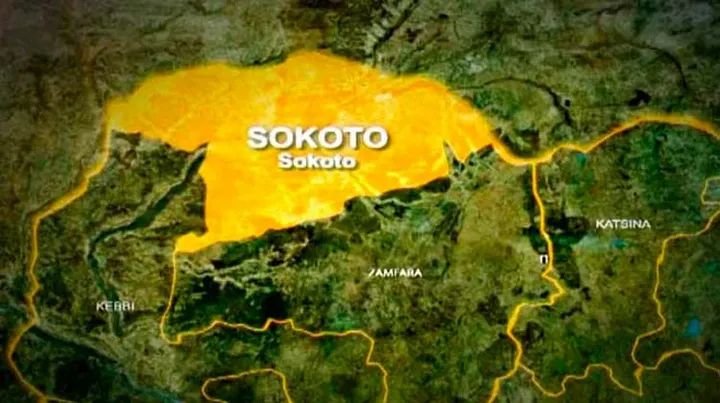
Internally displaced persons (IDPs) taking refuge in Yabo Local Government Area of Sokoto State have appealed to the government and humanitarian organisations to provide permanent housing, food assistance and livelihood support after bandit attacks forced them to abandon their homes and farmlands.
The displaced families said their inability to return to their communities has left them struggling to secure food, decent accommodation and other basic necessities, with farming activities that previously sustained their households severely disrupted.
The appeal was made on Friday, November 20, 2026, during the distribution of dignity kits and other relief materials organised by ActionAid Nigeria, with support from the European Union, at the Yabo Local Government Secretariat.
The intervention brought attention to the continuing difficulties facing families who have been forced from their ancestral communities by insecurity and are now struggling to rebuild their lives in unfamiliar surroundings.
Displaced Families Lose Access to Homes and Farmlands
For many of the affected residents, displacement has meant losing more than their houses. It has also taken away the agricultural activities and other economic opportunities that previously provided food and income for their families.
Mukhtar Umar, speaking on behalf of the displaced residents, said farming had become impossible because armed bandits had taken control of their communities and farmlands.
He explained that agriculture was their major source of livelihood before the attacks but that they could no longer access their farms after fleeing for safety.
Umar acknowledged the assistance provided by the government and humanitarian organisations but said the support received so far had not addressed the long-term challenges confronting displaced households.
He appealed for permanent accommodation, regular food supplies and sustainable assistance that would allow families to become economically independent again.
His account highlights the difficult situation facing rural households whose livelihoods depend heavily on access to agricultural land.
For families that rely on seasonal farming, losing access to farmland can mean losing an entire source of household income, making it increasingly difficult to provide food, pay for healthcare and support children’s education.
Women Appeal for Decent Accommodation
The difficulties have also affected displaced women, many of whom face additional challenges in securing adequate shelter and meeting their families’ daily needs.
Hafsat Muhammad, representing the displaced women, appealed to the government and international organisations to help them obtain decent accommodation.
Another beneficiary, Modi Tuita, described the situation of displaced residents as difficult, noting that families had abandoned their communities in search of safety.
Tuita commended ActionAid Nigeria for providing assistance but urged the authorities to strengthen their interventions to improve the living conditions of affected households.
The appeals reflect the importance of including women and other vulnerable groups in humanitarian programmes, particularly when displacement disrupts access to housing, healthcare, education and essential services.
ActionAid Calls for Long-Term Protection
Speaking during the distribution exercise, ActionAid Nigeria’s Deputy Country Director, Suwaiba Muhammad Dankabo, said the intervention was not limited to distributing relief materials but also sought to draw attention to the need for safe housing and improved social protection for displaced people.
She stressed that people forced to leave their homes because of insecurity should continue to have access to essential services, regardless of where they seek refuge.
According to Dankabo, displaced persons deserve protection and access to education, healthcare, security and other basic social services.
She explained that the dignity kits were designed around the needs identified by beneficiaries, particularly women, and included sanitary pads and other essential items.
Dankabo disclosed that ActionAid had targeted 300 beneficiaries under the intervention.
Of this number, 100 people were expected to receive the items during the initial distribution, while the remaining beneficiaries would be reached subsequently.
The programme forms part of broader efforts to address the immediate needs of vulnerable communities while advocating more sustainable solutions to displacement.
Three-Year Partnership Targets Social Protection
Dankabo also disclosed that ActionAid Nigeria was implementing a three-year partnership programme with the Sokoto State Government under a European Union-supported social protection initiative.
The programme is intended to strengthen social protection interventions and support vulnerable populations, including people affected by displacement and poverty.
A key component involves advocacy for a functional social register that can help government authorities identify displaced households and other vulnerable residents who require assistance.
Such a register can help authorities improve the identification of beneficiaries and direct available support towards households facing the greatest difficulties.
The initiative is currently being implemented in two local government areas, according to Dankabo, with possible expansion depending on available funding and the achievement of its objectives.
The development highlights the importance of reliable information in humanitarian planning, particularly in communities where displacement has increased the number of people requiring government and development assistance.
Yabo Council Says It Has Provided Accommodation and Relief
Meanwhile, the Vice Chairman of Yabo Local Government, Usman Na’Allah, said the council had been supporting displaced families through the provision of accommodation, foodstuffs and medication.
Speaking on behalf of the local government chairman, Na’Allah disclosed that some displaced households had been accommodated in government-owned properties without paying rent.
He said the council had previously received approximately 2,300 displaced persons from neighbouring villages in Shagari Local Government Area.
According to him, some of the affected families were accommodated in government facilities without being charged for their stay.
Na’Allah added that the local government had also appealed to residents to provide accommodation for displaced families where possible.
He said the council chairman had continued to assist affected households with food and medical support.
The vice chairman commended ActionAid Nigeria, the European Union and the federal and state governments for their interventions.
He also urged beneficiaries to use the relief materials for their intended purposes.
The council’s account demonstrates the role local authorities and host communities play in responding to displacement, particularly when families arrive without sufficient resources to secure accommodation and meet their immediate needs.
However, the displaced residents’ continued appeal for permanent housing suggests that emergency assistance alone cannot fully address the difficulties associated with prolonged displacement.
Sokoto’s Wider Displacement Challenge
The situation in Yabo forms part of a broader displacement challenge affecting communities across Sokoto State and other parts of north-western Nigeria.
Banditry, armed group activities and communal violence have forced thousands of people to abandon their homes, farms and other sources of livelihood.
A November 2026 assessment published by the Joint IDP Profiling Service (JIPS) highlighted the scale of the displacement crisis in Sokoto State.
The organisation estimated that more than 181,500 people were forcibly displaced across the state as of early 2026.
Its research, conducted with the Sokoto State Bureau of Statistics, the Danish Refugee Council and Nigeria’s National Bureau of Statistics, examined the circumstances of displaced households and host communities in Sokoto town.
The assessment identified challenges including insecure housing, limited assets, loss of farmland and poverty.
These findings illustrate how insecurity can create long-term economic and social consequences beyond the immediate danger of attacks.
For displaced farming households, the loss of access to agricultural land can undermine their ability to produce food, generate income and recover financially.
Children may also experience interruptions to their education, while women, older people and persons with disabilities can face additional difficulties accessing essential services.
The displacement crisis therefore requires coordinated interventions that address both immediate humanitarian needs and the conditions preventing families from rebuilding their lives.
Why Permanent Housing and Livelihood Support Matter
The demands made by displaced residents in Yabo underline the difference between emergency relief and long-term recovery.
Food supplies, dignity kits and temporary accommodation can help families meet immediate needs, but they do not necessarily provide a lasting solution when people remain unable to return to their communities or resume their previous economic activities.
Permanent housing can provide families with greater stability, while livelihood programmes can help them rebuild their financial independence.
For agricultural households, meaningful recovery may require access to safe farmland, farming equipment, seeds and other forms of economic support.
Where returning home remains unsafe, alternative accommodation and opportunities to establish new livelihoods may become necessary.
Government authorities and humanitarian organisations also need to ensure that displaced children can continue their education and that vulnerable residents have access to healthcare and social protection.
The experiences described by the Yabo residents show that displacement is not simply a matter of finding somewhere to stay. It involves rebuilding the social and economic foundations that allow families to live independently.
What Happens Next?
ActionAid Nigeria’s three-year partnership with the Sokoto State Government provides an existing framework for social protection advocacy and support for vulnerable populations.
The planned distribution of dignity kits to the remaining beneficiaries among the targeted 300 people is also expected to extend immediate assistance to more displaced residents.
However, the major concern raised by the families remains unresolved: access to safe and permanent accommodation and the ability to restore their livelihoods.
The Yabo Local Government Council says it has continued providing accommodation, food and medication, while the displaced residents are asking for more sustainable assistance.
Ultimately, lasting recovery will depend on improved security, effective government intervention and coordinated humanitarian support.
For the displaced families, the goal is not simply to receive temporary relief. They want a secure place to live, the opportunity to return to productive activities and the chance to rebuild lives disrupted by violence.
Their appeal also reinforces the need for security improvements that can make the return of displaced communities safe and sustainable.
Until families can regain access to their homes and livelihoods, the consequences of banditry will continue to extend beyond the attacks themselves, affecting household income, food security and the future of entire communities.
Weng Global – Stories beyond borders