Reported by Simon Daniel Yusuph l Journalist at Weng Global
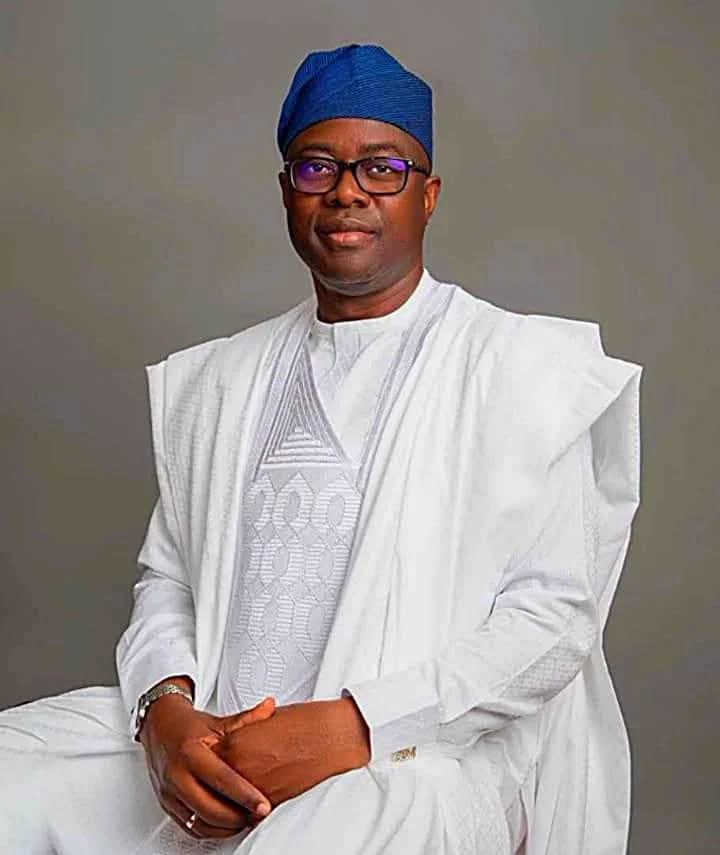
Oyo State Governor, Seyi Makinde, has presented a proposed ₦1.12 trillion appropriation bill for the 2027 fiscal year to the Oyo State House of Assembly, outlining a spending plan that places infrastructure, education and healthcare among the administration’s major priorities.
Makinde presented the proposal on Tuesday, November 10, 2026, during a special plenary session at the Parliament Building, Secretariat, Ibadan. The budget, titled the “Budget of Sustained Progress,” is intended to consolidate projects and development programmes undertaken by his administration since assuming office in 2019.
The proposal represents the final annual budget presentation of Makinde’s administration, whose second and final term is expected to end in 2027.
Its presentation now places the proposed expenditure before lawmakers for legislative scrutiny, consideration and possible approval.
Infrastructure Takes the Largest Allocation
According to figures reported from the governor’s budget presentation, infrastructure received the largest sectoral allocation, with approximately ₦236.15 billion earmarked for the sector.
Education follows with about ₦190.6 billion, while healthcare is allocated approximately ₦93.01 billion.
The allocation pattern indicates that the administration intends to maintain infrastructure development while continuing investment in essential public services.
Infrastructure spending is particularly significant for Oyo State because of the scale of ongoing road, transport and economic development projects across the state.
These investments are expected to support connectivity, commercial activity and access to public facilities. However, their ultimate impact will depend on project execution, funding availability, transparency and effective monitoring.
Capital Expenditure Accounts for the Larger Share
The proposed budget provides approximately ₦670 billion for capital expenditure, representing about 60 per cent of the overall spending plan.
Recurrent expenditure is estimated at approximately ₦444 billion, covering the routine costs of running government, including personnel obligations and the delivery of public services.
The proposed capital-to-recurrent spending balance suggests that the administration intends to direct a larger proportion of public resources towards development projects rather than routine government operations.
Capital expenditure is important because it finances long-term investments such as roads, schools, hospitals, public infrastructure and other facilities that can support economic activity.
Nevertheless, a large capital allocation does not automatically guarantee completed projects. The effectiveness of the budget will depend on the government’s ability to raise projected revenue, release funds on schedule and ensure that ministries, departments and agencies deliver projects within approved budgets.
Budget Comes as Makinde Prepares for Transition
The 2027 appropriation proposal carries additional significance because it is expected to be the final annual budget presented by Makinde before the completion of his second term.
At a budget stakeholders’ consultation held in Ibadan on October 17, 2026, the governor disclosed that his administration expected to implement only about 30 per cent of the 2027 budget because a new government would assume office on May 29, 2027.
That announcement provides an important context for understanding the proposed spending plan.
Although the budget covers the entire 2027 financial year, the current administration will have only part of the year to implement its programmes before handing over to a successor government.
This means that continuity arrangements, project documentation, financial commitments and the transfer of ongoing programmes will be important considerations.
The incoming administration will inherit responsibility for the remaining fiscal period and will have to determine how to manage approved projects and outstanding obligations.
The transition also raises questions about which projects can realistically be completed before May 2027 and which will require continued funding and implementation by the next government.
Oyo’s Previous Budget Provides a Basis for Comparison
The proposed ₦1.12 trillion spending plan is larger than the ₦891.99 billion budget presented for the 2026 fiscal year.
The 2026 proposal, titled the “Budget of Economic Expansion,” provided approximately ₦502.85 billion for capital expenditure and ₦389.14 billion for recurrent expenditure.
The 2027 proposal therefore represents an increase of roughly 25.6 per cent over the previous year’s budget, based on the reported rounded figures.
The increase reflects a larger nominal spending plan, although its real value will depend on revenue performance, inflation, the cost of government projects and the purchasing power of the state’s available resources.
For residents, the important question is not simply whether the budget is larger, but whether the additional spending translates into better roads, improved schools, accessible healthcare, employment opportunities and more effective public services.
Revenue Generation and Fiscal Management
The ability of Oyo State to finance the proposed budget will be central to its implementation.
During the presentation, Makinde reportedly stated that the state’s internally generated revenue had risen from ₦26.95 billion in 2019 to ₦103.25 billion in 2026.
The reported increase points to the administration’s emphasis on strengthening internally generated revenue as a way of supporting public expenditure and reducing dependence on external funding.
However, revenue growth must be considered alongside the rising cost of governance and infrastructure development.
At the October budget consultation, Makinde disclosed that the state’s wage bill had increased from ₦4.5 billion in 2019 to ₦18 billion in 2026. He also raised concerns about the rising cost of major infrastructure projects.
These pressures could affect how much of the proposed 2027 spending plan can be financed and implemented.
The state will therefore need realistic revenue projections, effective expenditure controls and careful management of financial obligations to avoid creating projects that cannot be adequately funded.
Public Consultation and Legislative Scrutiny
The preparation of the 2027 budget followed a series of consultations involving stakeholders across Oyo State.
At the October engagement, representatives of local governments, farmers, student groups, civil society organisations, religious bodies, persons with disabilities, artisans and market associations participated in discussions on development priorities.
The consultations provided an opportunity for residents and organised groups to communicate their expectations on infrastructure, security, welfare and other public needs.
The Speaker of the Oyo State House of Assembly, Adebo Ogundoyin, has also indicated that the legislature will give the proposal the necessary attention and scrutiny in the interest of the people.
The Assembly’s role will include examining the government’s revenue estimates, proposed expenditure, sectoral allocations and the feasibility of planned projects before deciding whether to approve the bill.
Lawmakers are also expected to consider whether the proposed allocations adequately address the needs of communities across the state.
The budget remains a proposal until it completes the legislative process and receives the necessary approval.
Why the 2027 Budget Matters to Oyo Residents
The proposed appropriation bill will shape the state government’s spending priorities during a politically and administratively significant year.
For residents, its importance will be measured by the practical outcomes of public spending.
The infrastructure allocation could support road construction, rehabilitation and other public works, while the education and healthcare provisions could influence the quality and availability of essential services.
The budget also presents an opportunity to strengthen the state’s economic foundations through investments that support agriculture, commerce, transport and business development.
However, the transition to a new administration makes accountability especially important.
Projects that remain unfinished at the end of Makinde’s tenure will require clear records of their financial status, contracts, implementation progress and outstanding obligations.
Without proper documentation and continuity arrangements, ongoing projects could face delays, additional costs or uncertainty under the next government.
For this reason, the budget’s success should be assessed not only through the amount approved but also through measurable results and the responsible management of public funds.
What Happens Next?
Following its presentation, the ₦1.12 trillion appropriation bill will undergo consideration by the Oyo State House of Assembly.
Lawmakers will examine the proposed allocations and may seek clarification or adjustments before deciding on passage.
If approved and signed into law, the budget will provide the legal framework for government expenditure during the 2027 fiscal year.
The administration will then face the task of implementing its priorities within the time available before the May 29, 2027 transition.
Attention will also turn to how the next administration manages the remaining budget period, ongoing projects and financial commitments inherited from the outgoing government.
For Oyo residents, the central test will be whether the proposed “Budget of Sustained Progress” delivers tangible improvements in infrastructure, education, healthcare and economic opportunities.
The presentation marks the beginning of the legislative process. Its eventual impact will depend on the quality of scrutiny, availability of funds and the government’s ability to translate budgetary commitments into results.
Weng Global – stories beyond borders
Sources
- Oyo State Governor’s 2027 budget presentation, as reported by Tribune Online.
- Voice of Nigeria — report on the 2027 budget presentation.
- Voice of Nigeria — report on Oyo State’s October 2026 budget stakeholders’ consultation.
- Governor Seyi Makinde’s official 2026 Appropriation Bill presentation speech.