Reported by Simon Daniel Yusuph l Journalist at Weng Global
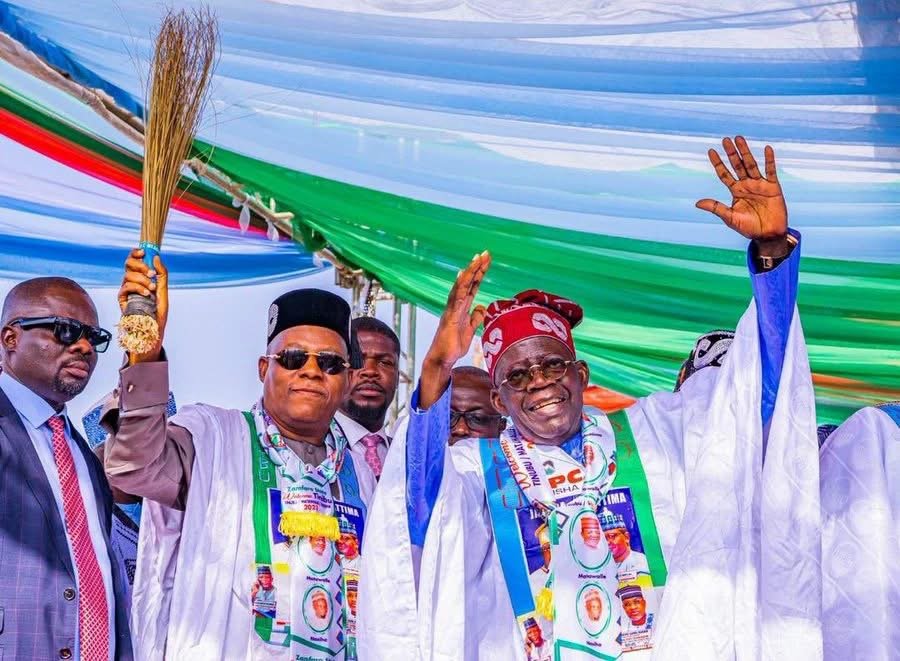
President Bola Ahmed Tinubu has renewed his commitment to providing Nigerians with reliable electricity, while criticising the existing privatisation model in the power sector during an All Progressives Congress (APC) presidential rally in Jigawa State on Tuesday, November 10, 2026.
Addressing supporters at the rally, Tinubu said his administration would work to reduce the cost of living and improve electricity supply, arguing that the existing privatisation arrangement had not delivered the expected results.
He maintained that Nigerians deserved a more dependable electricity system, an issue that has remained one of the country’s most persistent economic and governance challenges.
The President’s remarks come as electricity supply continues to attract public criticism and political debate ahead of the 2027 general elections, with households and businesses still facing interruptions and the additional cost of alternative power sources.
His renewed commitment also brings attention back to a major promise made during the 2023 presidential campaign, when he pledged to address unreliable electricity and end estimated billing.
Tinubu questions the existing privatisation arrangement
During his address in Jigawa, Tinubu indicated that his administration would pursue a different approach to delivering reliable electricity rather than relying on what he described as the old privatisation model.
The President’s statement has raised questions about the direction of his government’s electricity policy and whether further changes to the structure of the power sector could be considered.
Nigeria’s electricity industry has undergone significant reforms, including the privatisation of generation and distribution companies in 2013. The exercise was intended to improve efficiency, attract private investment and reduce the financial burden on government.
However, the sector has continued to experience difficulties involving inadequate infrastructure, electricity generation constraints, transmission limitations, distribution challenges, gas supply problems and financial disputes among market participants.
Tinubu’s criticism therefore reflects a wider debate over whether the existing structure has delivered the improvements Nigerians were promised when the industry was privatised.
However, his remarks at the Jigawa rally did not provide detailed information about a proposed replacement model, the specific changes being considered or the role private investors would play under any alternative arrangement.
The distinction is important because criticism of the existing privatisation structure does not, by itself, establish that the Federal Government intends to reverse the 2013 reforms.
A renewed promise ahead of the 2027 election
The latest pledge is closely connected to Tinubu’s electricity commitments during the 2023 presidential campaign.
At a meeting with members of the Organised Private Sector in Lagos before that election, he promised to ensure stable electricity supply and end estimated billing.
He also challenged Nigerians not to re-elect him if he failed to fulfil the commitment without providing adequate reasons for his inability to do so.
The promise has since become an important reference point in public discussions about his administration’s performance in the electricity sector.
With the 2027 presidential election approaching, the state of electricity supply is likely to remain a significant issue in the political debate.
For households, reliable electricity affects the cost of living, access to essential services and the ability to carry out everyday activities.
For businesses, especially small and medium-sized enterprises, unstable power supply increases operating expenses through spending on generators, fuel and other alternative energy sources.
The challenge is particularly significant for manufacturers and businesses that depend on continuous electricity to maintain production and protect equipment.
Consequently, the President’s latest assurance will be assessed against measurable improvements in electricity availability, affordability and service delivery.
APC defends Tinubu’s electricity record
The President’s renewed pledge follows a recent defence of his administration’s power-sector performance by the APC Presidential Campaign Council.
On November 1, 2026, the council’s spokesperson, Dele Alake, said Tinubu remained committed to improving electricity supply and addressing estimated billing.
Alake acknowledged that resolving Nigeria’s electricity crisis remained unfinished business but argued that the administration had introduced reforms and financial interventions to address longstanding problems.
He urged Nigerians to assess the President’s 2023 campaign promise in its full context, including the qualification that he would provide adequate reasons if he failed to deliver before seeking a second term.
The campaign council listed several interventions, including the Electricity Act 2023, the Presidential Metering Initiative, efforts to settle legacy debts owed to electricity generation and gas companies, and investments in transmission infrastructure.
Alake also said more than 1.5 million electricity customers had been metered under the administration’s initiatives.
The council maintained that the government was working to address the structural, institutional and financial weaknesses affecting the industry.
Its position is that the reforms should be assessed alongside the time and investment required to improve a sector that has experienced difficulties for decades.
Government approves N3.3 trillion power-sector debt settlement
One of the administration’s major financial interventions is the Presidential Power Sector Financial Reforms Programme, under which Tinubu approved a N3.3 trillion settlement plan for verified legacy debts accumulated between February 2015 and March 2025.
According to an April 6, 2026 announcement by the State House, the Federal Government reached an agreement on the amount following a review of outstanding obligations across the power value chain.
The Presidency said 15 power plants had signed settlement agreements worth N2.3 trillion.
It also disclosed that the government had raised N501 billion to support the payments, with N223 billion already disbursed at the time of the announcement.
The debt settlement is intended to address financial pressures affecting electricity generation companies and other operators, including gas suppliers.
The government has argued that resolving outstanding obligations will help restore confidence among industry participants and support more stable electricity generation.
However, debt repayment is only one part of the wider challenge. Nigeria also requires sustained investment in generation capacity, transmission infrastructure, distribution networks, gas supply and electricity market management.
The success of the financial intervention will therefore depend on whether it translates into improved operational performance and more dependable electricity for consumers.
Electricity Act 2023 changes the structure of the industry
Another major reform introduced under Tinubu’s administration is the Electricity Act 2023, which was signed into law on June 9, 2023.
The legislation created a framework for greater participation by state governments in electricity generation, transmission and distribution, subject to regulatory requirements.
It also opened opportunities for states to establish electricity markets and regulatory institutions suited to their local circumstances.
Several states, including Lagos, Enugu, Abia, Ekiti, Oyo, Kaduna and Niger, have taken steps to develop their electricity market frameworks.
The reform is intended to encourage investment, expand electricity access and reduce the pressure on the national grid by allowing more decentralised electricity solutions.
However, the existence of a legal framework does not automatically guarantee improved power supply. State governments and private investors still face challenges involving financing, infrastructure development, regulation and the commercial viability of electricity projects.
The effectiveness of the Electricity Act will ultimately depend on implementation and the ability of different electricity markets to provide reliable and affordable services.
Opposition questions the administration’s performance
Tinubu’s electricity record has also attracted criticism from opposition figures, who argue that government reforms and financial announcements have not sufficiently improved the experience of electricity consumers.
Former Vice-President Atiku Abubakar, who is associated with the African Democratic Congress (ADC), criticised the administration’s handling of the power sector in a statement reported on November 2.
Atiku argued that Nigerians were still experiencing unreliable electricity despite the President’s earlier campaign commitment.
He also questioned the relationship between financial interventions and actual improvements in electricity supply, maintaining that settling outstanding debts should not be treated as a substitute for delivering dependable power.
Atiku further criticised the electricity tariff structure and pledged to replace the existing five-band system with a framework he described as fairer and more affordable if elected.
The disagreement highlights a central issue in the 2027 political debate: whether the government’s reforms are producing sufficient results for consumers.
While the APC points to legislation, debt settlement, metering and infrastructure projects as evidence of progress, opposition figures are demanding more visible improvements in electricity supply and affordability.
The different positions underline the need for an assessment based on verifiable performance indicators rather than political claims alone.
Why reliable electricity remains critical to Nigeria’s economy
Nigeria’s electricity challenges have consequences that extend across nearly every part of the economy.
For households, inconsistent supply affects lighting, food preservation, education, communication and access to essential services.
For businesses, unreliable electricity raises production costs and reduces competitiveness.
Manufacturers may have to rely on diesel-powered generators to maintain operations, while small businesses often spend a significant portion of their earnings on fuel and alternative power arrangements.
These additional expenses can affect the prices of goods and services, contributing to the financial pressure experienced by consumers.
Reliable electricity is also important for attracting investment. Businesses considering expansion or establishing operations in Nigeria must assess the availability, cost and dependability of energy.
A more efficient electricity system could therefore support industrial development, job creation and economic growth.
For the government, the challenge is to improve supply while ensuring that electricity remains affordable, particularly for low-income households.
This requires a balance between attracting investment, ensuring that operators can recover reasonable costs and protecting consumers from excessive financial burdens.
The challenge of reforming electricity privatisation
Nigeria’s electricity privatisation was introduced to address weaknesses in the former government-controlled electricity structure.
Under the arrangement, generation companies and distribution companies were transferred to private operators, while the government retained responsibility for important parts of the sector, including the national transmission network.
The reform was expected to improve operational efficiency and attract investment into infrastructure.
However, the results have remained uneven.
Generation companies have faced financial and gas supply constraints, while distribution companies have struggled with infrastructure limitations, electricity losses, revenue collection and metering gaps.
The transmission network has also faced capacity and operational challenges, affecting the amount of electricity that can be reliably delivered across the country.
These problems have contributed to repeated debates about whether the existing market structure requires deeper reforms.
Tinubu’s criticism of the old privatisation model could therefore reopen discussions about the responsibilities of government, private operators and regulators.
For any new policy direction to succeed, it would need to explain how investment would be attracted, how electricity operators would be held accountable and how consumers would receive better services.
It would also need to address the financial sustainability of the industry without transferring unreasonable costs to ordinary Nigerians.
What happens next?
Tinubu’s latest assurance places renewed attention on the administration’s ability to improve electricity supply before the 2027 presidential election.
The government has already announced debt-settlement measures, metering initiatives, regulatory reforms and transmission projects.
However, the President’s remarks in Jigawa have not yet provided a detailed explanation of what changes, if any, his administration intends to make to the existing privatisation arrangement.
Further clarification will be important in determining whether the statement signals a new policy direction or represents a broader criticism of the industry’s current performance.
For Nigerians, the immediate concern remains the availability of electricity that is reliable, affordable and sufficient for homes, businesses and public institutions.
The administration will face pressure to demonstrate that its reforms are producing improvements that consumers can experience, rather than relying solely on policy announcements and financial commitments.
As the 2027 election approaches, electricity supply is likely to remain a major measure of public confidence in the government’s economic management.
Tinubu has renewed his promise. The central question for Nigerians is whether the administration can translate that commitment into consistent power supply and a more effective electricity system.
Weng Global – stories beyond borders
Sources
- Daily Post Nigeria – Report on Tinubu’s electricity pledge at the APC rally in Jigawa State, November 10, 2026.
- The State House, Abuja – Presidential approval of the N3.3 trillion power-sector debt settlement plan, April 6, 2026.
- Premium Times – APC Presidential Campaign Council’s defence of Tinubu’s electricity pledge, November 1, 2026.
- The Guardian Nigeria – Report on Tinubu’s electricity promise and the administration’s power-sector reforms, November 1, 2026.
- TheCable – Report on Atiku Abubakar’s criticism of Tinubu’s electricity record, November 2, 2026.
- Federal Government of Nigeria – Electricity Act 2023.