Reported by Weng Patrick Atokor l Journalist at Weng Global
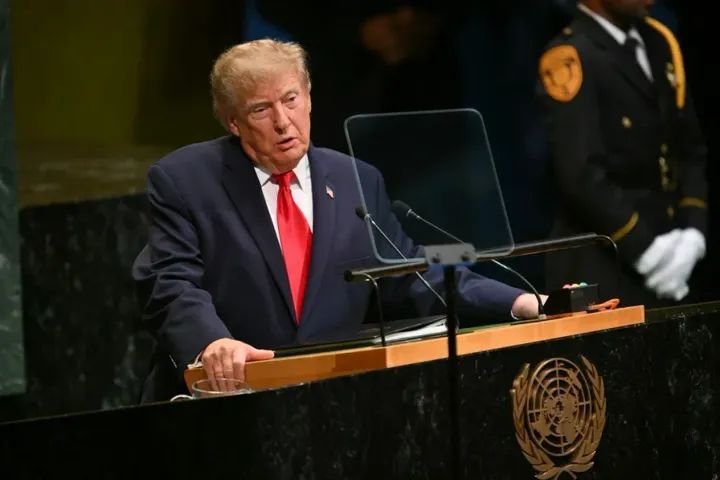
US President Donald Trump has acknowledged that his administration’s aggressive immigration enforcement and mass deportation policies may have gone too far, admitting that the approach was politically damaging to Republicans following their significant losses in the November 2026 midterm elections.
In an interview with CBS News’ 60 Minutes, broadcast on Sunday, November 8, Trump described his deportation policy as “too tough” and suggested that some undocumented immigrants who have established working lives in the United States could potentially be allowed to remain in the country.
The comments represent an acknowledgement of the political consequences of one of the defining policies of his administration, particularly as concerns over immigration enforcement continue to divide American voters.
Trump also indicated that he would be willing to work with Democrats on an immigration agreement when the new Congress takes office, although he did not provide specific details about what such an arrangement would involve.
His remarks come amid growing scrutiny of federal immigration operations, which have included increased arrests, workplace enforcement and deportations across different parts of the United States.
Trump Acknowledges Political Consequences of Deportation Policy
During the interview with CBS correspondent Ross Douthat, Trump was asked whether his administration’s immigration crackdown had contributed to Republican losses in the midterm elections.
The president acknowledged that immigration enforcement had both helped and hurt his political standing.
Trump maintained that his administration deserved strong marks for strengthening border security and removing individuals he described as dangerous. However, he recognised that the deportation campaign had also affected immigrants who were working and contributing to the American economy.
He explained that some people targeted by immigration enforcement had established jobs and had committed no other violation beyond entering the United States without legal authorisation.
Reflecting on the policy, Trump said: “So I think it was too tough.”
He also acknowledged that public opinion remained divided over whether undocumented immigrants who had secured employment and paid taxes should be deported or allowed to remain in the country.
The comments suggest that the administration’s approach to immigration enforcement has become a politically sensitive issue, particularly among voters concerned about the treatment of long-term immigrant residents.
CBS News +1
Trump Opens Door to Immigration Agreement With Democrats
Beyond acknowledging the difficulties associated with mass deportations, Trump expressed interest in reaching an agreement with congressional Democrats on immigration policy.
The president said he would welcome an opportunity to work with the opposition party, which is expected to assume control of both chambers of Congress following the midterm elections.
Although he did not outline a formal proposal, his comments suggested that an agreement could distinguish between undocumented immigrants considered security threats and those who have established themselves through employment and other economic activities.
Trump indicated that individuals involved in serious criminal activities, including murder and drug trafficking, should continue to face deportation.
However, he appeared more open to a different approach for undocumented immigrants who work in sectors such as hospitality, landscaping and other areas of the American economy.
The president’s comments could create an opportunity for discussions about the future of immigration enforcement, employment-based immigration arrangements and the legal status of some long-term undocumented residents.
Nevertheless, no new immigration agreement or change to the administration’s deportation policy has been formally announced.
ABC News +1
Stephen Miller’s Appointment Raises Questions About Policy Direction
Trump’s comments have also drawn attention because of another significant decision within his administration.
On Friday, November 6, the president announced that Stephen Miller would replace Susie Wiles as White House chief of staff, with the transition scheduled for Monday.
Miller is widely regarded as one of the principal architects of Trump’s hardline immigration policies and has played an influential role in shaping the administration’s approach to border security and deportations.
His appointment has raised questions about whether Trump’s acknowledgement of the political difficulties surrounding mass deportations will translate into a meaningful change in enforcement policy.
The timing is particularly significant because Miller’s promotion came shortly before the president publicly admitted that the deportation strategy had been too aggressive.
While Trump has expressed interest in negotiating with Democrats, there has been no official announcement that the administration intends to suspend or substantially reduce its immigration enforcement operations.
CBS News reported that the future direction of the deportation strategy remained unclear following the interview.
The appointment therefore presents an important political contradiction: Trump has acknowledged the consequences of an aggressive immigration policy while placing one of its strongest advocates in a senior White House position.
CBS News +1
Immigration Enforcement Faces Growing Public Scrutiny
Since returning to the White House, Trump has pursued an aggressive immigration enforcement programme, combining tighter border security with increased arrests and deportations within the United States.
The administration has defended the strategy as necessary to address illegal immigration and remove individuals considered threats to public safety.
However, the enforcement campaign has attracted criticism over its impact on families, workers and undocumented immigrants without criminal convictions.
According to CBS News, the number of people detained by Immigration and Customs Enforcement (ICE) reached record levels during the administration’s enforcement drive.
The agency also faced pressure from Miller to pursue a target of 3,000 arrests per day during the previous year.
The administration has maintained that its priority is to remove dangerous individuals, although immigration enforcement can also affect people whose only recorded violation is their unauthorised presence in the country.
Some operations have faced scrutiny over detention practices, vehicle stops, workplace raids and the deportation of migrants to countries other than their countries of origin.
These developments have intensified debate over the balance between national security, immigration law enforcement, due process and the economic contributions of migrant workers.
CBS News +1
Polling Shows Voters Are Concerned About Immigration Policies
Public opinion appears to have become an important consideration for the Trump administration following the midterm elections.
CBS News reported that 58 per cent of voters in exit polling believed the administration’s immigration actions had gone too far.
The findings point to a significant level of public concern about the methods used to implement the deportation programme.
However, the political picture is not entirely one-sided.
The same polling indicated that Republicans maintained a slight advantage over Democrats on the question of which party voters trusted more to handle immigration.
Republicans received 43 per cent support on the issue, compared with 41 per cent for Democrats.
This suggests that although voters have expressed concerns about the administration’s enforcement methods, immigration remains a politically competitive issue in the United States.
The election outcome also exposed challenges for Republicans in areas with substantial Latino populations.
CBS reported that support for the Republican Party declined in parts of South Texas and other heavily Latino communities that had shifted towards Trump in the 2024 presidential election.
Some Republican politicians had previously warned that aggressive immigration enforcement could alienate Hispanic voters.
Republican Representative Maria Elvira Salazar of Florida, for example, warned in September that many Hispanic voters who supported Trump in 2024 felt betrayed by aspects of his immigration approach.
These developments have increased pressure on Republican leaders to reconsider how immigration policies are implemented and communicated to voters.
CBS News +1
Democrats Could Seek Changes to Immigration Enforcement
Trump’s willingness to negotiate with Democrats could become an important development when the new Congress begins its work.
With Democrats preparing to control both the House of Representatives and the Senate, immigration policy is likely to become a major subject of political negotiations.
Democrats have previously criticised the administration’s immigration enforcement operations and raised concerns about the treatment of migrants and the powers exercised by federal agencies.
The Guardian reported that Democratic Senate Leader Chuck Schumer criticised Trump’s apparent willingness to reconsider the deportation strategy, pointing to the appointment of Miller as evidence that the administration was not necessarily changing direction.
The criticism highlights the difficulty Trump could face in convincing Democratic lawmakers that his proposed willingness to compromise represents a genuine policy shift.
Any agreement would likely involve difficult discussions over enforcement priorities, eligibility requirements, legal protections and the future status of undocumented residents.
For Democrats, a potential agreement could provide an opportunity to push for greater oversight of immigration agencies and protections for certain long-term residents.
For Republicans, negotiations could offer a way to address public concerns without abandoning the party’s longstanding emphasis on border security.
However, the president’s comments remain an indication of willingness to negotiate rather than an agreed legislative programme.
The Guardian +1
Why Trump’s Comments Matter Beyond the United States
The debate surrounding Trump’s deportation policy has implications beyond American domestic politics.
The United States remains a major destination for international migrants, including people from Africa, Asia, Latin America and other regions seeking employment, education and better economic opportunities.
Changes to American immigration enforcement could therefore affect migrant communities, international labour movements, families and businesses that depend on cross-border employment.
For African migrants living in the United States, the administration’s approach is particularly relevant because stricter enforcement can create uncertainty for individuals without permanent immigration status.
It may also affect families who depend on financial support from relatives working abroad.
At the same time, the debate raises broader questions about how governments balance immigration control with labour market needs and the rights of people who have established long-term lives in their host countries.
Trump’s recognition that some undocumented immigrants have jobs and contribute to the economy introduces an important distinction into the discussion.
It highlights the challenge of applying immigration laws while accounting for the economic and social realities of people who may have lived in a country for many years.
Nevertheless, his comments do not automatically create legal protection or a pathway to residency for undocumented immigrants.
Any such arrangement would require a formal policy decision and, depending on its structure, legislative approval.
What Happens Next?
The immediate question is whether Trump’s comments will lead to changes in the administration’s immigration enforcement strategy.
His willingness to negotiate with Democrats could open discussions about the treatment of long-term undocumented residents, particularly those who have established employment and have no serious criminal convictions.
However, the appointment of Stephen Miller as White House chief of staff has created uncertainty about the administration’s priorities.
Congressional oversight of ICE and the Department of Homeland Security is also expected to become an important issue under the incoming Democratic majority.
For now, Trump’s admission represents a notable acknowledgement of the political consequences of his deportation programme, but it should not be interpreted as an announcement that mass deportations are ending.
The coming months will show whether the president’s remarks lead to a substantive immigration compromise or remain an expression of political reflection following the Republican Party’s electoral setbacks.
For millions of undocumented immigrants and their families, the difference between those two possibilities could be significant.
Weng Global – Stories beyond borders
Sources
- CBS News – Trump says his deportation policy might have been “too tough” in 60 Minutes interview.
- ABC News – Trump says ‘too tough’ deportation policies hurt him in the midterms.
- The Guardian – Trump tells 60 Minutes that deportation policy was ‘too tough’.
- Associated Press – Trump says his deportation policy might have been too tough for voters.